
Last updated September 20, 2026
Full 25-point door and opener safety check with every visit - springs, cables, rollers, tracks, and your LiftMaster or Chamberlain opener included
You get a price before we start. It does not change when the truck arrives.
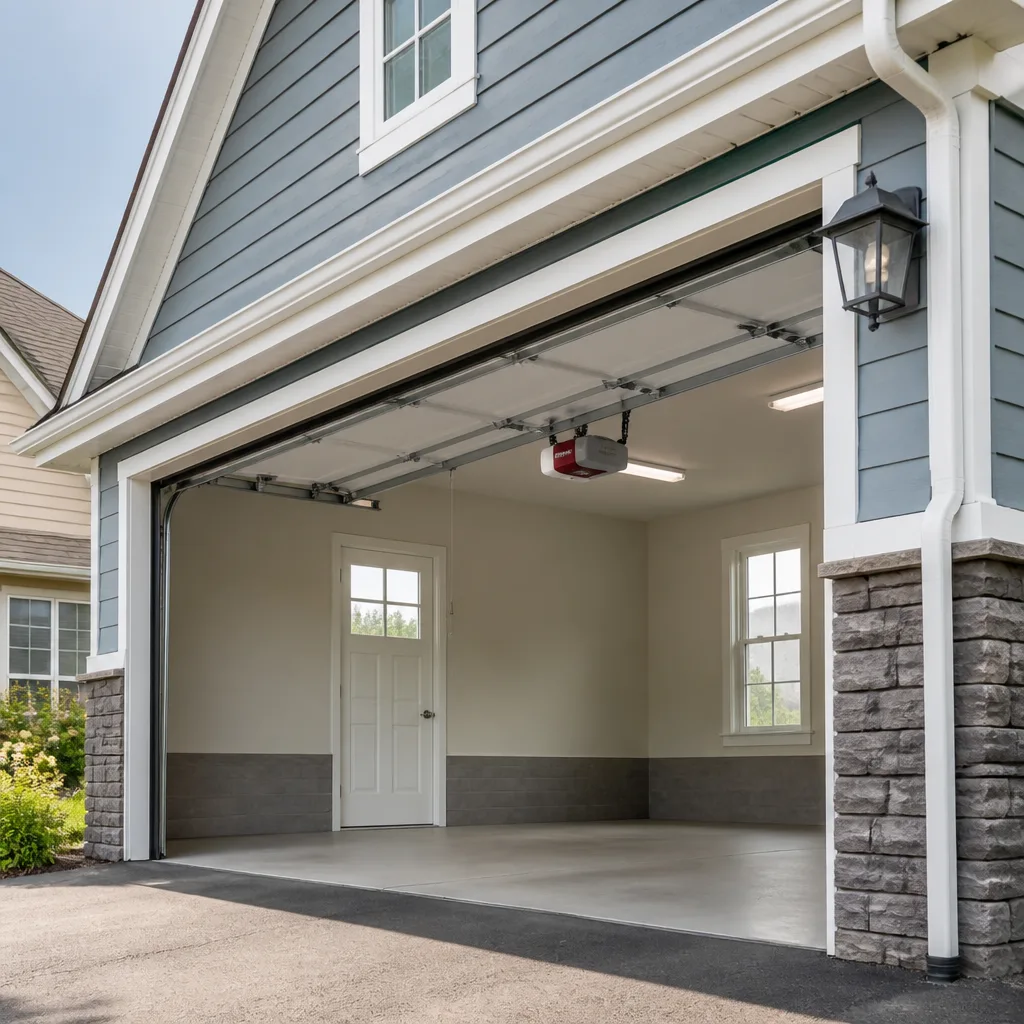
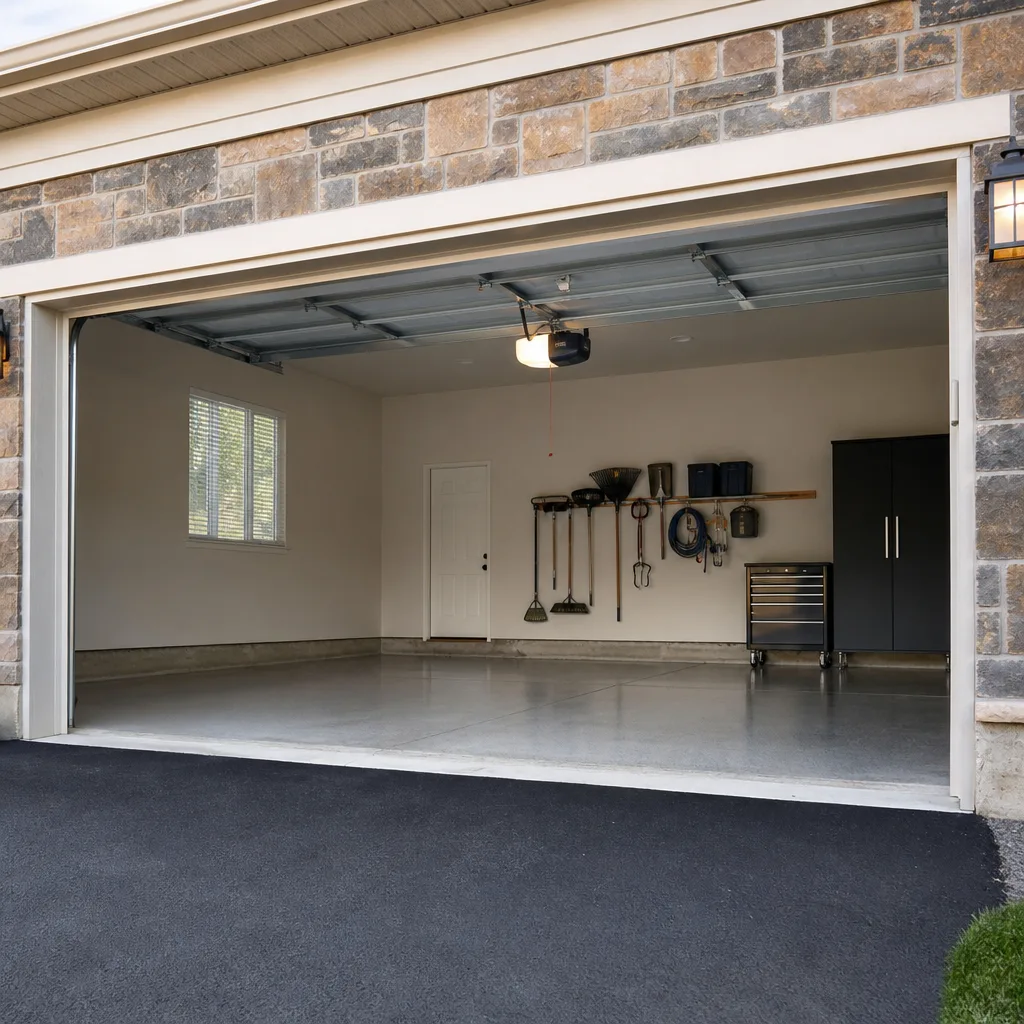
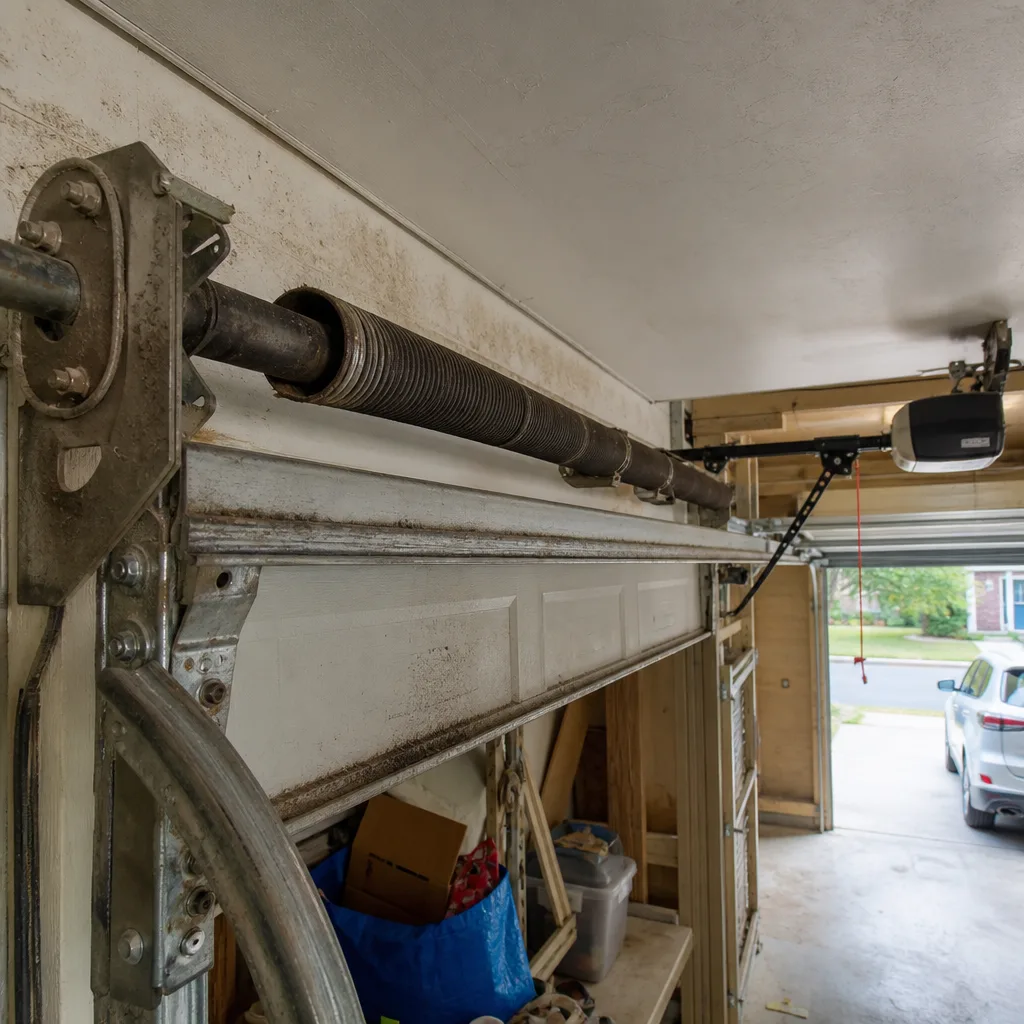 Before
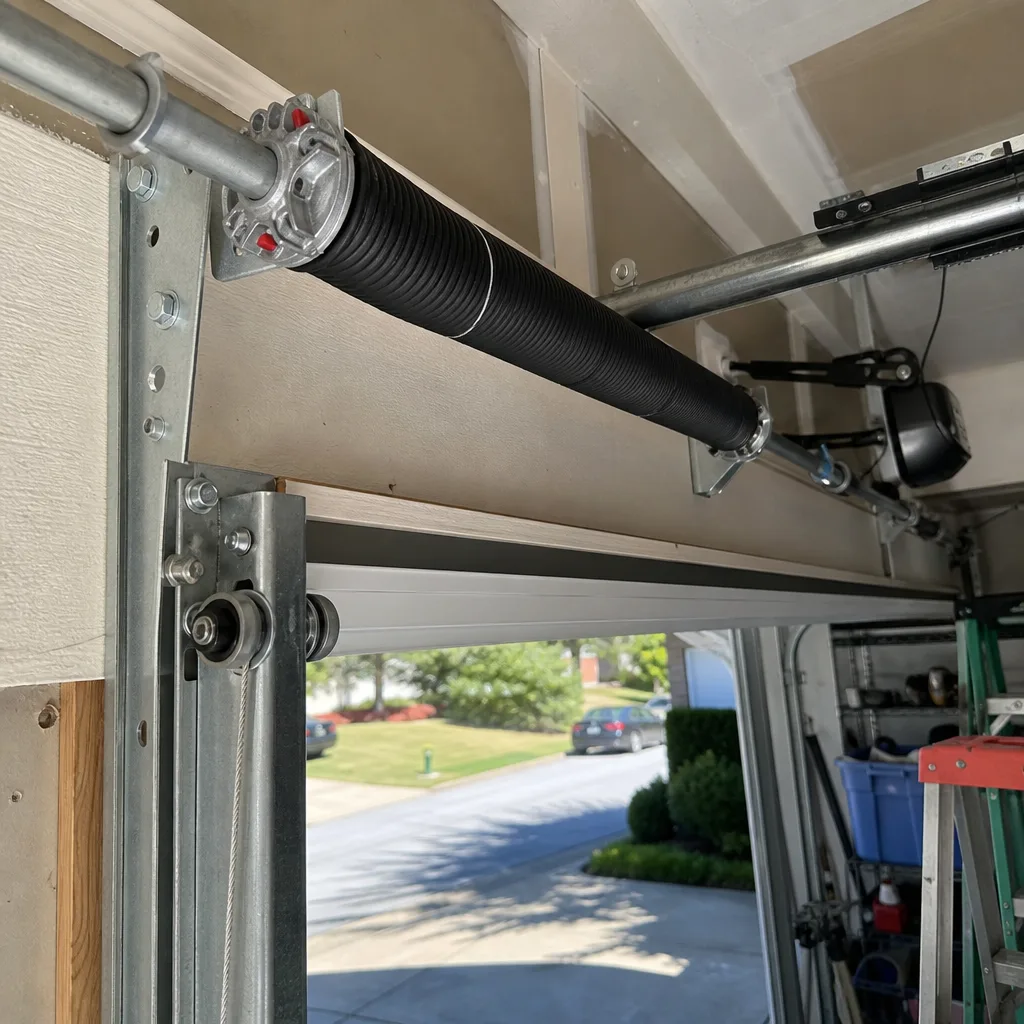 After
After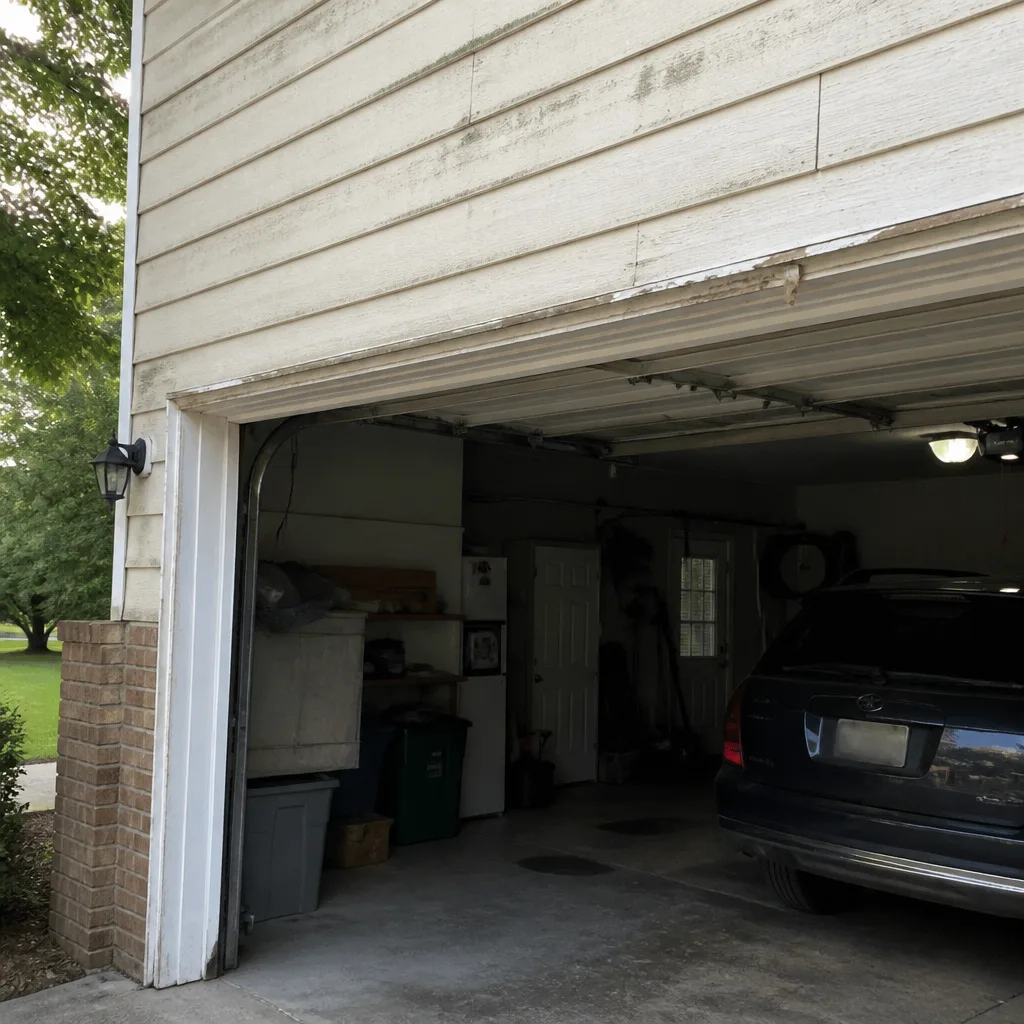 Before
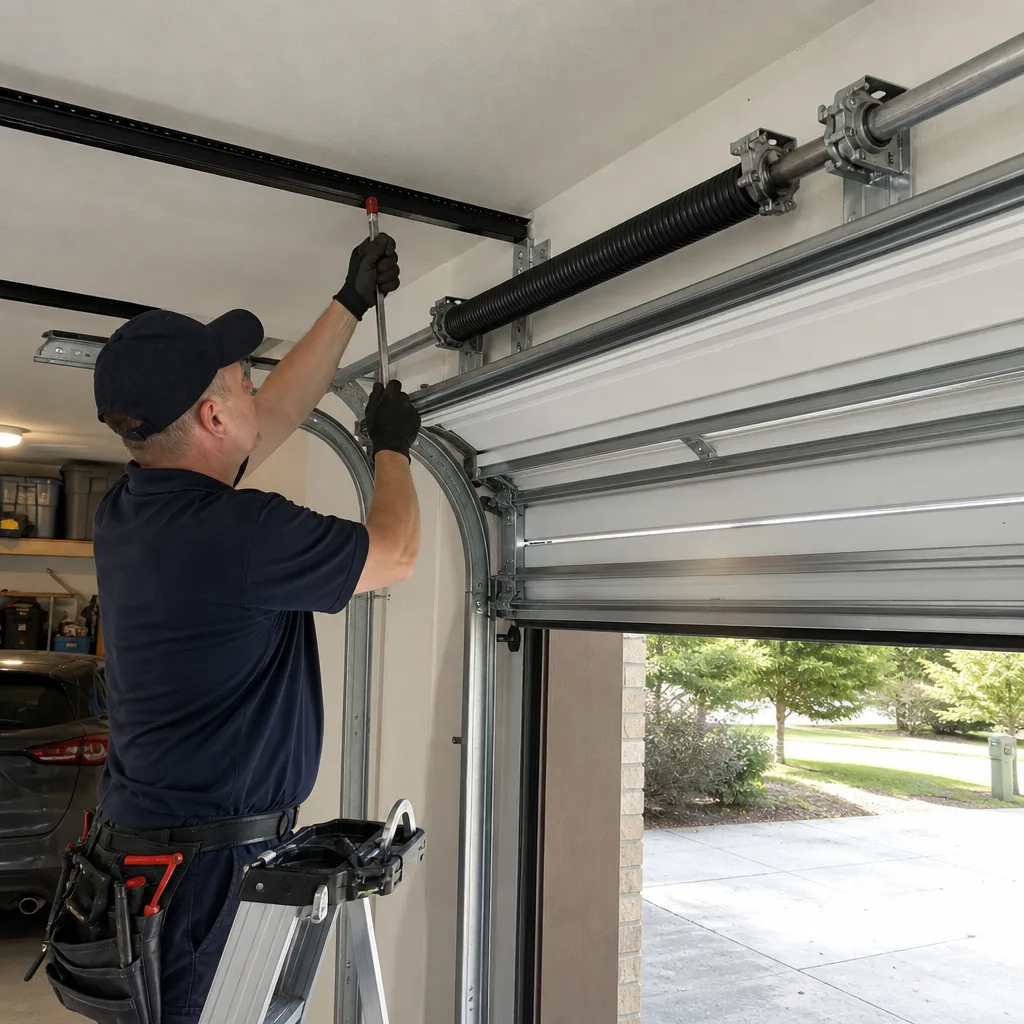 After
After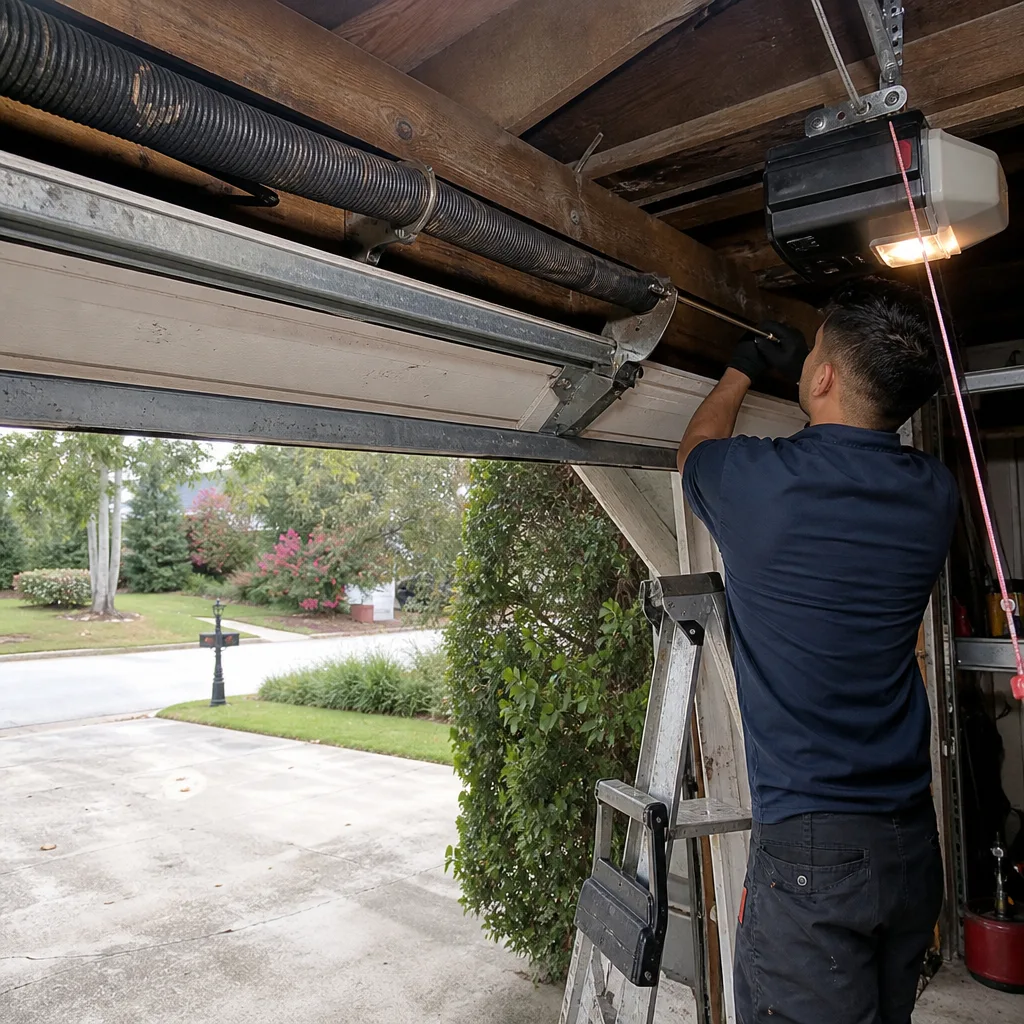 Before
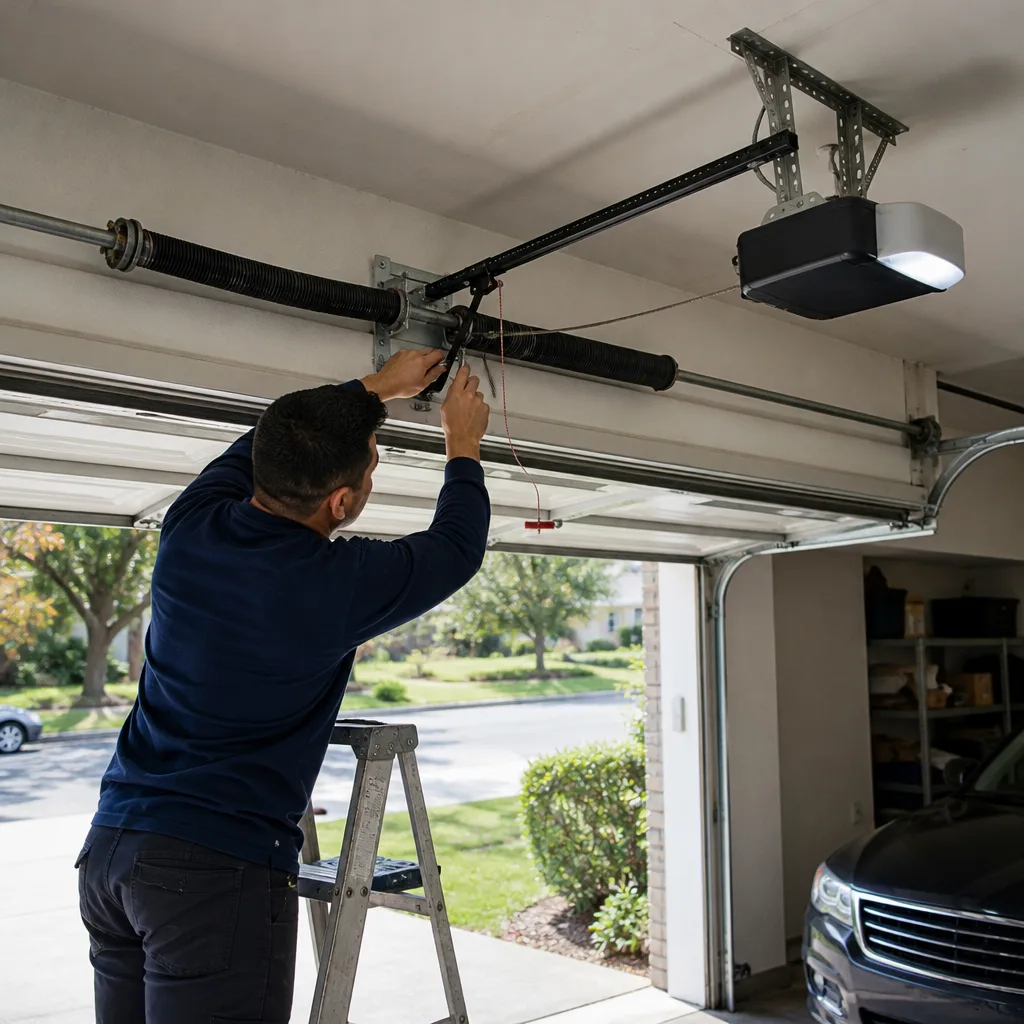 After
AfterDIY vs Professional Garage Door: The Alpharetta Homeowner’s Decision Guide
Most homeowners don’t realize that a garage door weighs between 130 and 400 pounds, and that the springs counterbalancing that weight are the only reason you can lift it with two fingers. That single fact reshapes the entire DIY conversation. This guide breaks down the decision task by task, because the honest answer in Alpharetta is not “hire a pro for everything” or “do it all yourself.” It’s “these four jobs are fine for a careful homeowner, and these four can put you in an emergency room.” By the end, you’ll know exactly which column each repair falls into, what it costs either way, and how to document what you do so it never comes back to bite you at resale. For a deeper look at pricing in our market, see our Garage Door Cost Breakdown: The Alpharetta Homeowner’s Reference for 2026.
Quick Answer
Most garage door maintenance tasks in Alpharetta fall cleanly into two buckets: safe DIY jobs like bottom seal replacement, sensor realignment, and remote reprogramming, and professional-only jobs like torsion spring replacement, cable work, and track realignment. The deciding factor is stored energy. If the component you’re touching is under tension or bears the door’s weight, it belongs in a technician’s hands. For everything else, a homeowner with basic tools and about an hour can do the work competently and save $120 to $250 in labor.
Table of Contents
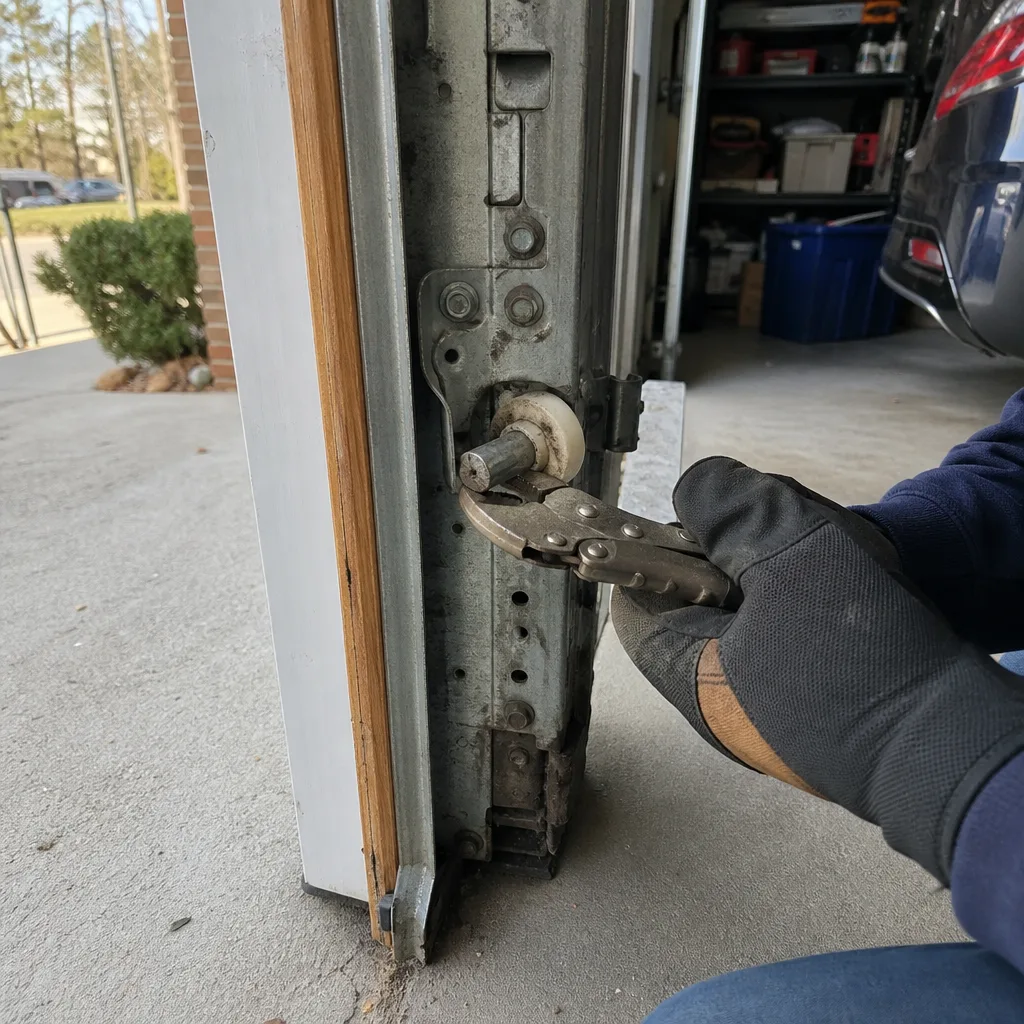
- The Decision Framework: Energy, Access, and Consequence
- Safe DIY Jobs: Four Tasks You Can Do This Weekend
- Professional-Only: Four Tasks That Require a Technician
- The Physics of Torsion Springs: Why YouTube Isn’t Enough
- Warranty Realities: What DIY Work Can Void
- The Real Cost-Benefit Calculation for Alpharetta
- Documenting DIY Work: The Paper Trail That Protects You
- Common Mistakes to Avoid
- When to Call a Professional
- Frequently Asked Questions
BeforeAfterThe Decision Framework: Energy, Access, and Consequence
Every garage door task can be evaluated on three questions. First: does this component store energy, and how much? A torsion spring stores enough torque to break bones. A bottom seal stores none. Second: can I reach this comfortably with tools I already own, or am I on a ladder with my hands above my head? Third: if this goes wrong, what’s the worst outcome? A failed seal replacement means you buy another $18 seal. A failed spring adjustment means a trip to the hospital and a door that won’t open.
This framework matters more in Alpharetta than it does elsewhere. Homes here skew toward two-car and three-car garages with doors that are wider, heavier, and fitted with higher-cycle springs than the national average. The neighborhoods off Kimball Bridge Road and along Rucker Road are full of homes built between 2015 and 2023 with 16-foot and 18-foot doors. That’s more mass, more spring tension, and less margin for error than the single-car doors you see in older intown neighborhoods.
We’ve also noticed a pattern specific to Alpharetta’s climate. The humidity here accelerates rust on torsion springs and cables, which means springs snap more often than in drier markets. That’s relevant to the DIY question because a rust-weakened spring is more unpredictable when it fails, and more dangerous to be near.
At Servo Garage Doors Alpharetta, we’ve built our entire approach around this framework. The Haven Standard exists because homeowners deserve to see the evidence of what failed before anyone quotes a replacement. Clause 4 is why the technician photographs the failed part before quoting a replacement. It’s not about making DIY seem dangerous. It’s about making the decision boundaries clear so you know when to pick up a wrench and when to pick up the phone.
How We Categorize Every Job
- Green: No stored energy, low access difficulty, low consequence of failure. Do it yourself.
- Yellow: Some mechanical complexity or access challenge, but no life-altering consequence. DIY if you’re comfortable, otherwise hire.
- Red: Stored energy, awkward access from a ladder, or consequence that includes injury or door failure. Professional only.
Safe DIY Jobs: Four Tasks You Can Do This Weekend
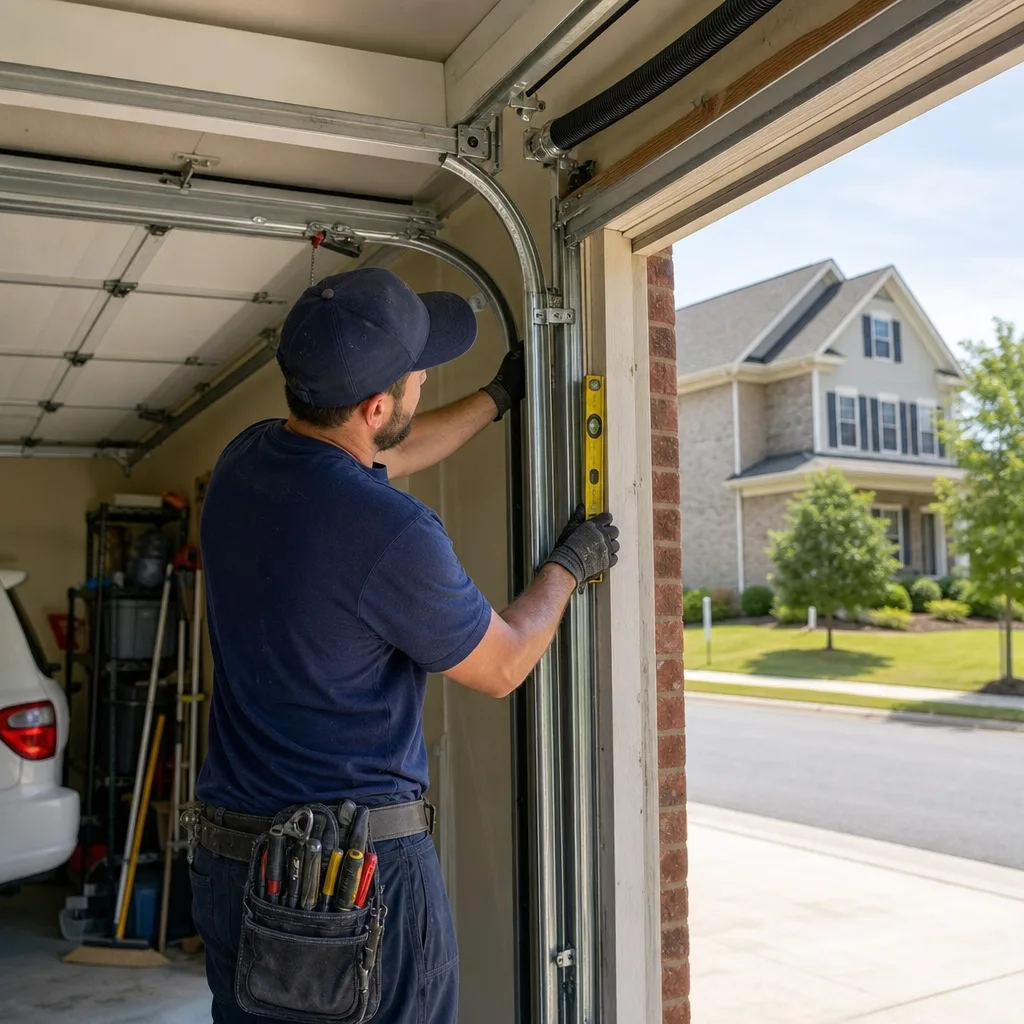
These four tasks are green-light DIY for most Alpharetta homeowners. Each one requires basic tools, takes under two hours, involves no stored energy, and has a failure mode that’s annoying rather than dangerous. The key is doing them in the right order and with the right materials for our climate.
1. Bottom Weather Seal Replacement
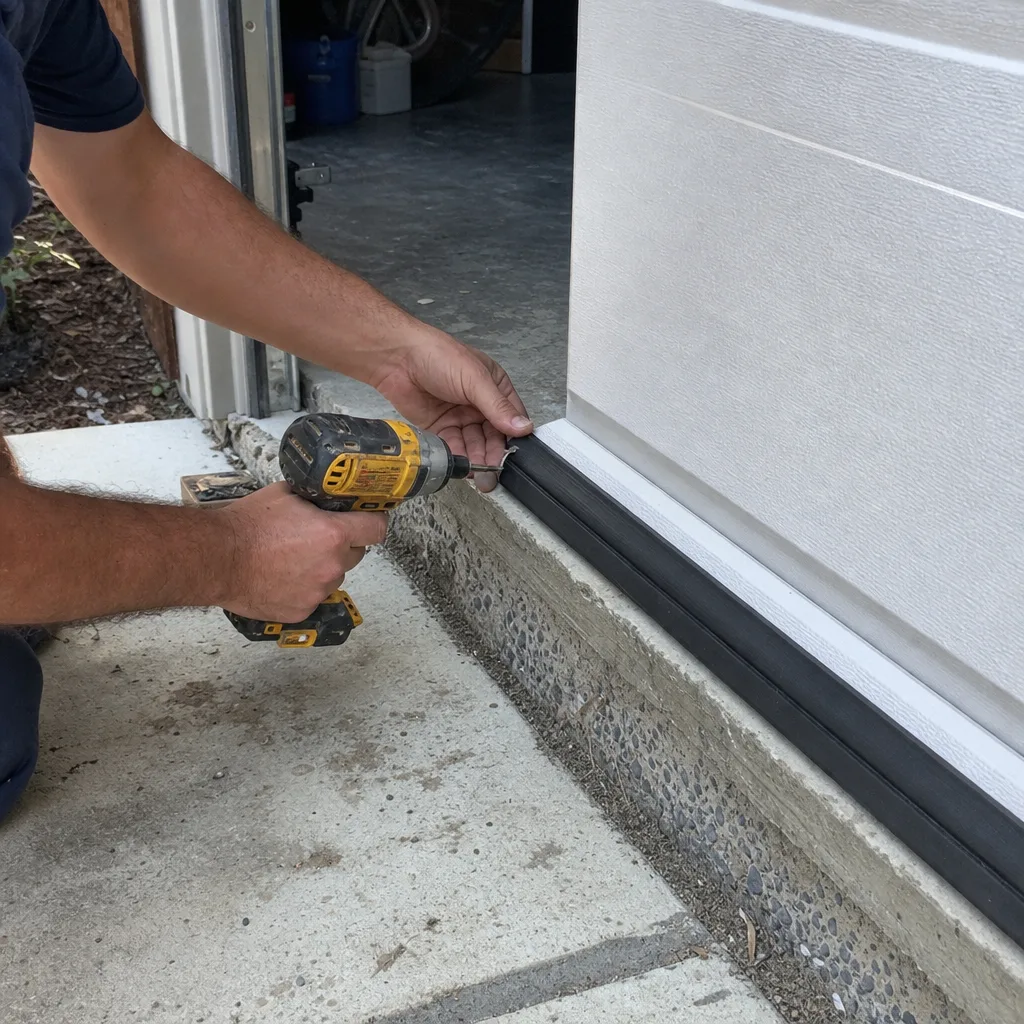
Replacing a bottom seal is the highest-value DIY task on any garage door. The seal is a rubber or vinyl strip that slides into a retainer channel on the bottom of the door. Over two to four years in Alpharetta’s humidity, that rubber hardens, cracks, or tears, and suddenly you have water intrusion, pests, and a higher energy bill. The fix costs about $18 to $35 in materials from any hardware store, takes 45 minutes, and requires a utility knife, a flathead screwdriver, and a pair of pliers.
The why-it-matters-in-Alpharetta detail: Our summers push moisture against garage floors from June through September. Georgia red clay soil holds water, and that water wicks under a door with a failed seal. We’ve seen home gyms, stored holiday decorations, and even home offices in garages damaged because a $20 seal went unfixed for two seasons.
- Measure the width of your door and buy a seal that matches your retainer type. Two common retainers exist: a T-style channel and a round bead channel. Take a one-inch slice of the old seal to the store to match it.
- Wear gloves. The old seal may have sharp edges from years of contact with the driveway.
- Slide the old seal out from one end. If it’s brittle, pull in sections rather than one continuous tug, which can tear the seal and leave pieces stuck in the channel.
- Clean the channel with a damp cloth and let it dry. Alpharetta’s humidity means you may find mildew inside. Wipe it out thoroughly.
- Slide the new seal in from one end. A small amount of dish soap on the seal’s edge helps it slide. Work it across the door width in slow, even pulls.
- Trim any excess with a utility knife. Leave no more than a quarter inch overhang on each end.
2. Photo Eye Sensor Realignment
If your door starts closing and then reverses immediately, the photo eye sensors on either side of the door near the floor are the first thing to check. These sensors shoot an invisible beam across the door opening. If the beam is blocked, misaligned, or dirty, the door won’t close. This is a green-light DIY fix that takes 10 minutes and costs nothing.
What you’re looking for: Each sensor has a small indicator light. On LiftMaster and Chamberlain openers, a solid green light means the sensor is powered and aligned. A blinking or amber light means misalignment or obstruction. The fix is usually loosening the wing nut on the sensor bracket, adjusting the angle until the light goes solid, and tightening the nut back down.
Alpharetta-specific: We see this most often in spring, when pollen season coats the sensor lenses in a yellow film. A quick wipe with a dry cloth fixes most cases. We also see it after wind storms that shift the door track slightly, which throws off sensor alignment even though the door itself still works.
3. Remote and Keypad Reprogramming
Reprogramming a garage door remote or wireless keypad is a 15-minute job that requires no tools beyond a step stool. Every major brand, including Genie, LiftMaster, and Chamberlain, uses a similar process: locate the learn button on the opener motor housing, press it, then press the button on the remote within 30 seconds.
The one thing to know: some newer LiftMaster openers with Security+ 2.0 require a slightly different programming sequence and may need the remote to be within specific range during programming. The instruction manual has your opener model number on it. So does the label on the side of the motor housing.
When to replace instead of reprogram: If the remote works only from directly under the opener or within a few feet, the remote’s battery may be fading or the remote itself is failing. A replacement universal remote costs $25 to $40 and takes the same 15 minutes to program. We’ve had Alpharetta customers bring us remotes that were 15 years old, wondering why the range shrank to nothing. The answer is component fatigue, not programming.
4. Panel Painting
Painting a garage door panel is cosmetic, low-risk, and genuinely doable on a weekend. The material cost is $80 to $150 depending on paint quality, and the result can add real curb appeal. Alpharetta homeowners with HOA color requirements should check those first, but the process itself is straightforward: clean the panel, lightly sand any rust spots, prime, and paint with an exterior-grade paint suited to your door material.
The caution here is about prep, not technique. A garage door that was installed with a factory finish under warranty should not be painted. More on that in the warranty section below.
Professional-Only: Four Tasks That Require a Technician
These four tasks are red-light professional work. Each one involves stored energy, a high-consequence failure mode, or specialized tools that most homeowners don’t own and shouldn’t buy for a single job. In Alpharetta, the decision to call a professional for these tasks is not a concession. It’s the correct risk calculation. Before you start any project, check Garage Door Permits, Codes & Inspections in GA: What You Need to Know to stay compliant.
1. Torsion Spring Replacement
Torsion springs are mounted on a metal shaft above the door opening. They twist under tension to store the energy that lifts the door. When one breaks, the door becomes a dead weight. The spring itself, if it snaps while under tension, releases that force explosively. Torsion spring replacement is the single most dangerous task in residential home maintenance, and it’s a professional-only job, no exceptions that we would ever endorse.
In the 15 years we’ve been doing garage door repair in Alpharetta, we’ve replaced thousands of springs. The work requires winding bars, which are solid steel rods that fit precisely into the spring cone. A screwdriver or any improvised substitute will slip under torque. When a cone set slips under load, the bar moves at whatever speed the spring releases, and hands and faces are exactly where homeowners instinctively put them.
2. Cable Replacement
The lift cables run along both sides of the door, attached to the bottom brackets and wrapping around drums at the top. They work with the springs to distribute the door’s weight evenly as it opens and closes. When a cable frays or snaps, the door can come down unevenly or suddenly. Replacing a cable requires releasing tension from the spring system first, which means you’re back to the torsion spring problem. Professional-only, and for the same reasons.
3. Track Realignment
A garage door track that’s been knocked out of alignment, whether by a car bumper in the driveway or the settling that happens in Alpharetta’s clay soil, causes the door to bind, grind, or refuse to close. Realigning track requires loosening the mounting brackets, repositioning the track with the door in a partially raised position, and re-tightening with the door under tension. The door itself weighs hundreds of pounds. If the track lets go while you’re working, that weight follows gravity.
4. Motor and Logic Board Repair
Inside every garage door opener is a circuit board, called the logic board, that interprets signals from your remote, the wall button, and the safety sensors. When that board fails, the symptoms look like everything else: the door won’t open, or opens randomly, or the lights flicker. Diagnosing a logic board failure requires testing voltage at specific terminals with a multimeter and understanding which components on the board are serviceable versus which require board replacement. This is 120-volt electrical work combined with precision electronics. It’s professional work, and it’s where calling someone who does garage door opener repair in Alpharetta pays for itself, because a misdiagnosis here costs you a $200 board that wasn’t the problem.
The Physics of Torsion Springs: Why YouTube Isn’t Enough
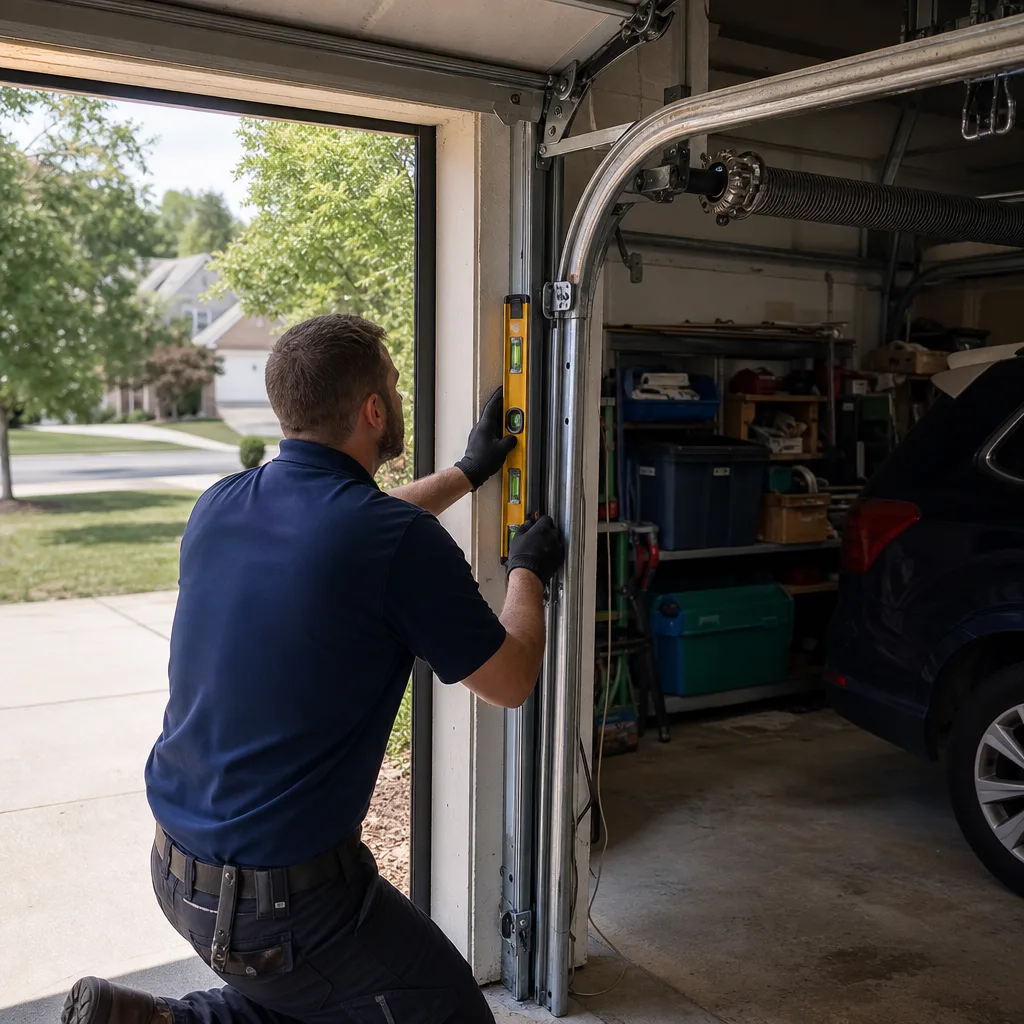
A torsion spring on a typical Alpharetta two-car garage door holds between 80 and 120 foot-pounds of torque when fully wound. That means each spring stores enough rotational force to lift a 200-pound door through its full travel arc, and that force is released in milliseconds when the spring unwinds. The spring is wound using two winding bars, each about 18 inches long, inserted into the cone at the end of the spring. The technician turns the cone in quarter-turn increments, alternating between the two bars, until the spring is wound to the correct number of turns for the door’s weight.
The dangerous moment is not when the spring breaks. It’s when the winding bar slips out of the cone under load. That bar becomes a projectile moving at the speed of the released spring, and the technician’s hand is usually wrapped around it. The standard injury, which we will not describe in detail here, is severe enough that emergency room physicians in metro Atlanta see it as a recognizable pattern.
Watching a video teaches you the sequence of steps. It cannot teach you the tactile feel of a winding bar seating correctly in a cone, or the sound a spring makes when it’s nearing the correct tension, or the instinct to stand outside the bar’s arc of travel. Those are learned only through repetition under supervision. Marcus Deller, our owner, trained on hundreds of spring jobs before ever doing one alone, as do all of our technicians. The decision to do this job yourself is not brave. It’s a failure to calculate the consequence column accurately.
If your door has a broken spring, the responsible DIY action is to stop using the door and disconnect the opener. A door with one broken spring is unbalanced, and repeated use strains the remaining spring, the cables, and the opener motor. Then call someone. A replacement spring costs $280 to $420 installed in Alpharetta, and that price includes the technician’s knowledge of how many turns your specific door weight requires, which is not a guess and not in the YouTube video.
Warranty Realities: What DIY Work Can Void
Here’s the part most DIY guides skip: what your manufacturer warranty actually says about who performs the work. The language matters, especially in Alpharetta, where a high percentage of homes have doors installed within the last decade and may still be under warranty.
Most major brands, including Clopay, Amarr, Raynor, and Wayne Dalton, state in their warranty documents that the warranty covers defects in materials and workmanship for a specified period, typically 3 to 10 years on panels and 1 to 5 years on springs and hardware. That coverage applies to the original homeowner and is transferable in some cases. The critical clause in nearly every manufacturer warranty is an exclusion for damage caused by “improper installation, improper maintenance, or unauthorized modification.”
What does that mean in practice? Three things:
- Painting a panel may void the panel warranty. Several manufacturers explicitly exclude coverage for panels that have been repainted, because paint changes the thermal expansion characteristics of the panel and can cause delamination. Before you paint, read your warranty. If the panel is under warranty and has a finish issue, file a claim before you touch it with a brush.
- Improper spring replacement can void the entire door warranty. If you attempt a spring replacement and the door later falls or a panel cracks because of imbalance, the manufacturer will not cover the resulting damage. The exclusion is explicit.
- Using non-matching parts can void adjacent component coverage. Installing springs from a different manufacturer or a different cycle rating than the door was designed for can void coverage on the door itself, because the mismatch creates uneven wear.
Specific brands have specific language. Raynor’s warranty excludes damage from “alteration, misuse, abuse, or improper installation.” Clopay’s excludes “failure to provide reasonable and necessary maintenance.” Chamberlain and LiftMaster exclude “damage caused by installation of non-Chamberlain or non-LiftMaster parts.” Genie similarly excludes non-Genie components on opener repair.
The safe path if your door is still under warranty: keep your warranty document, check the exclusions before any DIY work, and for anything that touches the spring system, cables, or motor, use a professional who can document the work. The documentation matters when you file a claim later.
The Real Cost-Benefit Calculation for Alpharetta
Let’s put numbers on both columns for the four safe DIY tasks, because the common assumption that DIY always saves money is not quite right. The labor rate in Alpharetta for garage door work runs $85 to $120 per hour, with most jobs billed as a flat rate rather than hourly. Here’s how the safe DIY tasks compare:
| Task | DIY Materials Cost | DIY Time | Professional Cost (Alpharetta) | DIY Savings |
|---|---|---|---|---|
| Bottom seal replacement | $18-$35 | 45-60 min | $95-$150 | $60-$115 |
| Sensor realignment | $0-$10 | 10-20 min | $85-$125 service call | $85-$125 |
| Remote reprogramming | $0-$40 | 15-30 min | $50-$90 (often waived with other work) | $50-$90 |
| Panel painting | $80-$150 | 4-6 hours including prep | $300-$500 (professional paint job) | $150-$350 |
Here’s the counterintuitive part. On the small jobs, the savings from DIY are more modest than most homeowners expect. A sensor realignment that takes a professional 10 minutes might cost $85 as a standalone service call, but when bundled with any other work, it’s often included at no additional charge. The real savings from learning these small tasks is not financial. It’s time. You’re not saving $120 on a seal replacement. You’re avoiding the scheduling call, the four-hour service window, and the disruption of having someone in your garage for 45 minutes.
For the professional-only tasks, the calculation flips. A torsion spring replacement done wrong costs the spring, possibly the door, possibly a hospital visit. A cable that lets go mid-repair drops a 300-pound door. The professional cost of $280 to $420 for a spring replacement in Alpharetta is not a labor charge you’re trying to avoid. It’s the price of the expertise and the liability.
Our position at Servo is consistent with our brand: we publish the price before the work begins. Written price, written scope, Clause 1 of The Haven Standard. On the safe DIY tasks, we’d rather tell you how to do them than charge you $85 to stand in your driveway for 10 minutes. On the red-light tasks, we’d rather have the conversation about what we found and show you the photo of the failed part before we quote the replacement.
Documenting DIY Work: The Paper Trail That Protects You
This section addresses something almost no DIY guide covers: how to document the work you do yourself so it doesn’t create a problem later. For a complete framework of what to track, download our Garage Door Repair Maintenance Checklist for Alpharetta Homeowners. The problem shows up in two places. First, when you sell the house and the buyer’s inspector asks about the garage door service history. Second, when a professional needs to work on an adjacent component and can’t tell what you did, when you did it, or whether it was done correctly.
Here’s a simple documentation system that takes five minutes per DIY job:
- Take before and after photos. Before you start, photograph the component from two angles. After you finish, photograph the same two angles. Your phone’s timestamp metadata is your evidence of when the work happened.
- Save the receipts. The receipt for a bottom seal, a can of paint, or a replacement remote proves you used the correct part. If a warranty claim ever arises, the receipt is the difference between a covered repair and a denied claim.
- Write a two-sentence note in a designated file. “Replaced bottom seal on 16-foot Clopay door, March 2025. Used Frost King T-style seal from Home Depot.” That’s the whole note. It takes 90 seconds. Do it in a Notes app or a dedicated folder in your email.
- When you hire a professional for adjacent work, mention what you did. If you replaced a seal and later need spring work, tell the technician. Clause 4 of our standard means the technician documents what they find anyway, but your context shortens the diagnosis.
This documentation habit matters more in Alpharetta than it might elsewhere because of resale volume. Homes turn over frequently here, and garage door condition is a standard inspection item. A buyer’s inspector who finds a door with no service history and visible DIY work will flag it. A seller who can produce a simple spreadsheet of what was done, when it was done, and with what parts removes that flag.
At Servo, we mirror this approach on every visit we make. Every job ends with a documented photo record of what was found and what was done. It’s the same principle, applied professionally. When you sell the home, your garage door file and our photo records together tell the inspector what they need to know.
Common Mistakes to Avoid
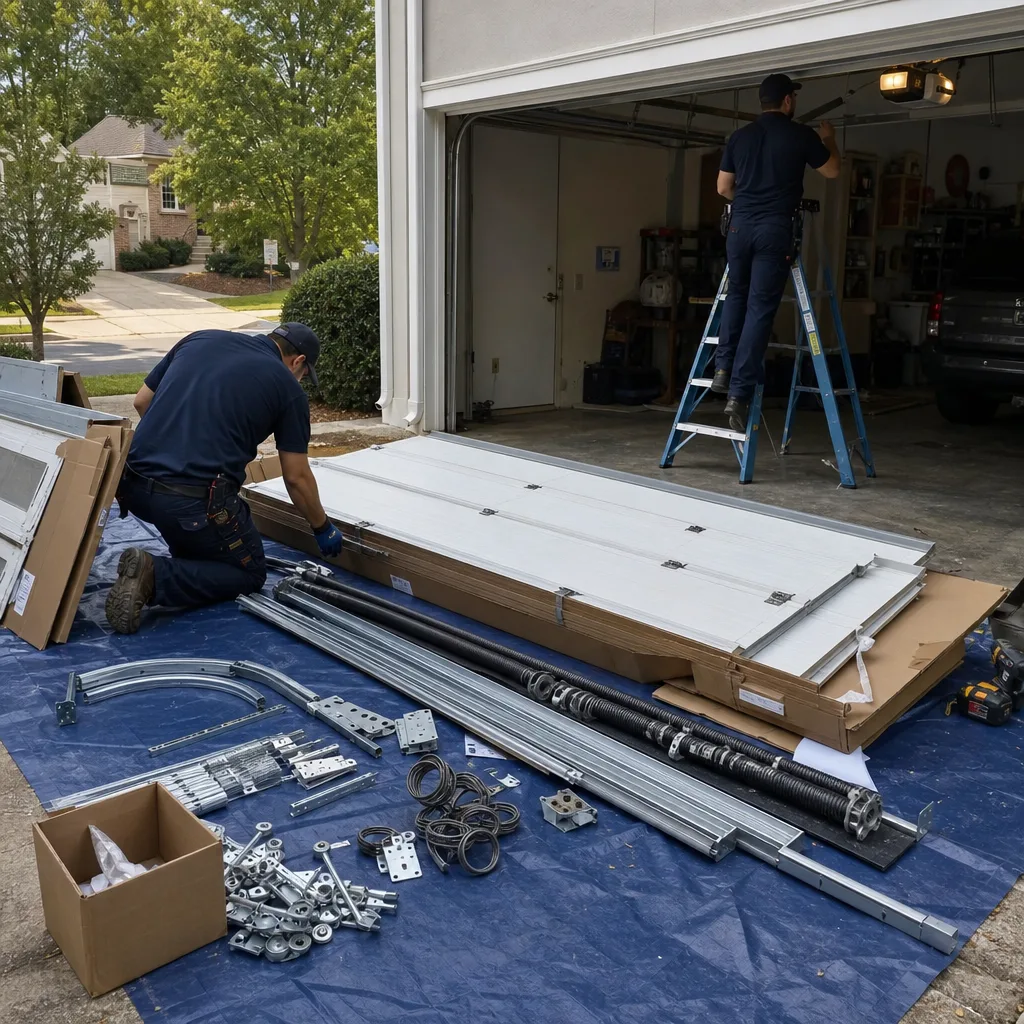
- Using a screwdriver as a winding bar. This is the most common and most dangerous DIY error we hear about. A screwdriver does not seat fully in a spring cone set, and it will slip. The resulting projectile can reach velocities that cause catastrophic hand injuries. If you take nothing else from this guide: never improvise winding tools.
- Replacing one spring instead of both. Springs are rated for a specific number of cycles, usually 10,000. When one breaks, the other is at the same count. Replacing only the broken spring means the old one fails soon after, and you pay for two service calls instead of one. Professional spring replacement in Alpharetta is priced for both springs, and any technician who offers to replace just one is doing you a disservice.
- Painting a door under warranty without reading the exclusions. We covered this above, but it bears repeating because we’ve watched homeowners void a 10-year panel warranty with a $60 can of paint. Check the document first.
- Disconnecting the safety sensors to force a close. The sensors are there because a closing door can crush anything in its path, and children and pets are exactly the things that dart under closing doors. Bypassing them is a code violation and a genuinely dangerous decision.
- Trying to adjust the track while the door is raised. The door’s full weight is on the cables and springs when it’s up. Loosening track bolts in that state transfers the load to whatever you’re holding. Always do track work with the door in the down position and the opener disconnected.
- Ignoring a grinding sound because the door “still works.” Grinding is metal on metal. It means a roller, hinge, or bearing is failing, and a failed roller can jam the door in its track and snap a cable. The $40 roller replacement is a lot cheaper than the $250 cable repair that follows.
- Assuming the door is balanced because it “looks fine.” An unbalanced door wears out springs, cables, and the opener motor prematurely. The test is simple: disconnect the opener and lift the door halfway. If it stays, it’s balanced. If it drops or rises, it’s not. Do this test twice a year.
When to Call a Professional
Call a professional when the component stores energy, bears weight, or involves electrical wiring. Torsion springs, lift cables, track alignment, and opener electronics are the four red-light categories. If you hear a sound like a gunshot from your garage, that’s a spring snapping. If the door is crooked in the opening or refuses to stay up when you lift it manually, that’s a cable or spring failure. If the opener hums but the door doesn’t move, that’s the motor, the logic board, or a disconnected spring system.
In any of those cases, the responsible move is to disconnect the opener, stop using the door, and call someone who can show up with the right tools and the right documentation. Garage door installation in Alpharetta and repair don’t need to be a leap of faith. Servo Garage Doors Alpharetta offers free estimates in Alpharetta with a written price and written scope before any work begins. Call (678) 679-2096 and a live person answers, 24/7.
Frequently Asked Questions
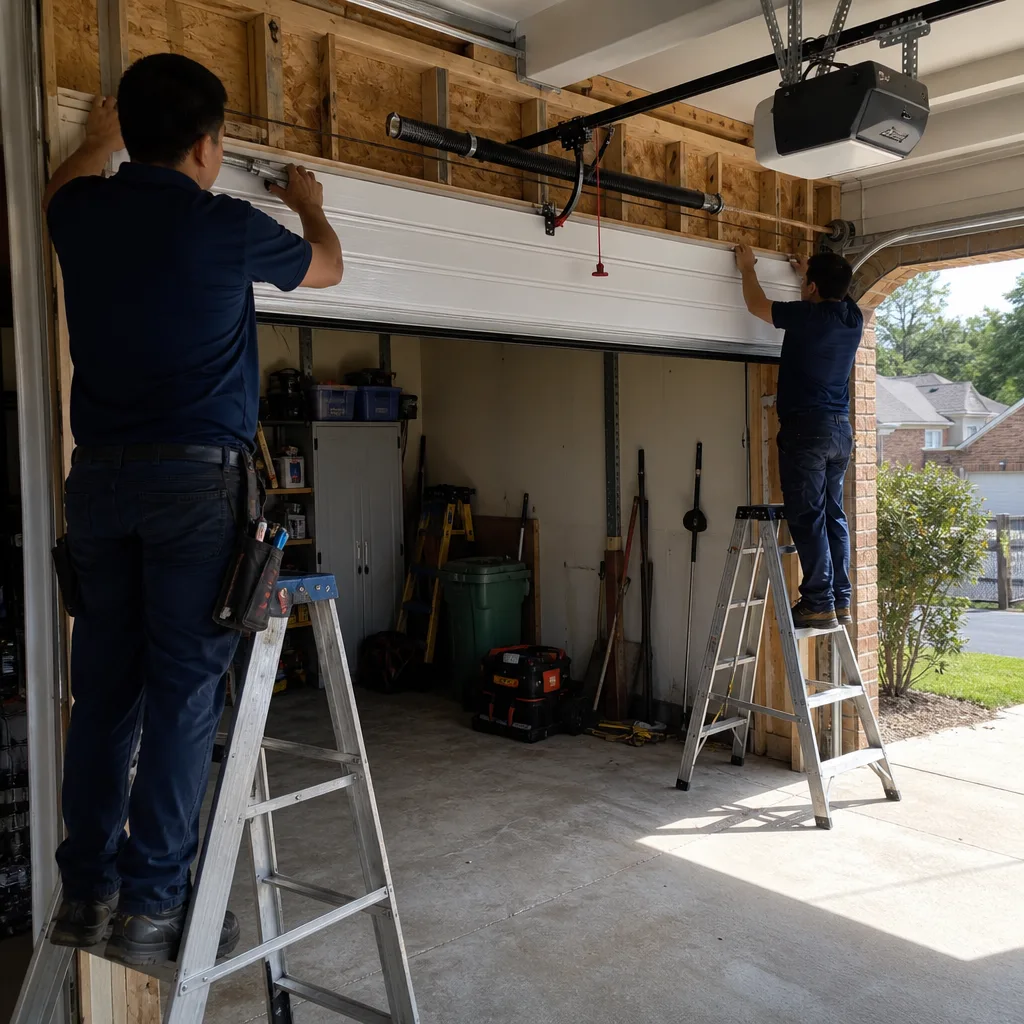
No. Torsion springs store enough energy to cause serious hand or face injury, and the winding bars required for the job are not standard homeowner tools. The task requires tactile experience that videos can’t transfer. The cost of professional spring replacement in Alpharetta is $280 to $420 for both springs, which is the price of the expertise and the liability, not a labor fee you can meaningfully avoid.
Most garage door repairs in Alpharetta fall between $95 and $420 depending on the component involved. Minor fixes like sensor realignment run $85 to $125. Bottom seal replacement runs $95 to $150. Spring replacement runs $280 to $420 for both springs. Cable replacement runs $180 to $300. Every job at Servo Garage Doors Alpharetta gets a written price before any work starts, so the number you’re quoted is the number you pay. Call (678) 679-2096 for specifics on your door.
Not with us. Clause 1 of The Haven Standard means you get a flat, written price and a written scope of work before anything begins. The price you approve is the price you pay. The technician photographs what they find before quoting, so you can see exactly what failed and why the quote is what it is. Bring a competing written estimate and we’ll give you a free second opinion on it.
We service all eight major brands, including LiftMaster, Chamberlain, Genie, Clopay, Amarr, Wayne Dalton, Craftsman, and Raynor. Most parts for these brands are stocked on our trucks, which means most repair calls are completed in a single visit. If a specific part has to be ordered, the timeline is included in the written scope before work begins.
Most springs are rated for 10,000 cycles, which translates to roughly 7 to 10 years for a typical Alpharetta household that opens their garage door two to three times a day. Our humidity accelerates rust, which can shorten that lifespan by a year or two. If your springs are over 7 years old and you hear creaking or see visible rust, they’re nearing the end of their service life. Replacing them before they snap avoids the inconvenience of a door that won’t open and the risk of the spring failing while someone is near it.
For most garage door repair and replacement work, no permit is required in Alpharetta. Full door replacement does not trigger a permit requirement in most cases because the work is classified as repair and maintenance. The exception is if you’re modifying the structural opening itself, which is not part of standard garage door work. If you have any doubt, the technician can advise on your specific situation during the free estimate. We never begin work without confirming the appropriate scope, and the written scope you receive before work starts includes exactly what will be done.
The Bottom Line
The DIY versus professional garage door decision is not a statement about your competence. It’s a math problem with three variables: stored energy, consequence of failure, and your access to the right tools. For bottom seals, sensors, remotes, and paint, the math favors doing it yourself. For springs, cables, tracks, and motors, the math says call someone who does this every day and carries the documentation to prove what they found and what they did. In Alpharetta, where the humidity is hard on components and the doors are bigger than average, that calculation matters more than most places. Keep the documentation. Read the warranty. And when the energy is stored in the part, not your ambition, call (678) 679-2096 for a free estimate with a written price before the work starts.
Written by Marcus Deller, Owner at Servo Garage Doors Alpharetta, serving Alpharetta since 2015.