
Last updated September 20, 2026
Full 25-point door and opener safety check with every visit - springs, cables, rollers, tracks, and your LiftMaster or Chamberlain opener included
You get a price before we start. It does not change when the truck arrives.
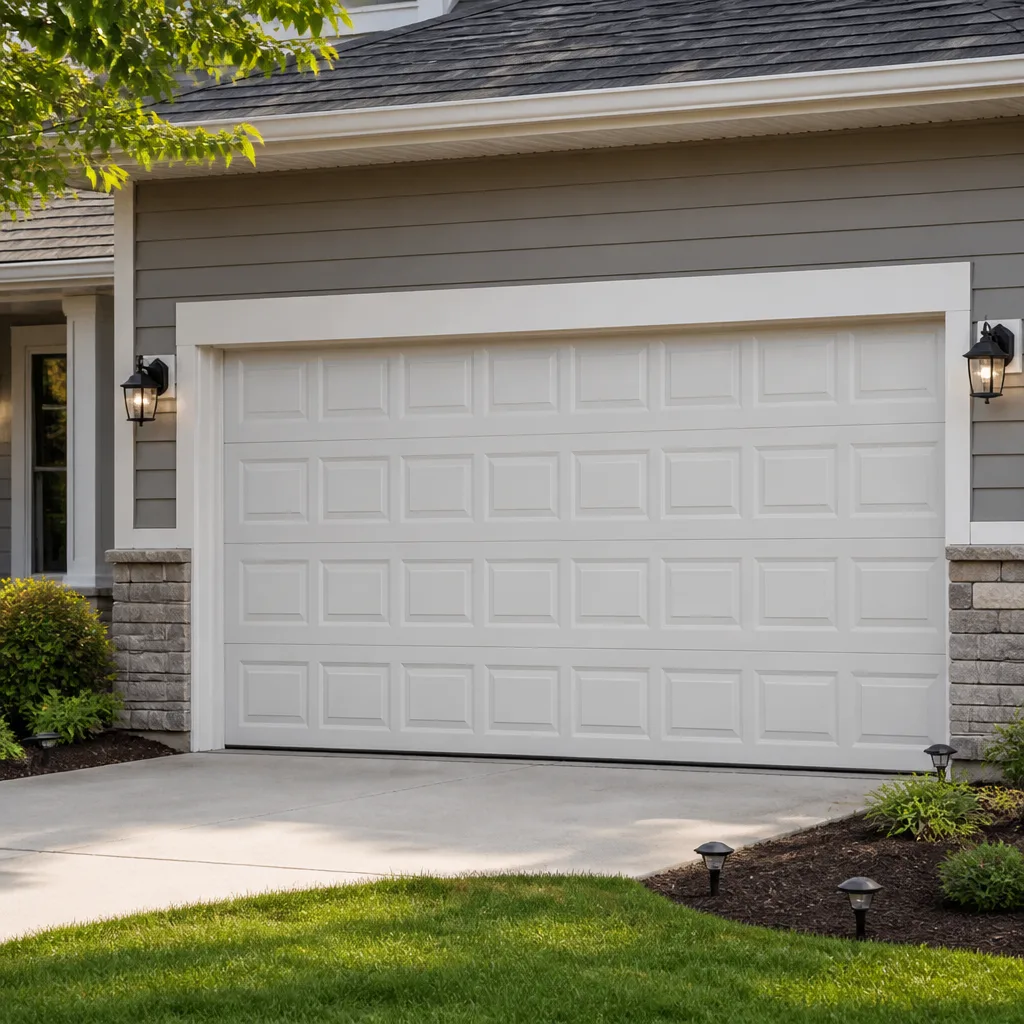
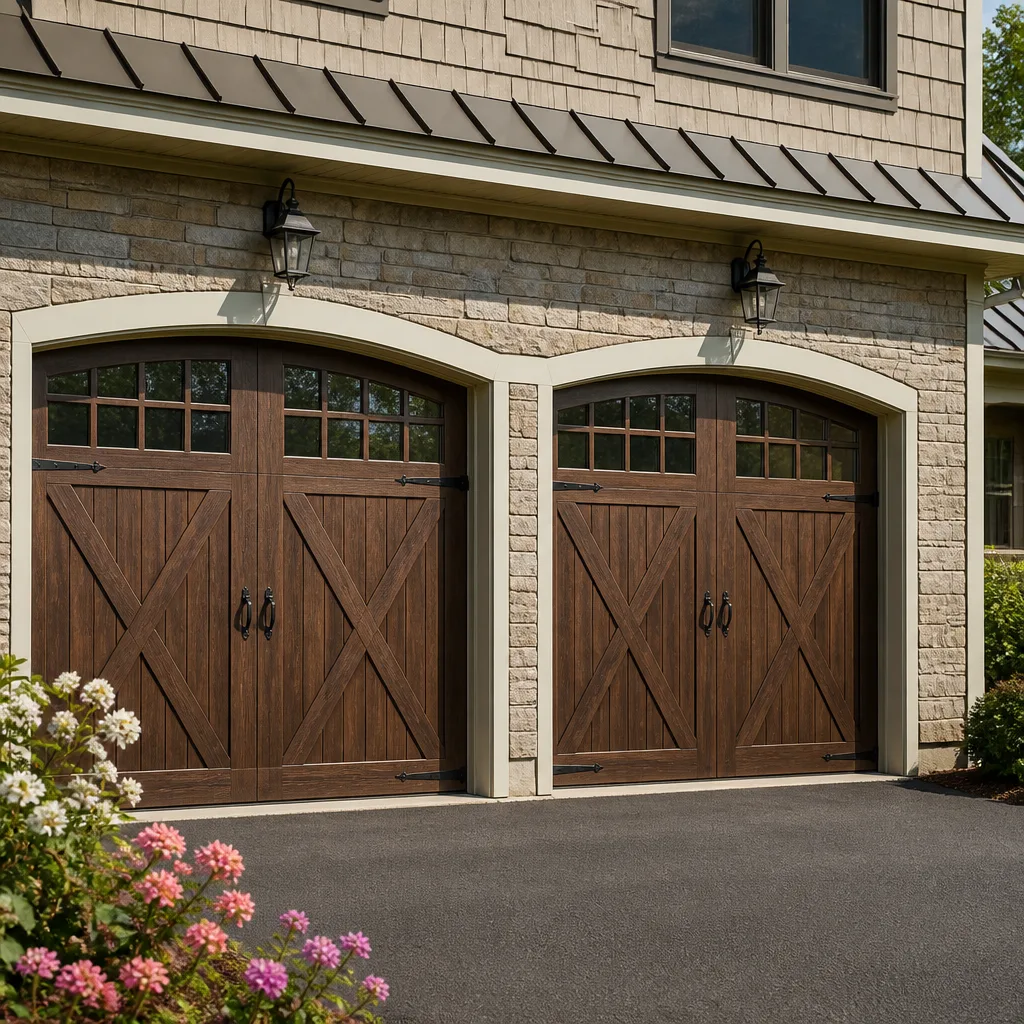
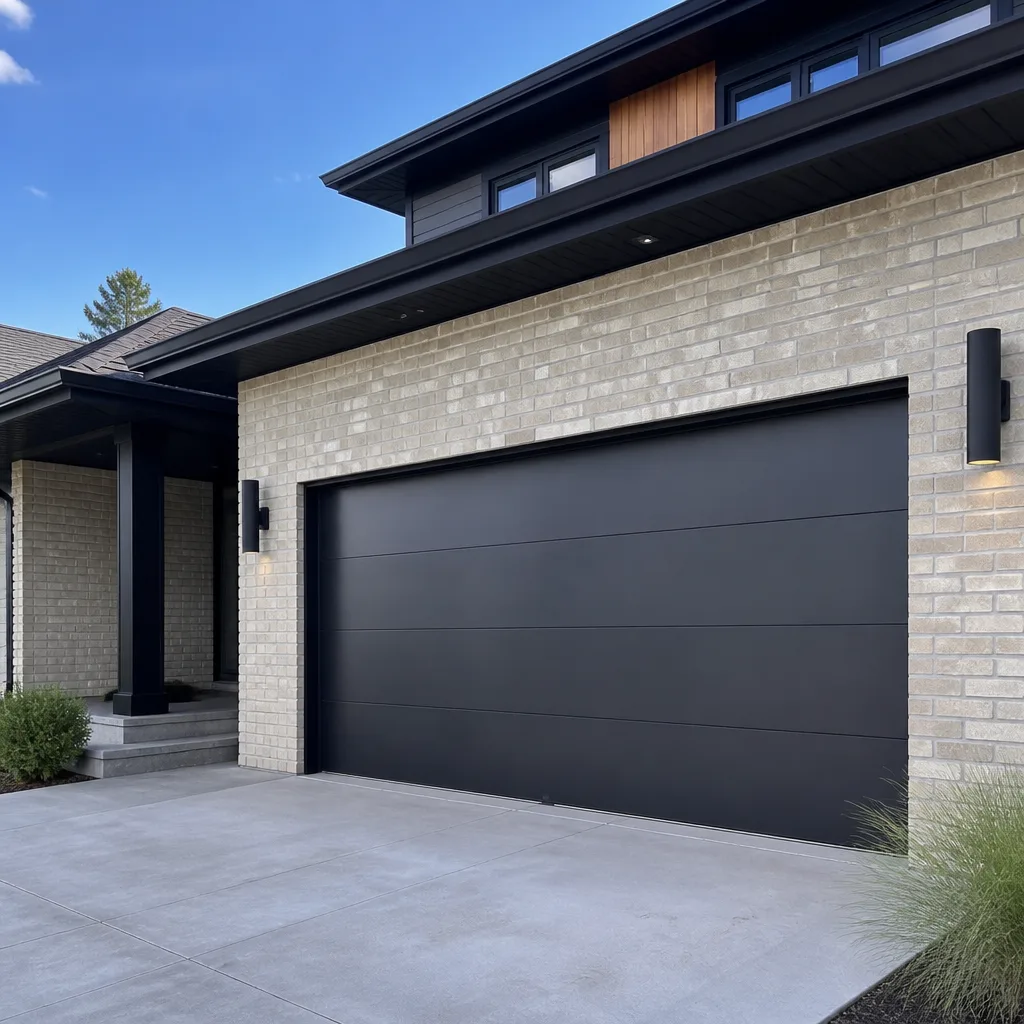
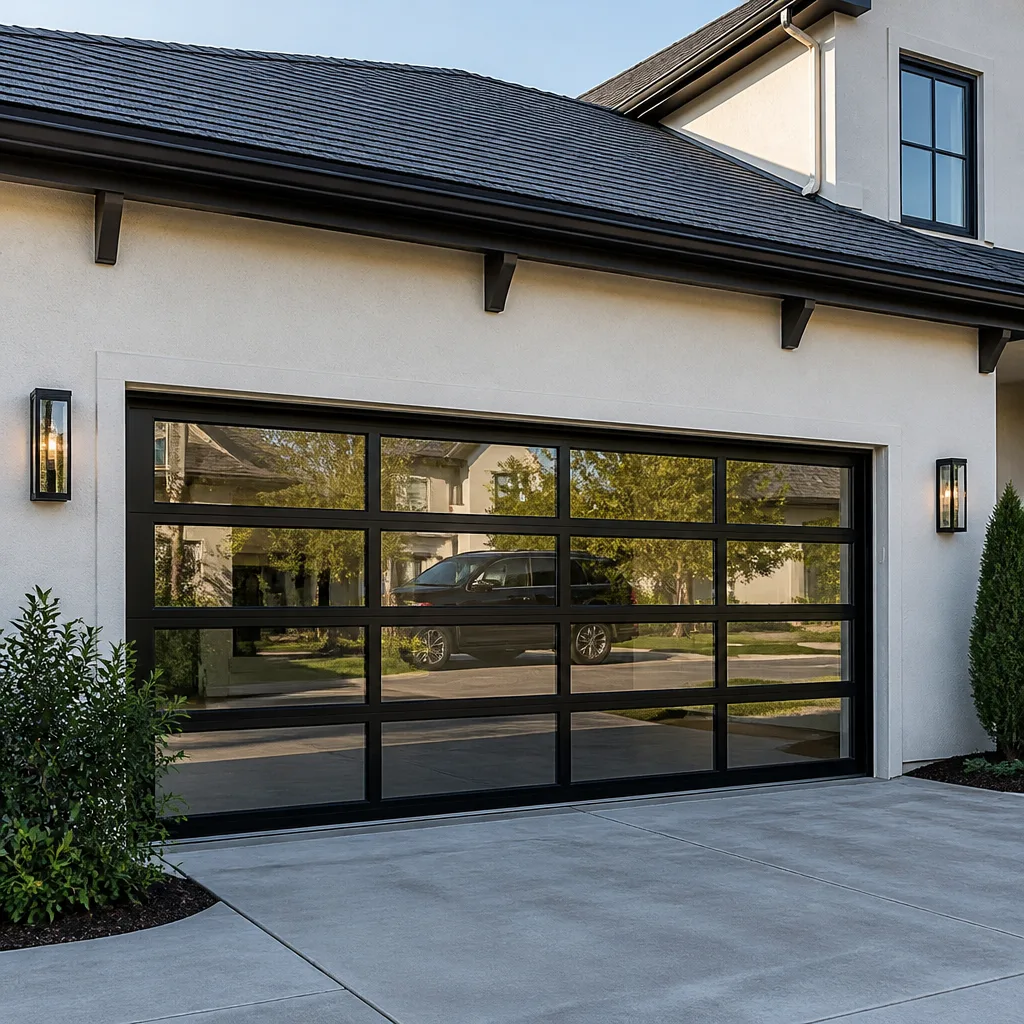
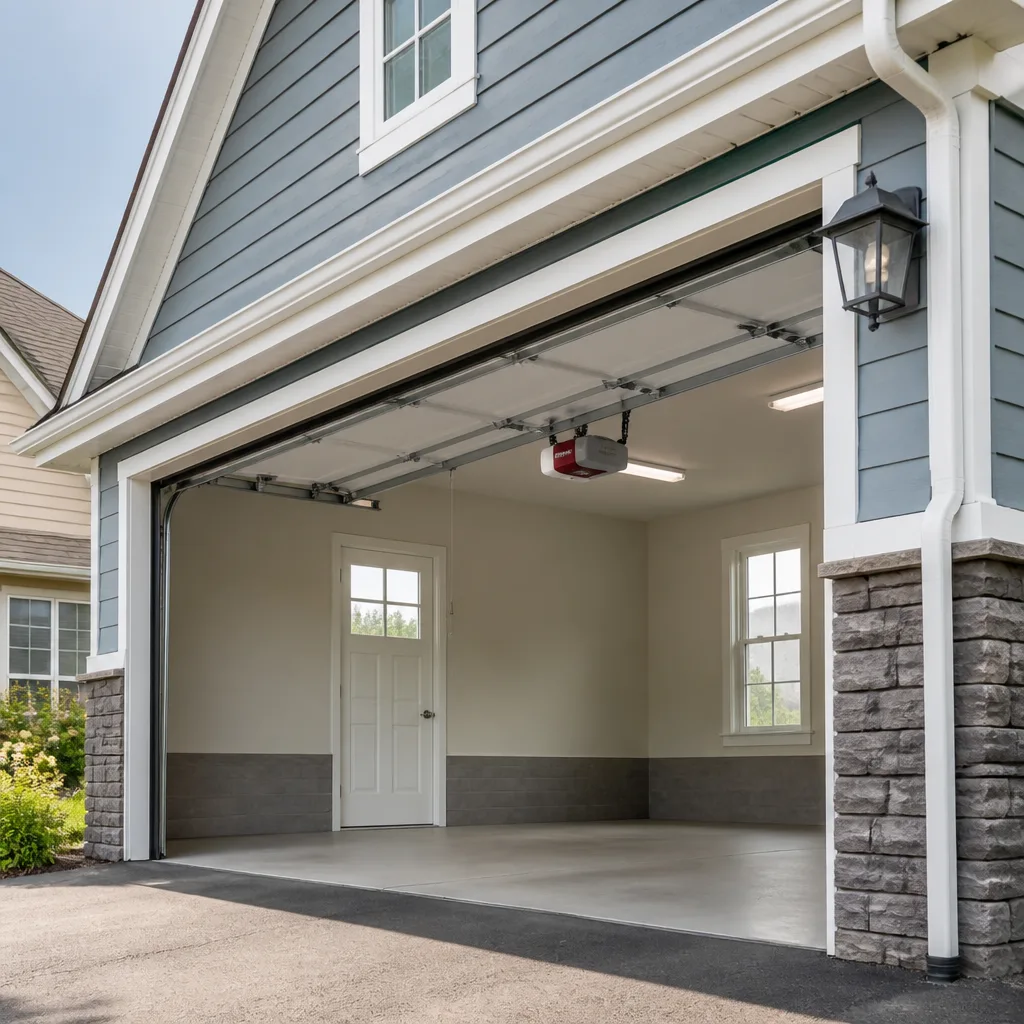
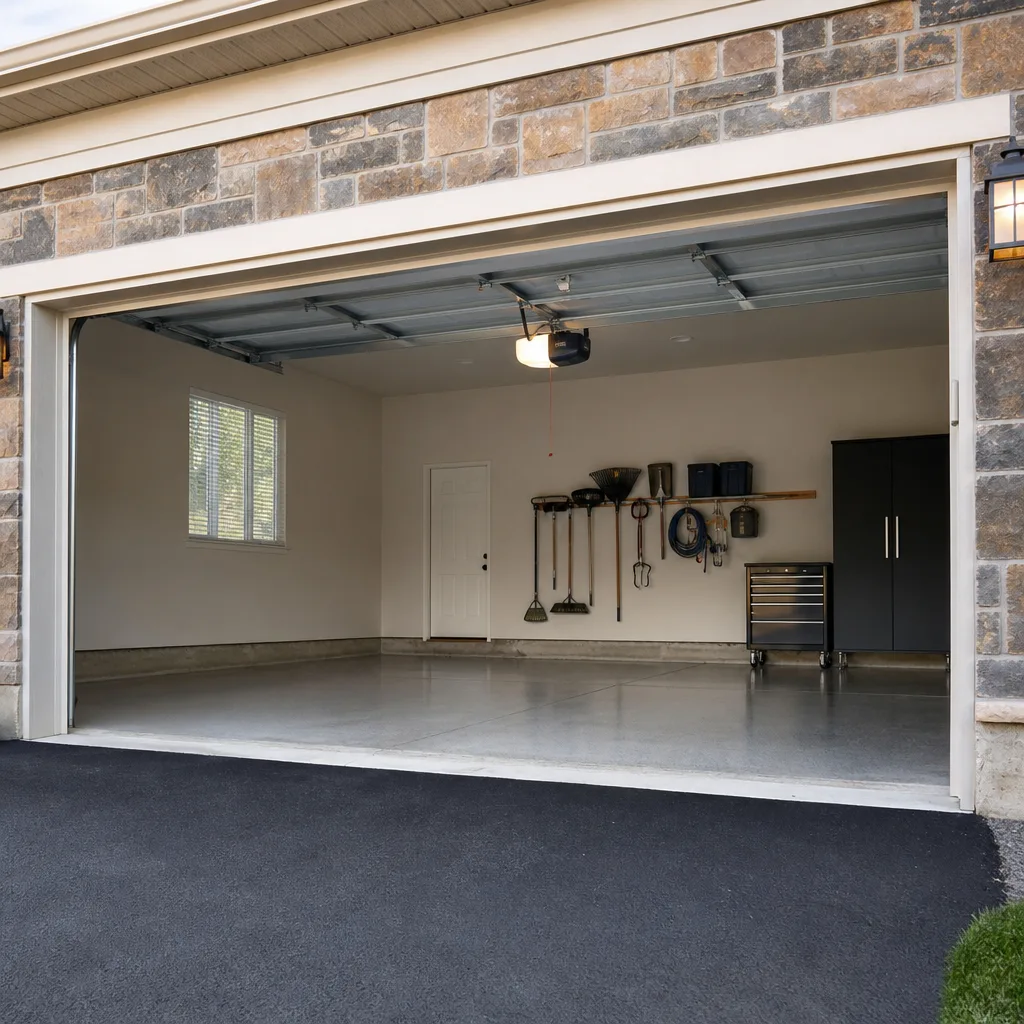
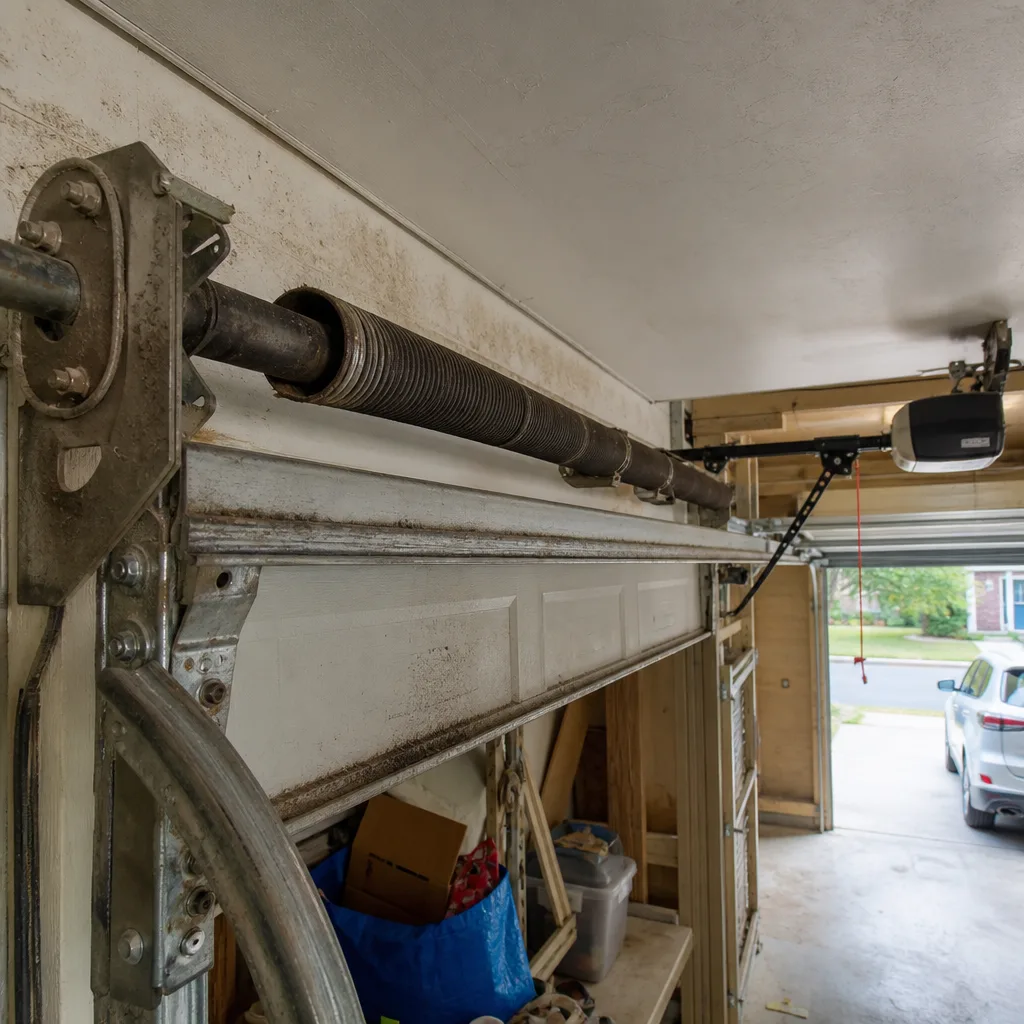 Before
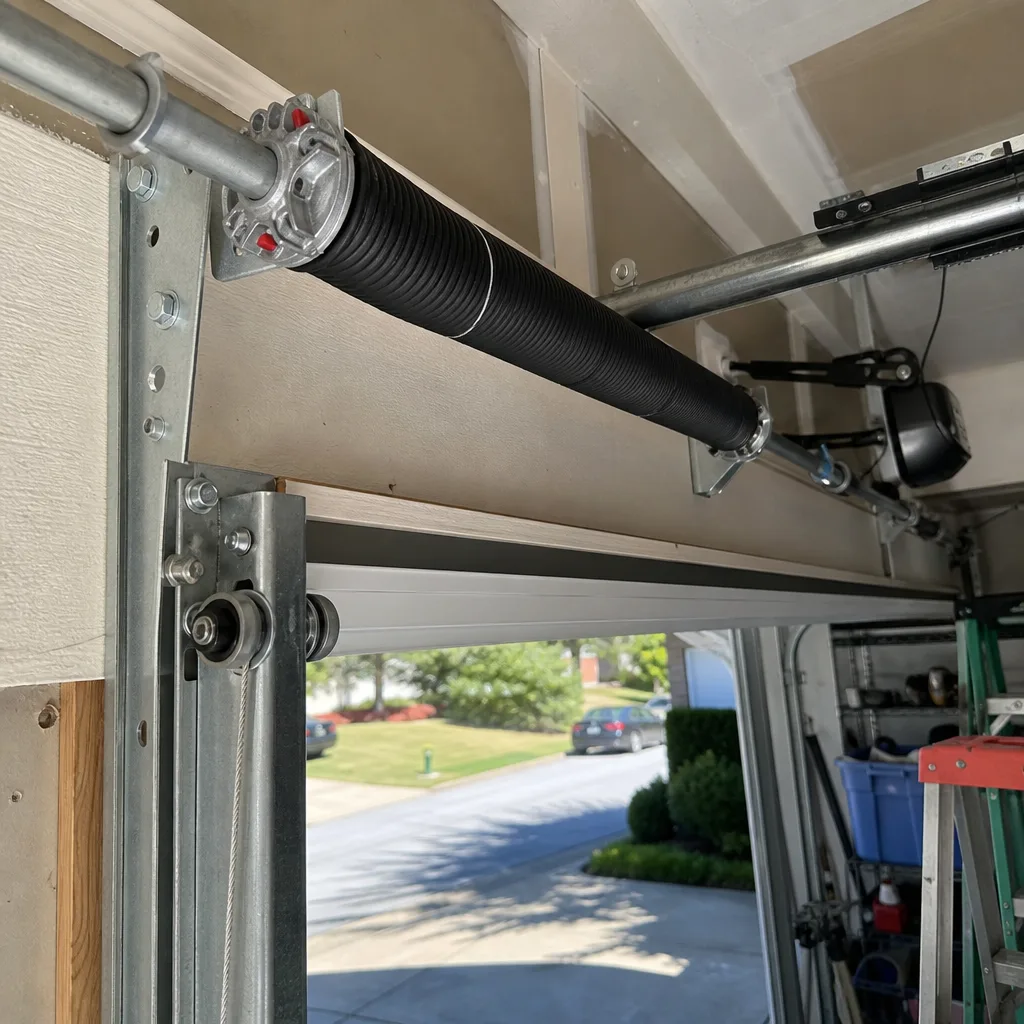 After
After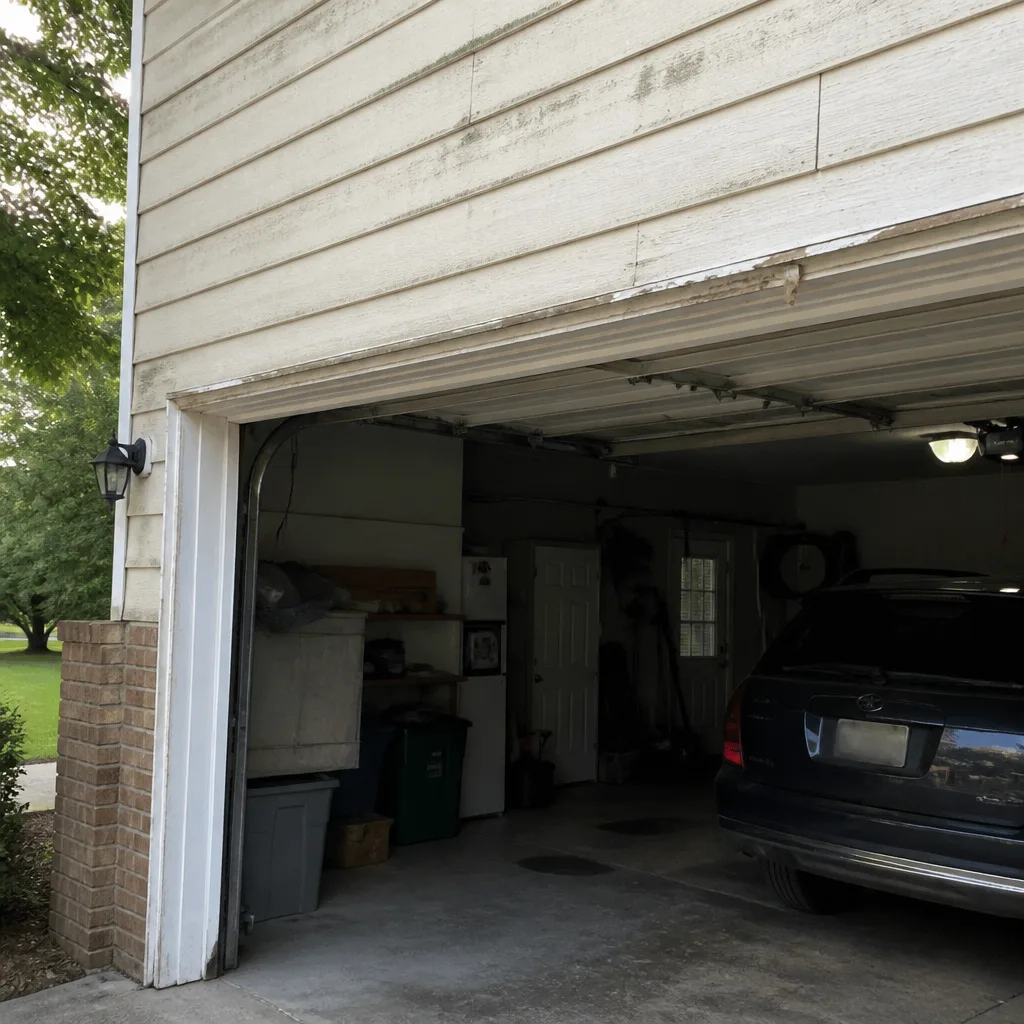 Before
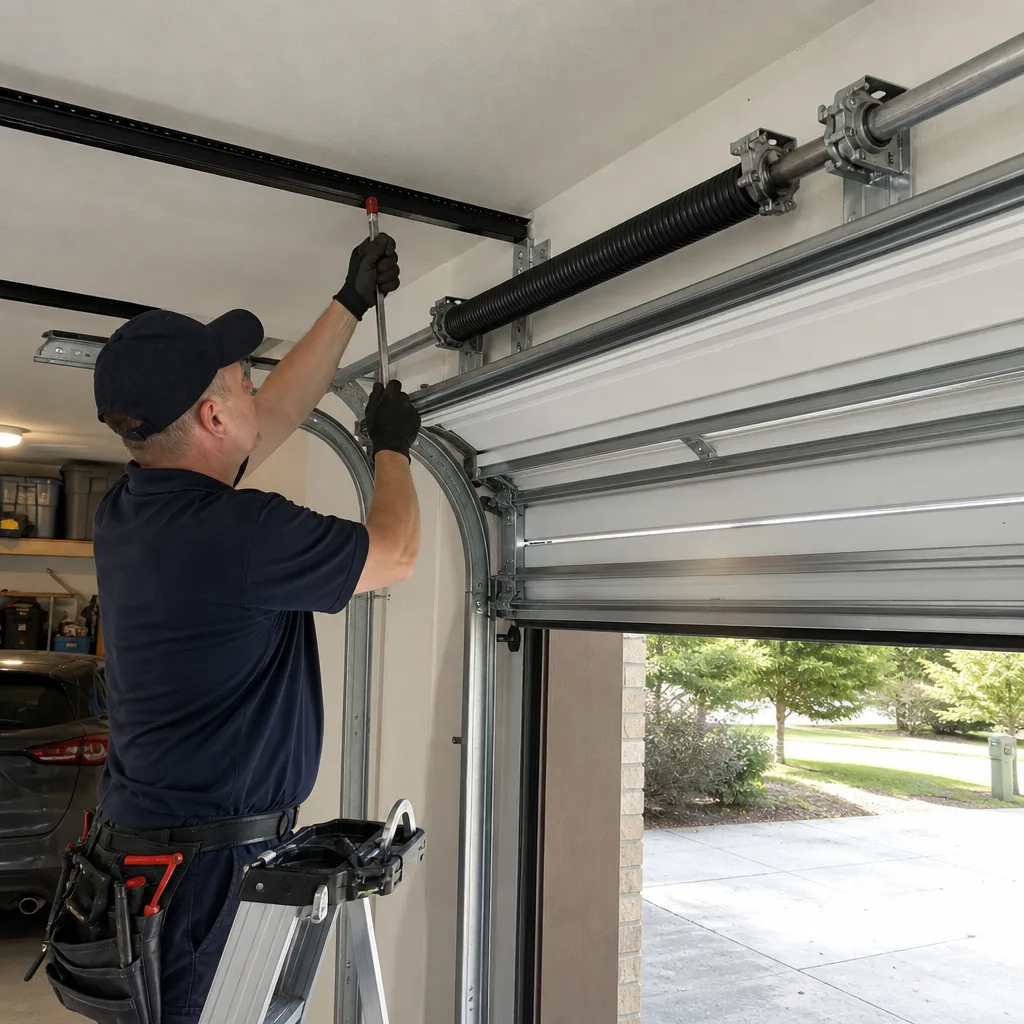 After
After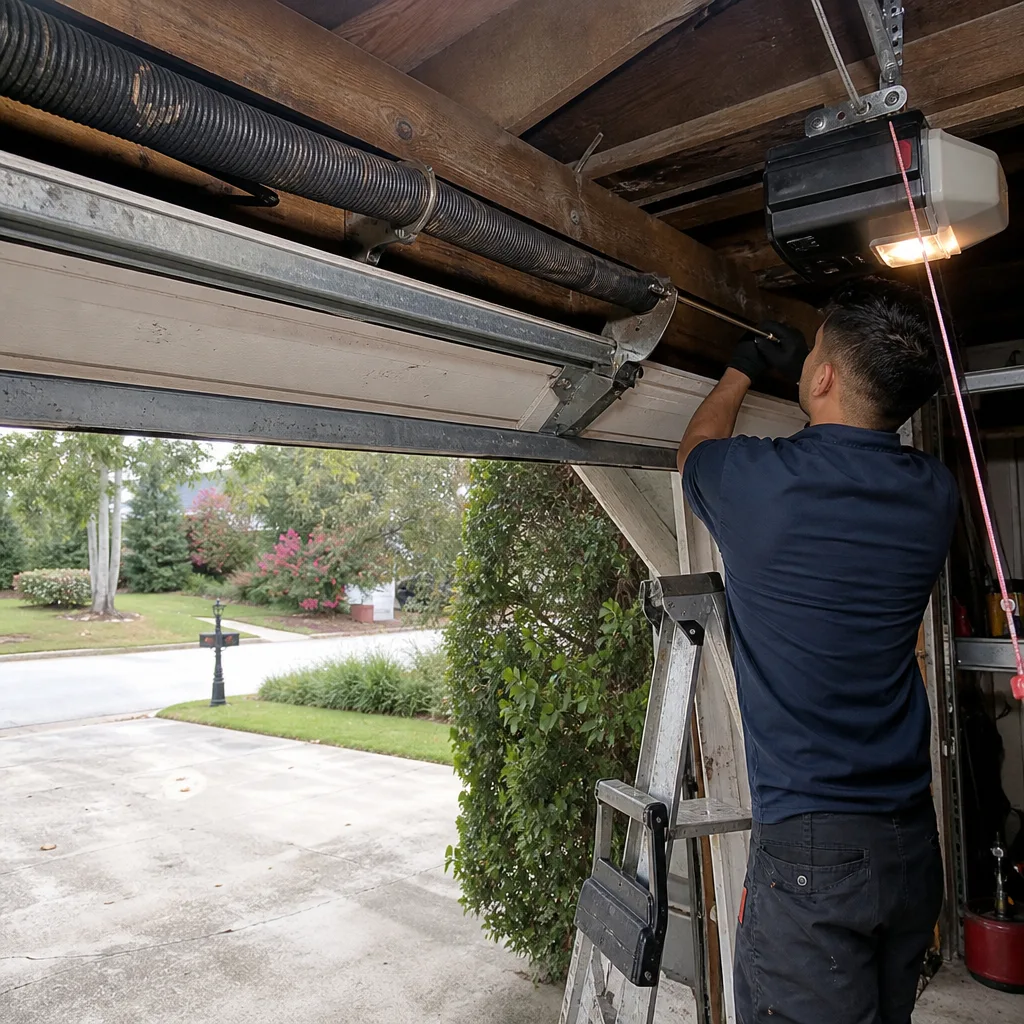 Before
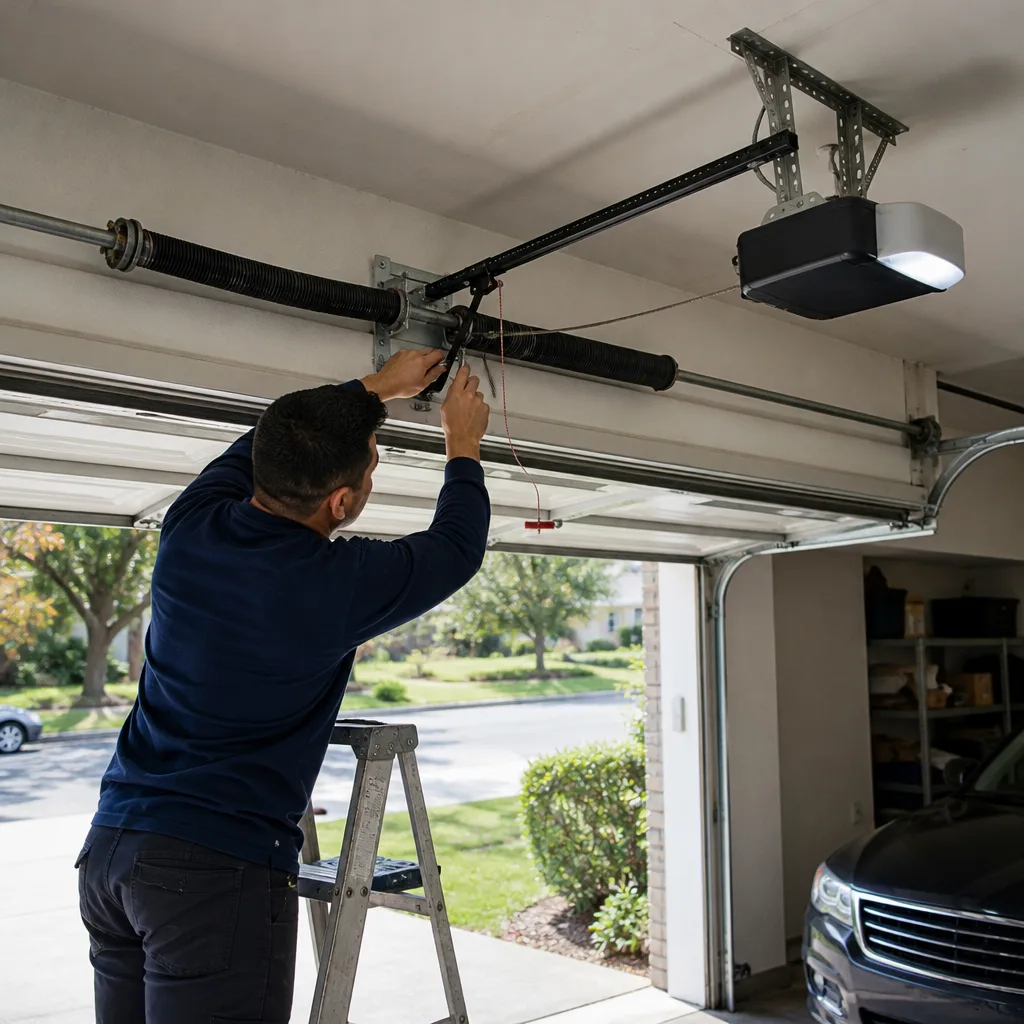 After
AfterGarage Door Permits, Codes & Inspections in GA: What You Need to Know
Most Alpharetta homeowners assume a new garage door means a trip to the permit office. The reality is narrower and more interesting: a like-for-like door swap on an existing opening typically needs no permit at all in Fulton County. But the moment a contractor widens the rough opening, moves a header, or runs a new circuit to a wall-mount opener, the county becomes a required participant whether anyone mentions it or not. This guide draws that line precisely, walks through the fire-rating rules most door companies never discuss, and explains what your own documentation should look like when the county is not in the room. For related reading, see our Garage Door Warning Signs: A Alpharetta Homeowner’s Reference Guide.
Quick Answer
A standard garage door replacement in Alpharetta, Georgia generally does not require a permit when the door is swapped like-for-like on an unmodified opening with existing electrical. A permit and inspection become mandatory if the rough opening is structurally altered, a new circuit is run to the opener, or a fire-rated door between the garage and living space is replaced with a non-rated unit. Homeowners should keep their own paper trail regardless: installation spec sheet, spring wind count, and written opener programming confirmation. See our Garage Door Repair Maintenance Checklist for Alpharetta Homeowners for a complete record-keeping framework.
Table of Contents
- When Does a Garage Door Permit Exist in Fulton County?
- Georgia’s IRC Adoption and the Fire-Rated Door Rule (Section R302)
- What an Inspection Actually Covers (and What It Skips)
- Unpermitted Structural Work at the Point of Home Sale
- Paperwork to Request From Any Contractor, Permit or Not
- How to Verify a Permit on the Fulton County Portal, Step by Step
- Alpharetta-Specific Code Notes and Neighborhood Patterns We See
- Common Mistakes to Avoid
- When to Call a Professional
- Frequently Asked Questions
- The Bottom Line
BeforeAfterWhen Does a Garage Door Permit Exist in Fulton County?
Fulton County enforces the Georgia State Minimum Standard Codes, which include the International Residential Code (IRC) for one- and two-family dwellings. The IRC does not issue a permit requirement for replacing a garage door in an existing, unmodified opening. No permit, no inspection, no county record. The door is treated as a finish component, similar to replacing a window sash or a front entry door.
The threshold shifts when the work touches structure or electrical. Here is the line, drawn precisely as Fulton County’s building officials apply it:
- Like-for-like door replacement: No permit. The opening dimensions, header, jambs, and spring configuration remain unchanged. A new panel door, track set, and torsion spring assembly on the same footprint is a repair or finish replacement, not new construction.
- Rough opening modification: Permit required. Widening the opening, raising the header, reframing jambs, or altering the foundation curb triggers a structural review because the load path above the opening changes. The county wants an engineer’s letter or a prescriptive code path on file before drywall hides the framing.
- New electrical circuit to the opener: Permit required. If the replacement opener needs a new dedicated circuit, a relocated outlet, or a hardwired branch run, that is electrical work under IRC Chapter 39 and Fulton County requires a permit and inspection. Tapping into an existing, tested receptacle does not require one.
- Fire-rated door replacement between garage and living space: Permit required. When the pedestrian door from the garage into the house is replaced and the original was a 20-minute fire-rated assembly, installing a non-rated door violates IRC Section R302.5.1. This door is not a garage door in the overhead panel sense, but it sits inside the garage envelope and is the most common code miss we find in Alpharetta homes built after 1990.
Our technicians in Alpharetta quote the work as two distinct line items when the opening is modified: the door package and the permitted structural work. The permit cost, county fee schedule, and inspection timeline are written into the scope before any work starts. Clause 1 of The Haven Standard requires that written price and written scope to exist before the first tool comes off the truck.
Georgia’s IRC Adoption and the Fire-Rated Door Rule (Section R302)
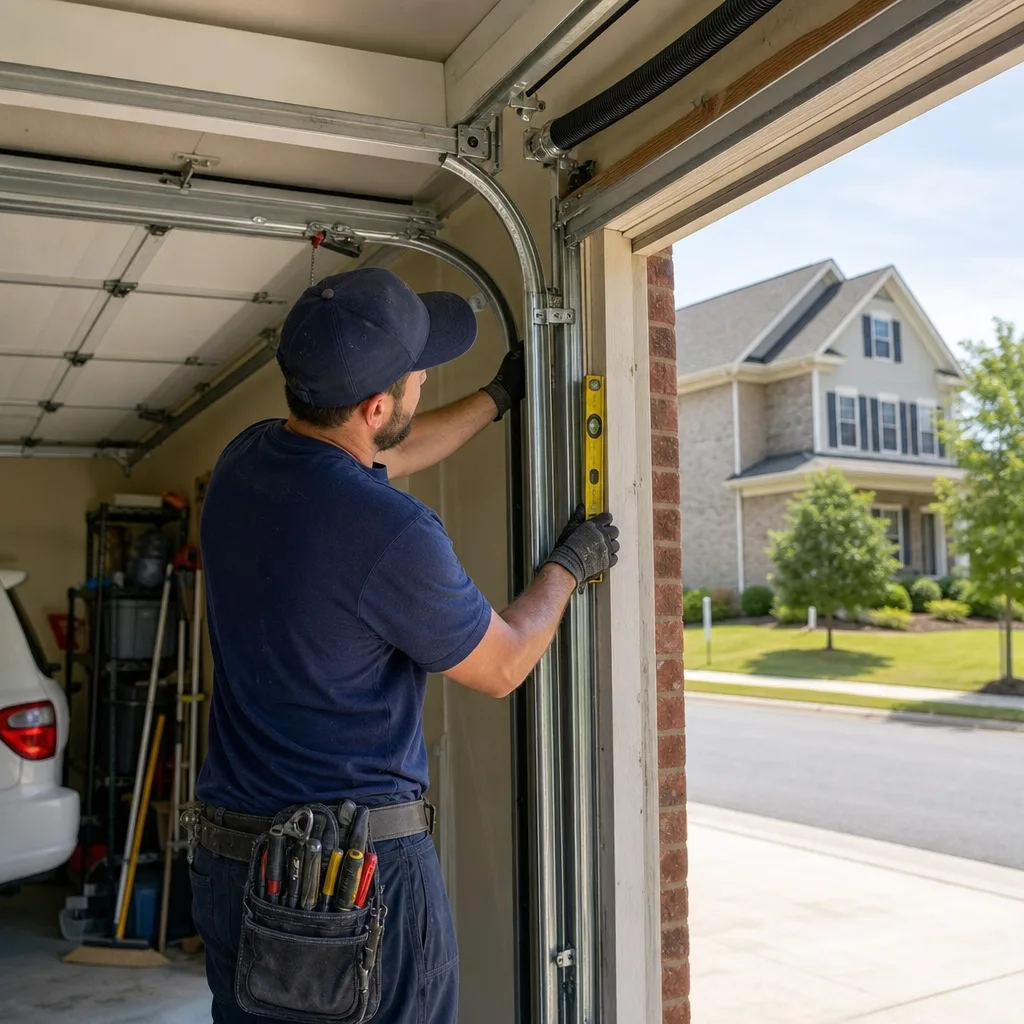
Georgia adopts the IRC with state-specific amendments, and Section R302 governs fire-resistant construction between a garage and the dwelling. The rule exists because a garage holds fuel, paint, and a parked car: fire spreads fast in that space, and the wall and door assembly between the garage and the living area is the primary barrier keeping that fire out of the house.
For the overhead garage door itself, there is no fire-rating requirement in a standard residential setting. The overhead door opens to the outside, not to the living space. The fire-rated door requirement applies to the pedestrian door in the garage wall that leads into the home. If you walk from your kitchen into the garage through a side door, that door needs to be a 20-minute fire-rated assembly with a self-closing hinge and weatherstripping seal. The label is usually on the hinge edge of the door or the frame; it reads “20 Minute Fire Rated” and includes the testing agency mark.
What happens when a permit is not pulled and a non-rated door ends up on that opening? The visual difference is invisible to most homeowners. A solid-core wood door looks similar to a fire-rated door. But the listing is the point: the fire-rated assembly was tested as a system, including the frame, glazing, and hardware. Altering it without a listed replacement breaks the barrier. During a home inspection at sale, a sharp inspector will open the door, look for the label, and flag it if the label is absent. That adds a repair condition to the contract or a concession negotiation that could have been avoided with a $120 rated slab at the time of replacement.
In Alpharetta, homes built across Windward, Crabapple, and the neighborhoods along Rucker Road span multiple code eras. Homes built under the 1990s iteration of the IRC were required to have the fire-rated pedestrian door. Homes built before the 1980s may not have one, and a pre-existing non-rated door can remain as a nonconforming condition under the code. The issue arises at replacement: if you replace a non-rated door with another non-rated door on an older Alpharetta home, no violation is created. If you replace a rated door with a non-rated one on a newer build, that is a code violation whether a permit was pulled or not.
We mention this because the county’s permit threshold and the code requirement are two separate conversations. A permit is the county’s administrative process. The code is the standard the work must meet whether the county is watching or not. Many Alpharetta homeowners learn this distinction only when a buyer’s inspector opens the pedestrian door and asks where the label went.
What an Inspection Actually Covers (and What It Skips)
When a permit is triggered, Fulton County sends a building inspector to verify code compliance at specific stages. For garage door work involving a structural modification or electrical run, the inspection scope is narrow and specific. Understanding what the inspector checks helps you know what your own documentation needs to cover because the county inspection will not cover everything.
- Rough framing inspection (structural modifications only): The inspector verifies the header size and span, jack stud placement, anchor bolt spacing, and load transfer to the foundation. On an opening widened from 9 feet to 16 feet, the header spec changes substantially, and this is the inspection that catches undersized lumber. The inspector does not check the door itself. The door does not exist yet.
- Electrical rough-in (new circuit only): The inspector verifies wire gauge, box fill, GFCI or AFCI requirements, and the separation of the circuit from other loads. A garage opener on a shared 15-amp circuit with two bedrooms is a common find that gets flagged. The opener is not tested at this stage.
- Final electrical inspection (new circuit only): The inspector verifies the receptacle or hardwire connection, confirms the circuit breaker labeling, and confirms the opener is connected to a grounded outlet. The opener’s force settings, travel limits, and safety sensor alignment are not part of the county’s inspection. Those are manufacturer-spec adjustments the installer handles, and the county does not verify them.
- Final building inspection (structural modifications only): The inspector walks the finished opening, confirms the fire separation between the garage and dwelling is intact, and verifies the door assembly is weather-sealed at the perimeter. The door’s spring balance, cable tension, and panel symmetry are not code items and are not inspected.
The gap here is important. The county verifies the structural and electrical minimums. It does not verify whether the torsion spring wind count matches the door weight, whether the opener’s down-force limit is set correctly, or whether the safety sensors reverse the door under 6 inches of resistance. That is why Marus Deller’s technicians at Garage Door Installation in Alpharetta photograph the spring wind count and include it in the job record. The county’s stamp is a floor, not a ceiling, and the documentation you keep should cover what the inspection skipped.
Unpermitted Structural Work at the Point of Home Sale
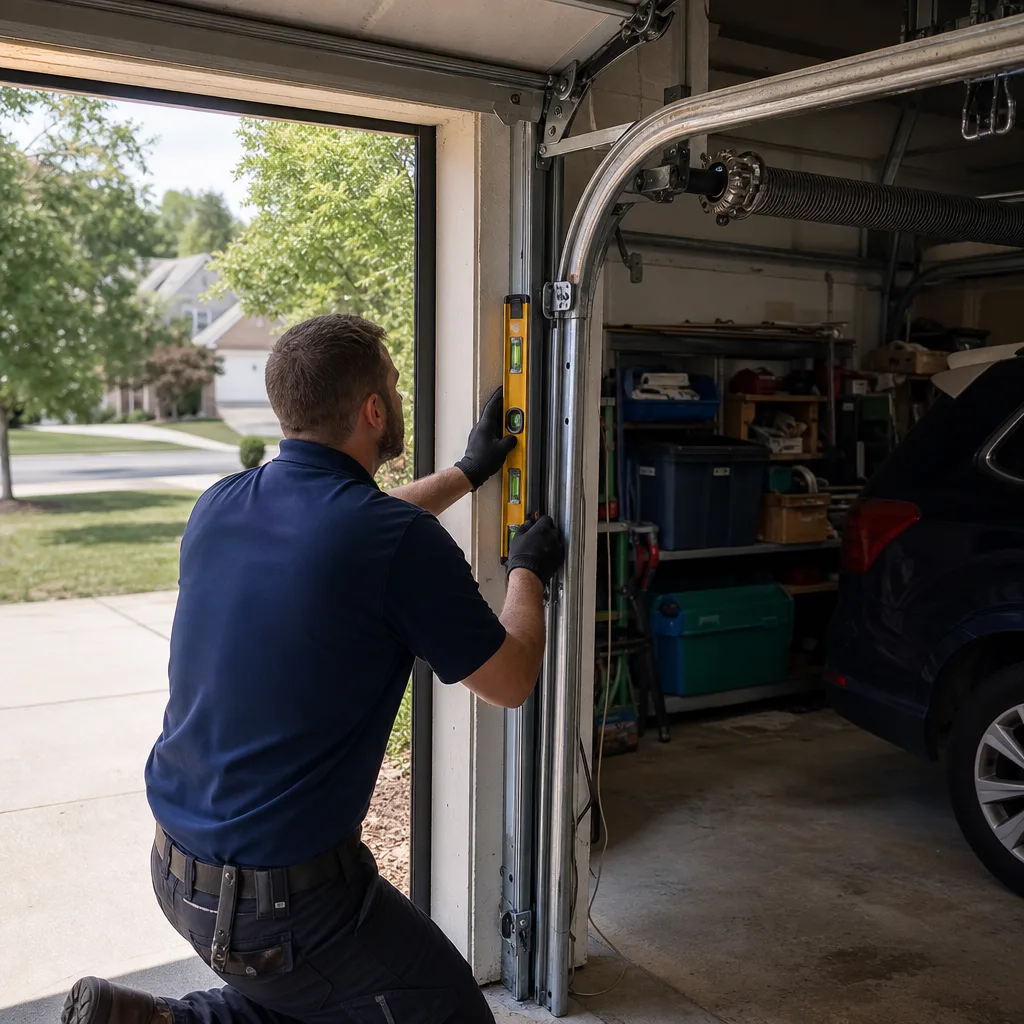
Georgia law requires sellers to disclose material defects that affect the value or habitability of the property, but the exact language differs from what most Alpharetta homeowners assume. Georgia is a caveat emptor state with a mandatory disclosure exception. The Georgia Seller’s Property Disclosure Statement is not mandatory for all transactions, but if a seller completes one and knowingly omits unpermitted structural modifications, the seller can face a misrepresentation claim after closing.
Here is the pattern we see in Alpharetta when a garage opening was modified without a permit years before the home goes on the market:
- Buyer’s inspection flags the modification: A home inspector who notices a widened garage opening with non-standard header construction or an added support post will call it out. The inspector does not need to be a code enforcement officer; they need to recognize that the condition differs from what the original construction documents would have shown.
- Buyer asks for the permit record: The buyer’s agent pulls the property file from Fulton County and finds no permit for the modification. The county does not proactively inspect homes for unpermitted work, but the absence of a permit becomes a negotiation point.
- Seller faces three options: Apply for a retroactive permit and bring the work up to current code, reduce the price to compensate the buyer for the cost of remediation, or lose the contract. The retroactive permit path in Fulton County requires opening the finished wall to expose the framing, which costs more than the original modification saved by skipping the permit.
- Disclosure statement liability: If the seller completed a Georgia Seller’s Property Disclosure Statement and answered “No” to the question about structural modifications or unpermitted work when a modification existed, closing does not end the exposure. A buyer who discovers the omission after closing can pursue a claim for misrepresentation. These claims are fact-intensive, but the paper trail determines how they resolve.
The lesson is not that every garage door needs a permit. The lesson is that when a permit is required and skipped, the savings are a lien against the future sale. A $300 permit on a $1,900 opening modification is not the place to save money in an Alpharetta home.
Paperwork to Request From Any Contractor, Permit or Not
Whether Fulton County is involved or not, the documentation you keep should answer three questions a future buyer or inspector might ask: What was installed? Was it installed to the manufacturer’s spec? Can it be proven? Our How to Hire a Garage Door Contractor in Alpharetta: A Step-by-Step Guide covers what to demand before work begins. The following documents cost the contractor nothing to provide and take under ten minutes to compile. Any contractor who resists providing them is telling you something about how they work.
- Installation spec sheet: The manufacturer’s spec sheet identifies the door model, size, weight, R-value, and wind load rating. It confirms the door meets the Georgia coastal wind requirements if applicable and gives the buyer’s inspector something to compare against the installed assembly. We include this on every job in Alpharetta because the buyer’s inspector will want to see it years later.
- Spring wind count record: Torsion springs are wound to a specific number of quarter-turns based on door weight and drum size. The wind count is not visible once the spring is wound and the cone set screws are torqued. A written record of the spring wire diameter, inside diameter, length, and wind count tells a future technician whether the spring was set correctly and whether the current spring matches the door. This is the failure point most likely to send an Alpharetta homeowner back to Garage Door Repair in Alpharetta within four years.
- Opener programming confirmation in writing: The opener’s force limits, travel limits, and safety sensor function should be recorded: measured down-force in pounds or the manufacturer’s dial setting, the travel stop positions, and a confirmation that the door reverses under 6 inches of resistance at the safety sensor beam. A written confirmation means the technician tested it and recorded the result, not that they assumed it was fine.
- Photo record of the failed component: On any repair, the homeowner should receive a photo of the failed part before a replacement is quoted. This is Clause 4 of The Haven Standard, and it exists because a photo closes the knowledge gap between what the technician sees and what the homeowner can verify. In Alpharetta, we have quoted torsion springs at 0.250-inch wire diameter against originals at 0.225-inch and shown the customer the difference in the photo before they agreed to the work.
- Written scope and flat price: The scope describes the work in plain language with the specific part numbers where applicable. The price is the price. In a market where call-for-a-quote is the default, a written flat price before work starts is the single strongest signal that a contractor is not planning to find problems mid-job. Clause 1 of The Haven Standard requires this on every job, period.
None of these documents require the county. They require a contractor who is willing to write down what they did and what they charged. In our experience across Alpharetta, the willingness to document is the strongest predictor of a clean result.
How to Verify a Permit on the Fulton County Portal, Step by Step
A contractor can claim a permit was pulled. The county’s record is the only source that matters. Fulton County maintains an online permit lookup portal where any homeowner can search by address and see the permit history, inspection status, and final disposition. Here is the process, step by step, for verifying a garage-related permit in Alpharetta:
- Open the Fulton County Development Services permit portal in a browser. The portal is linked from the county’s main website under “Permitting & Inspections.” No login is required for a public search.
- Search by property address using the full street address, including the Alpharetta mailing address and the Fulton County parcel. Some records are tied to the parcel number, not the mailing address, so if the address search returns nothing, try the parcel number.
- Review the permit list for the property. Each permit shows the permit number, type, status (issued, in progress, finaled, or expired), issue date, and the contractor or applicant name. A valid permit for structural garage work will be a “Building Residential Alteration” or similar type.
- Open the individual permit record and check the inspection history. A permit that was pulled but never finaled shows “Inspections Outstanding” or “Open.” A permit with all inspections completed shows “Finaled.” An open permit is a problem: Fulton County does not close permits automatically, and an open permit creates a cloud on the property title at sale.
- Verify the contractor name matches the company doing the work on your home. Some contractors pull a permit under a different entity name than the one on the contract. If the permit is under a different name, ask why before the work starts.
- Check the finaled date against the work date. A permit that was finalized before the work was performed is not a valid permit for that job. This is rare but it exists, and the portal shows the timeline in plain view.
If the portal shows no permit and the work you are doing required one, do not proceed until the permit is issued. The contractor’s word is not a substitute for the county’s record. In Alpharetta, we have had homeowners call us after another contractor claimed a permit was “in process” for three weeks when the portal showed no application had ever been filed. The portal is free, it takes five minutes, and it eliminates the ambiguity.
Alpharetta-Specific Code Notes and Neighborhood Patterns We See
Alpharetta sits at the northern edge of Fulton County, and the city enforces the same Georgia State Minimum Standard Codes as the rest of the county with some local amendments to zoning and stormwater that typically do not affect garage door work. What changes across the city is the housing stock, and the housing stock determines which code issues show up most often.
In the Windward community and the neighborhoods around Lake Windward, we see a high concentration of Amarr and Clopay carriage-style doors installed in the late 1990s and early 2000s. These homes are now hitting the age where original torsion springs fail, and the replacement conversation often becomes a door replacement conversation. The openings are standard sizes, the headers are intact, and no permit is needed. The documentation is still worth keeping because these homes sell regularly to buyers who inspect the garage thoroughly.
In Crabapple and the older estates along Mayfield Road, the homes span multiple code eras and multiple door types. Some pre-1980s homes have pedestrian doors that were never fire-rated, and those can remain as nonconforming conditions. The issue is what happens when a Genie or Wayne Dalton opener is replaced and the pedestrian door is touched as part of a larger garage refresh. The moment that door is replaced, the current code applies, and the 20-minute rating becomes mandatory.
In the newer builds east of Highway 400 around Kimball Bridge Road and north toward the county line, we see a different pattern: builder-grade doors with minimal insulation and stamped steel panels that dent easily. These are warranty-era replacements, and the permit conversation is usually about the electrical circuit, not the door. A wall-mount opener like a LiftMaster 8500W on a new circuit requires an electrical permit; a belt-drive ceiling mount tapping an existing receptacle does not.
The weather matters too. Alpharetta’s summer humidity and spring storm season put wind load and moisture intrusion into the code conversation. A door carrying a wind load rating under IRC Section R301.2.1 is specified by the manufacturer for the design wind speed at the property location. In Alpharetta, that typically falls in the 90 to 100 mph range depending on the exact parcel. The spec sheet should show the rated design pressure. If the contractor cannot produce it, the door may be an interior-grade unit dressed as an exterior one.
Common Mistakes to Avoid
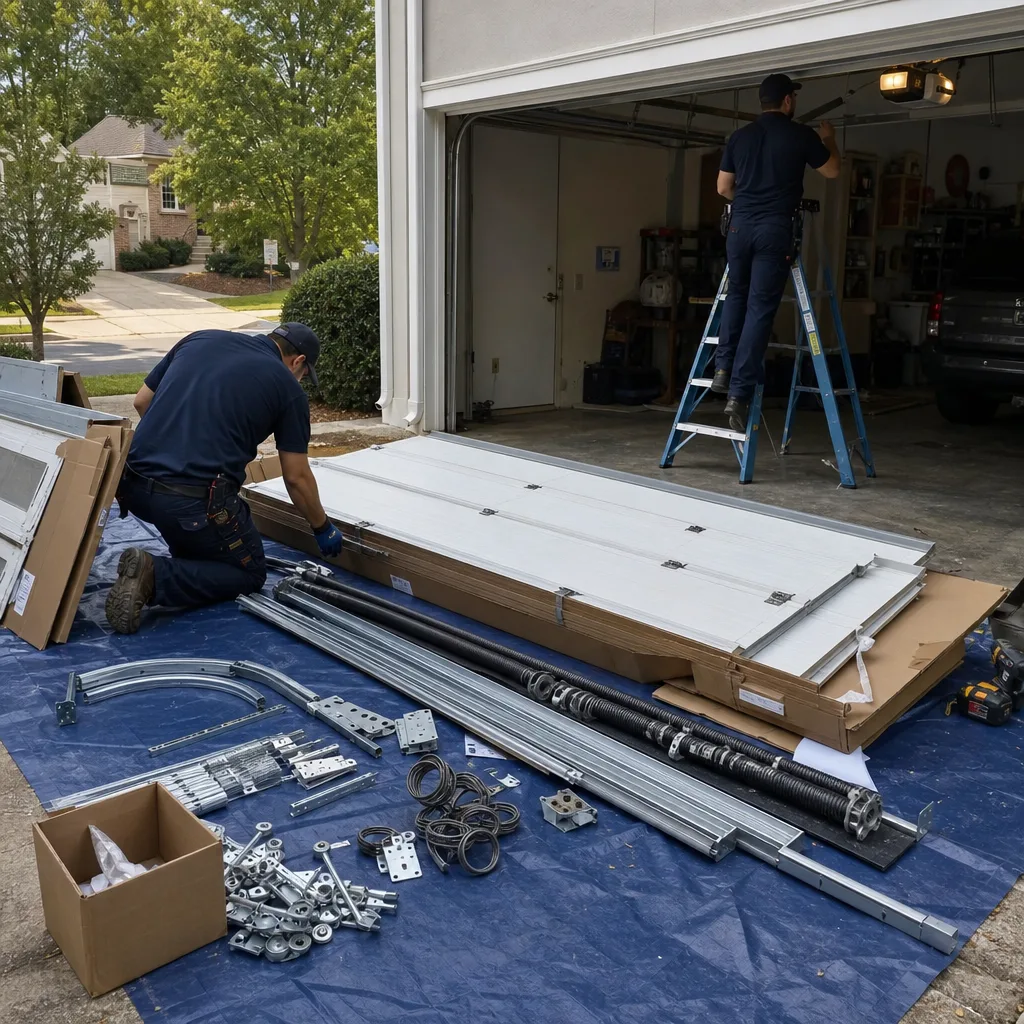
- Assuming every door needs a permit: A like-for-like door swap on an unmodified opening needs no Fulton County permit. Paying a contractor a “permit fee” for this work without seeing the portal record means the fee went into the contractor’s pocket.
- Assuming no permit means no documentation: The county may not be involved, but the installation spec sheet, spring wind count, and opener programming confirmation are your record. A future buyer’s inspector will ask for them.
- Replacing the pedestrian door with a non-rated unit: The fire-rated door between the garage and the house is the most common code violation we find in Alpharetta homes built after 1990. The 20-minute rating is a system listing, not a style choice, and a non-rated door breaks the fire barrier.
- Skipping the spring wind count record: A torsion spring wound incorrectly will fail early, and the failure is invisible once the spring is set. The wind count tells a future technician whether the spring was right, and it costs nothing to record.
- Trusting a verbal permit claim: “We pulled the permit” means nothing without a portal record. Fulton County’s permit lookup takes five minutes and shows the true status, including whether the permit was finaled.
- Using an opener circuit that shares a load with living space: A garage opener on a shared 15-amp circuit with bedroom receptacles is an electrical code violation even if no new circuit work is involved. The opener manufacturer specifies a dedicated circuit in the installation manual, and the IRC enforces it.
- Letting an open permit linger: An open permit creates a title cloud. When the work is done and the final inspection passed, confirm the portal shows “Finaled” and keep the record with your closing documents.
When to Call a Professional
A door swap on an unmodified opening with working electrical can be a clean, documented job. But when the opening is modified, a fire-rated pedestrian door is in play, or a new circuit is required, the work belongs with a licensed contractor who understands the county’s process and can document it. In Alpharetta, we see the most difficult conversations happen at the point of sale, years after the work was done, when a buyer’s inspector flags a header that was never permitted or a pedestrian door that lost its fire label. The cost of fixing it then is five times what it would have been at the time of the work. Servo Garage Doors Alpharetta home is straightforward about when the county needs to be involved and when it does not. If you are planning garage work in Alpharetta and want a written flat price with the permit path spelled out, call (678) 679-2096 for a free estimate. The price is written before any work starts, and the documentation is yours when the technician leaves.
Frequently Asked Questions
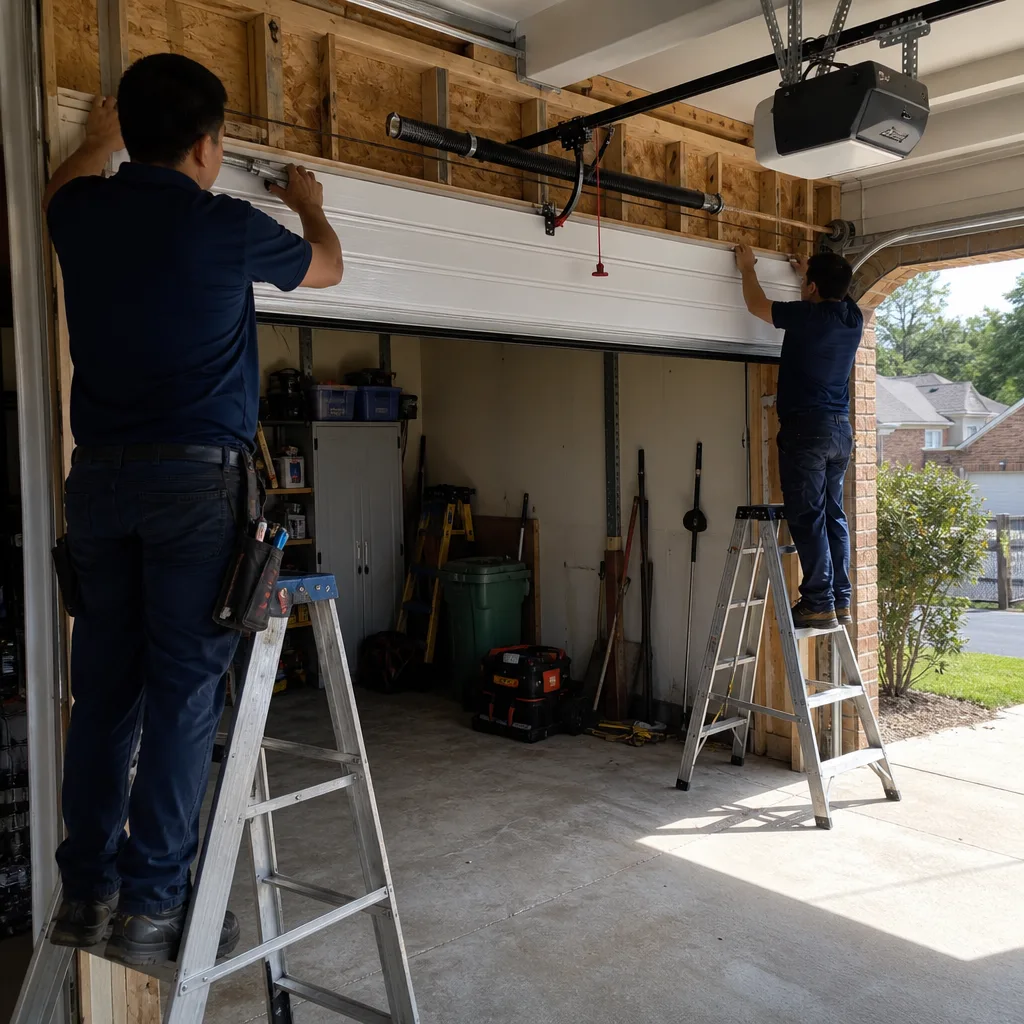
No, not for a like-for-like replacement on an unmodified opening with existing electrical. The door is treated as a finish component under the IRC, and Fulton County does not require a permit. A permit becomes mandatory if the rough opening is structurally altered or a new electrical circuit is run to the opener. Call (678) 679-2096 for a free estimate with the permit path documented in your written scope.
Yes, under IRC Section R302.5.1 as adopted by Georgia, the pedestrian door between an attached garage and the living space must be a 20-minute fire-rated assembly with a self-closing hinge. This applies to the side door you walk through, not the overhead panel door. The fire label is typically on the hinge edge of the door or the frame.
The buyer’s inspector will likely flag the modification, the buyer’s agent will pull the Fulton County permit record and find nothing, and you will face three options: apply for a retroactive permit and open the finished wall, reduce the sale price, or lose the contract. If you completed a Georgia Seller’s Property Disclosure Statement and omitted the modification, you may also face a post-closing misrepresentation claim.
Go to the Fulton County Development Services permit portal, search by your property address or parcel number, and review the permit list for the property. A valid permit shows the type, status, issue date, and contractor name. Check the inspection history to confirm the permit was finaled. An open permit is a title problem. Call (678) 679-2096 if you want help interpreting what you find.
Keep the installation spec sheet, the spring wind count record, the opener programming confirmation, and a photo record of any failed components replaced. These documents answer a future buyer’s or inspector’s questions about what was installed and whether it was set to the manufacturer’s spec. We include all of these on every job in Alpharetta as part of the documented record.
Yes. When a permit is required, the permit cost and inspection timeline are written into the flat price and scope before any work starts. You receive the permit number and the portal record is verified at final, and Garage Door Opener Repair & Installation in Alpharetta covers the electrical work with the same documentation standard. Estates are free; call (678) 679-2096.
The Bottom Line
The permit conversation for garage doors in Georgia is narrower than most homeowners think, but the documentation conversation is broader. A like-for-like door swap in Alpharetta needs no county involvement. The protection comes from your own paper trail: the spec sheet, the spring wind count, the opener settings, and the photo record. When the opening is modified or a circuit is run, the county enters the room and the record becomes public. Either way, the rule is the same: write down what was done, verify what was claimed, and keep the evidence. That evidence is what a future buyer’s inspector will look for, and it is the difference between a sale that closes and a negotiation that stalls over a header that never had a permit. Marcus Deller and the team at Servo Garage Doors Alpharetta have worked under that plain rule since 2015, and we are happy to help you apply it to your own garage. Browse more guides & resources on our blog.e. Call (678) 679-2096 for a free estimate with the price in writing before any work starts.
Written by Marcus Deller, Owner at Servo Garage Doors Alpharetta, serving Alpharetta since 2015.