
Last updated September 20, 2026
Full 25-point door and opener safety check with every visit - springs, cables, rollers, tracks, and your LiftMaster or Chamberlain opener included
You get a price before we start. It does not change when the truck arrives.
 Before
 After
After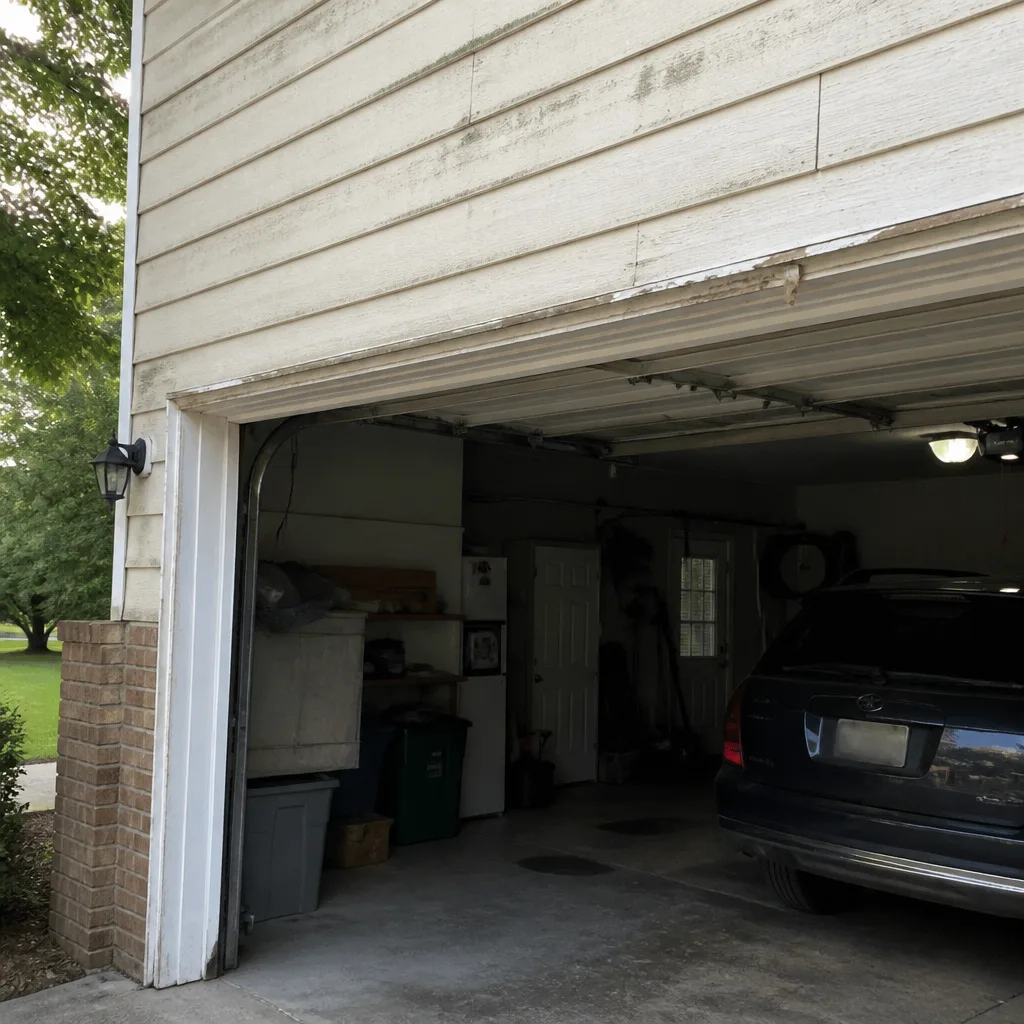 Before
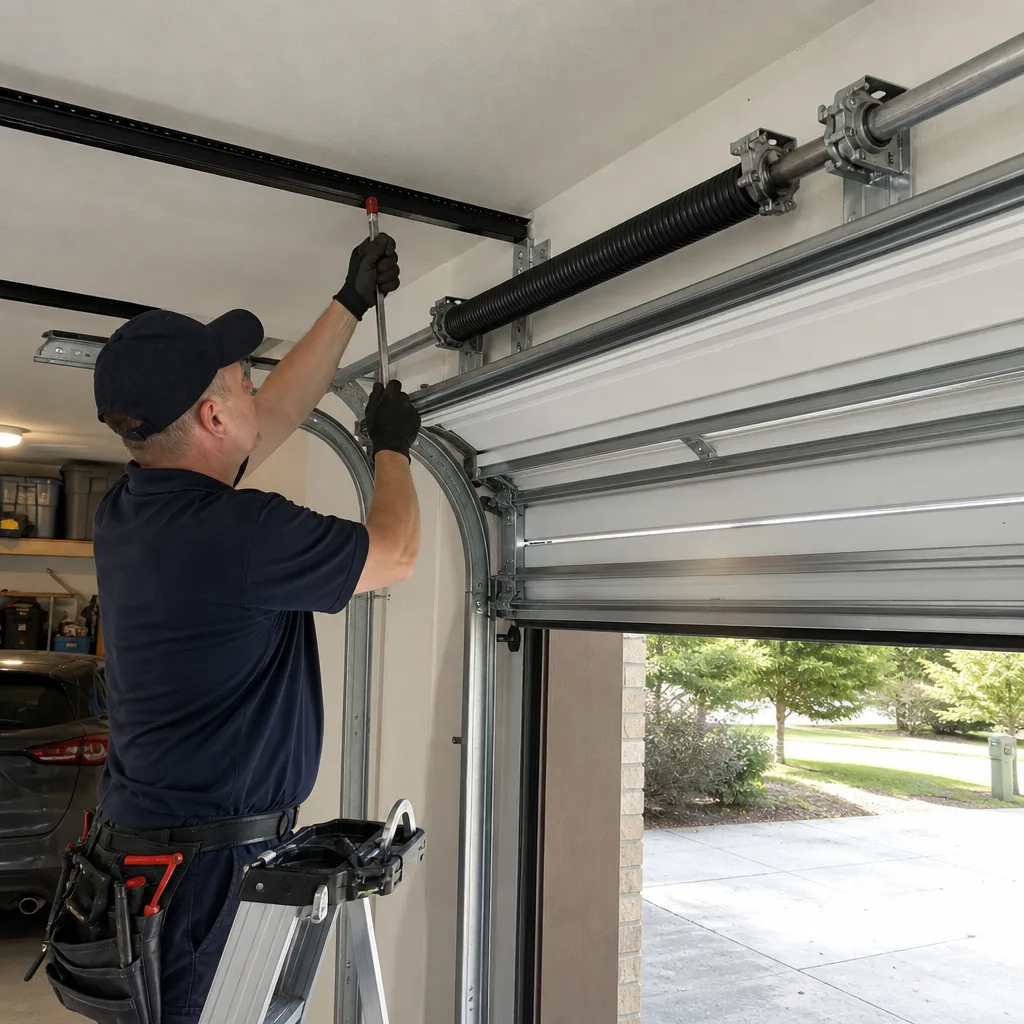 After
After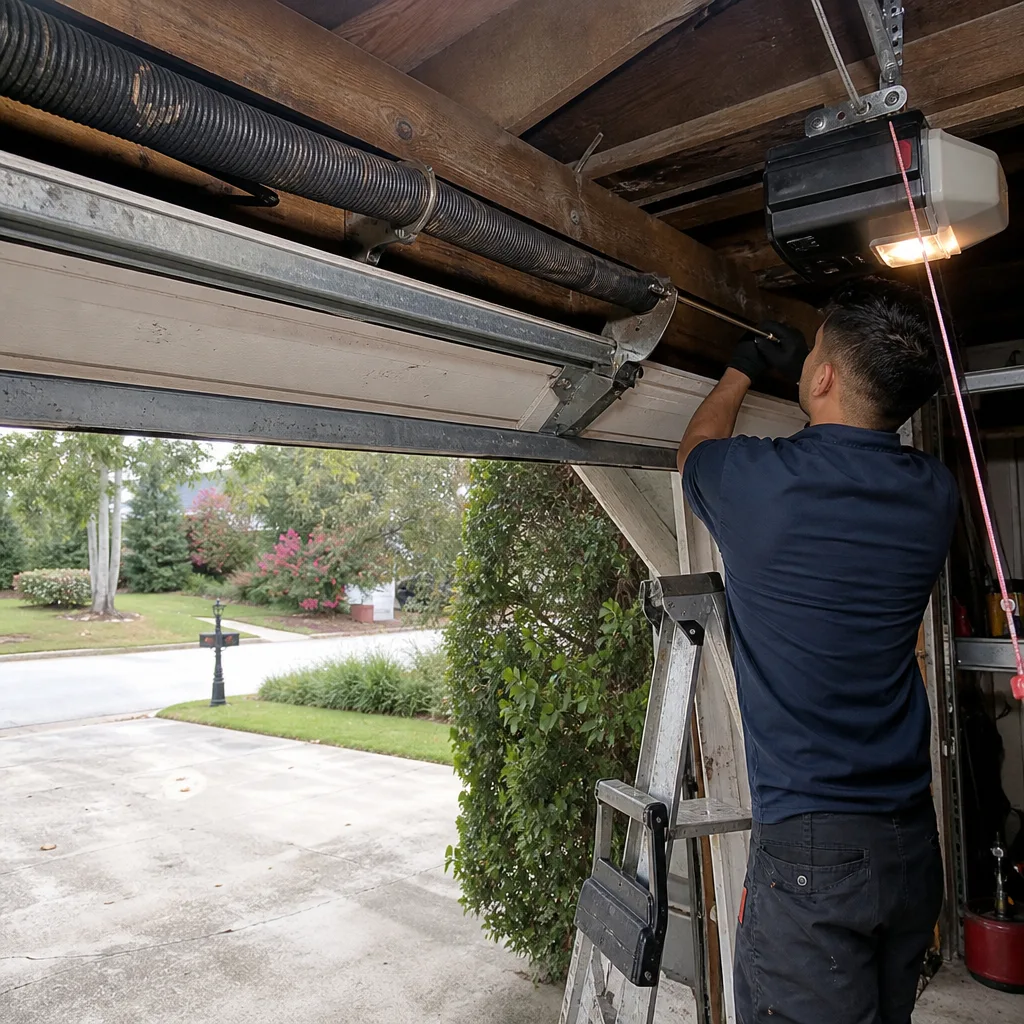 Before
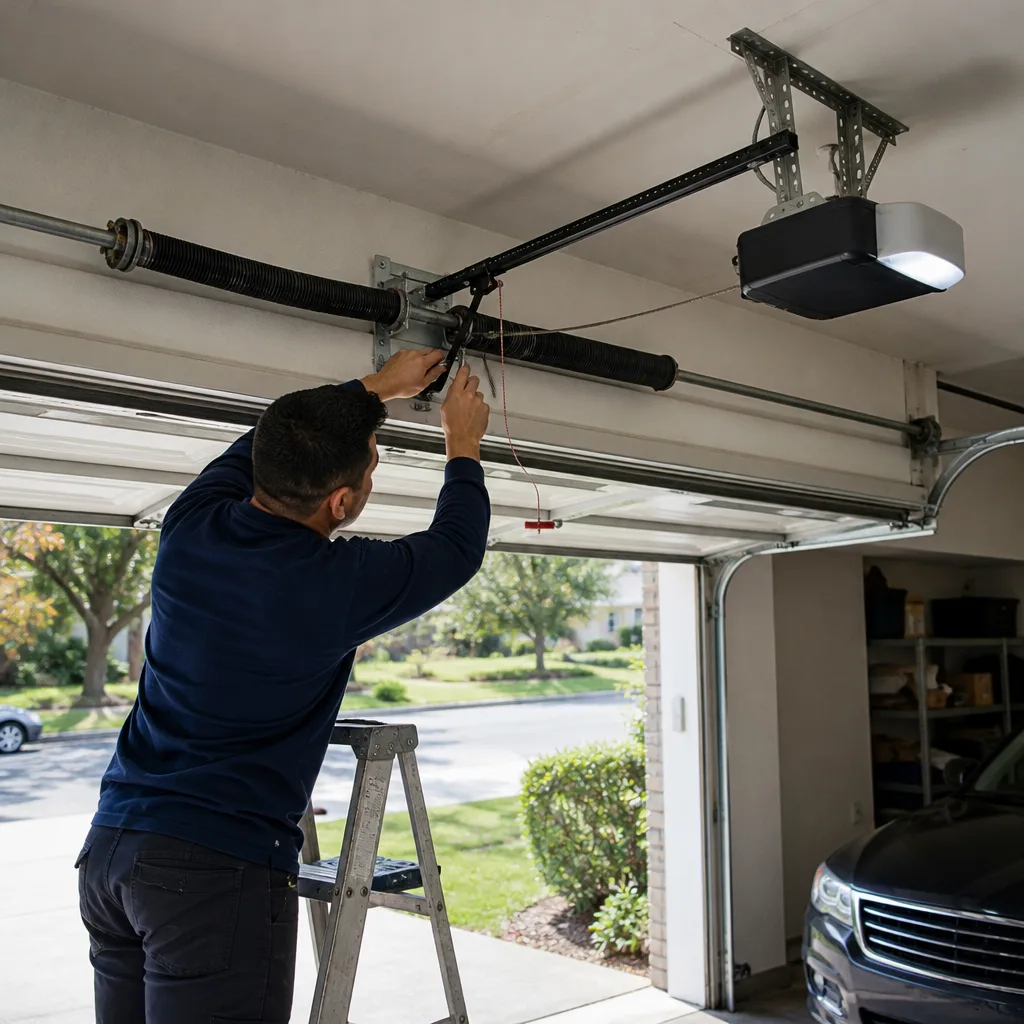 After
AfterGarage Door Warning Signs: A Alpharetta Homeowner’s Reference Guide
Every year in Alpharetta, homeowners spend thousands of dollars replacing garage door components that gave clear warning for months before failing. The problem is that most warning-sign guides treat every symptom the same way: a list of ten things to watch for, with no distinction between a cosmetic crack and a cable about to snap. This guide-along with our The Complete Guide to Garage Door in Alpharetta-assigns each sign a risk tier, explains the mechanical reason behind it, and tells you what it should cost to fix in Alpharetta so you can make a decision based on evidence rather than panic.
Quick Answer
The garage door warning signs that matter most in Alpharetta fall into three tiers: Tier 1 signs like asymmetric movement or cable slack mean stop operating the door immediately and call a technician; Tier 2 signs like grinding on reversal or slow opener travel mean schedule service within two weeks; Tier 3 signs like surface rust or weather seal cracking mean document and monitor. A broken torsion spring, the most common Tier 1 failure, typically costs $280 to $450 to replace in Alpharetta including parts and labor.
Table of Contents
- Tier 1 Warning Signs: Stop Operating the Door Immediately
- Tier 2 Warning Signs: Schedule Service Within Two Weeks
- Tier 3 Warning Signs: Document and Monitor
- How to Photograph Each Warning Sign Before the Technician Arrives
- Common Mistakes to Avoid
- When to Call a Professional
- Frequently Asked Questions
- The Bottom Line
BeforeAfterTier 1 Warning Signs: Stop Operating the Door Immediately
A garage door that moves unevenly on its way down is not a nuisance. It is a broken or severely weakened cable, and the correct response is to stop using the door manually and call a technician, not to jiggle the remote and try again. Here are the four signs that mean the door is no longer safe to operate.
1. Asymmetric Movement: One Side Drops Faster Than the Other
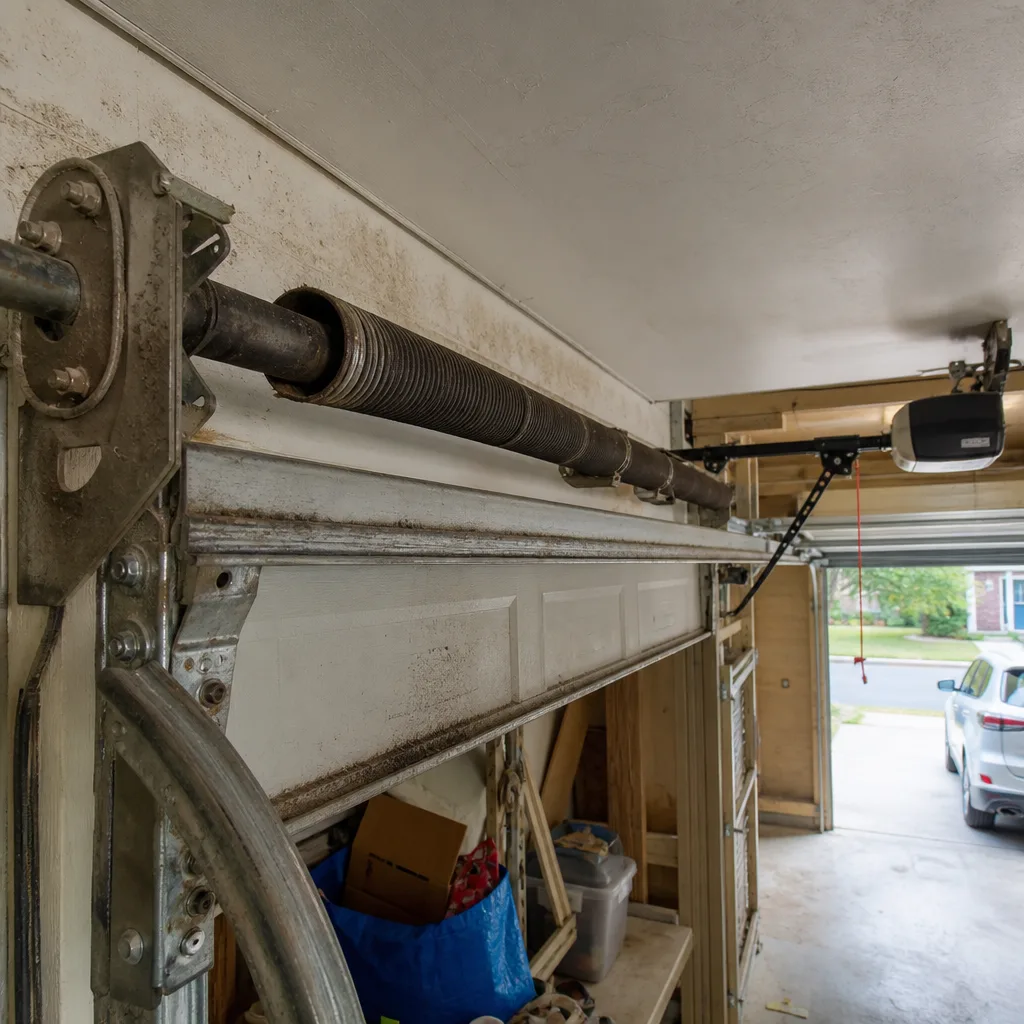
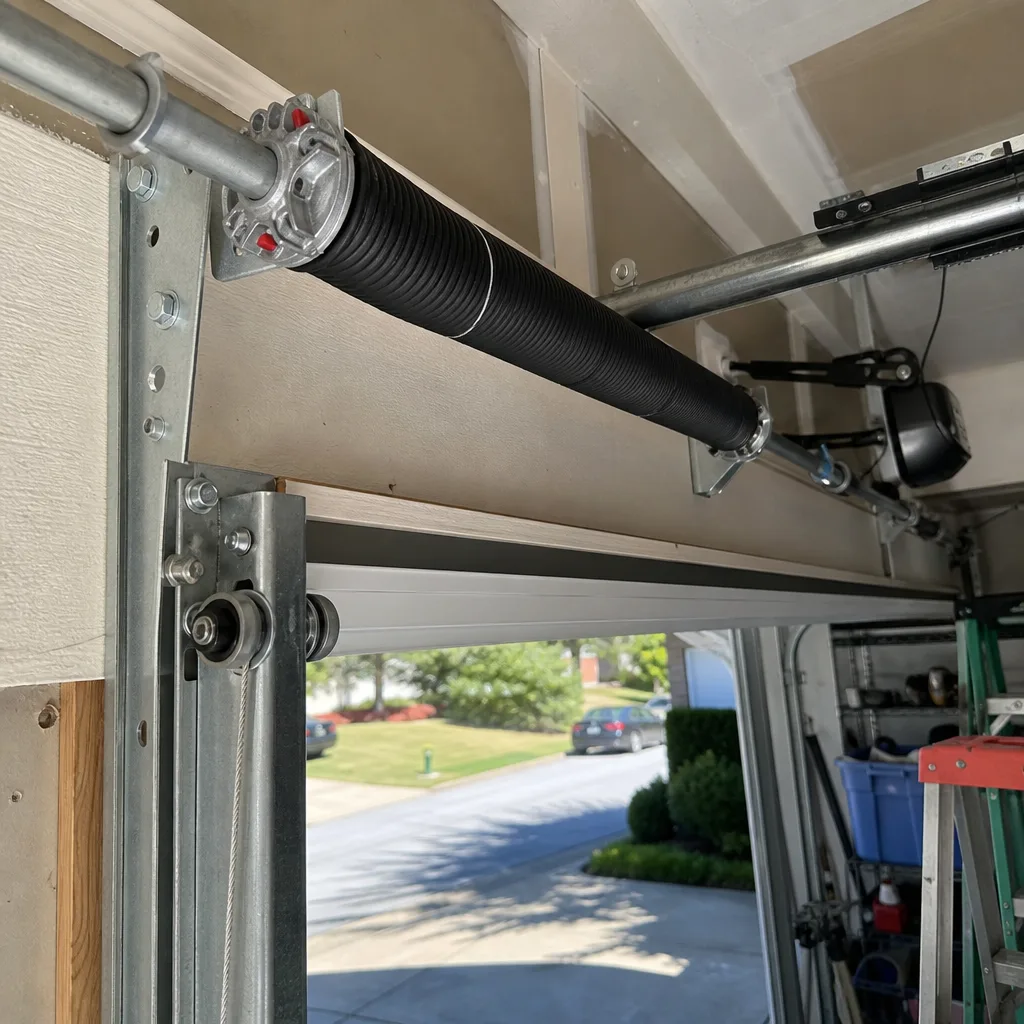
When a garage door travels up or down, both sides should move at exactly the same rate. The torsion spring assembly in the center of the door distributes tension to two cables, one on each side. When one cable breaks or slips off its drum, the load that cable was carrying transfers entirely to the other side. The result is a door that drops at an angle, sometimes jamming in the tracks.
The component responsible is almost always a cable, not the spring itself. Cables in Alpharetta fail more often in summer and early fall, when repeated heat cycles cause the steel to expand and contract against the cable drum. The average cost to replace one cable in Alpharetta ranges from $160 to $260, and most companies replace both cables at once since the second has seen identical wear.
What to do: Do not operate the door. Do not disconnect the opener and try to lift it by hand. A door under asymmetric tension can bind in the track and fall suddenly. Call for service and describe exactly what you saw: which side dropped first, whether the door stopped partway, and whether you heard a snap before the movement changed.
2. Visible Cable Slack or Fraying
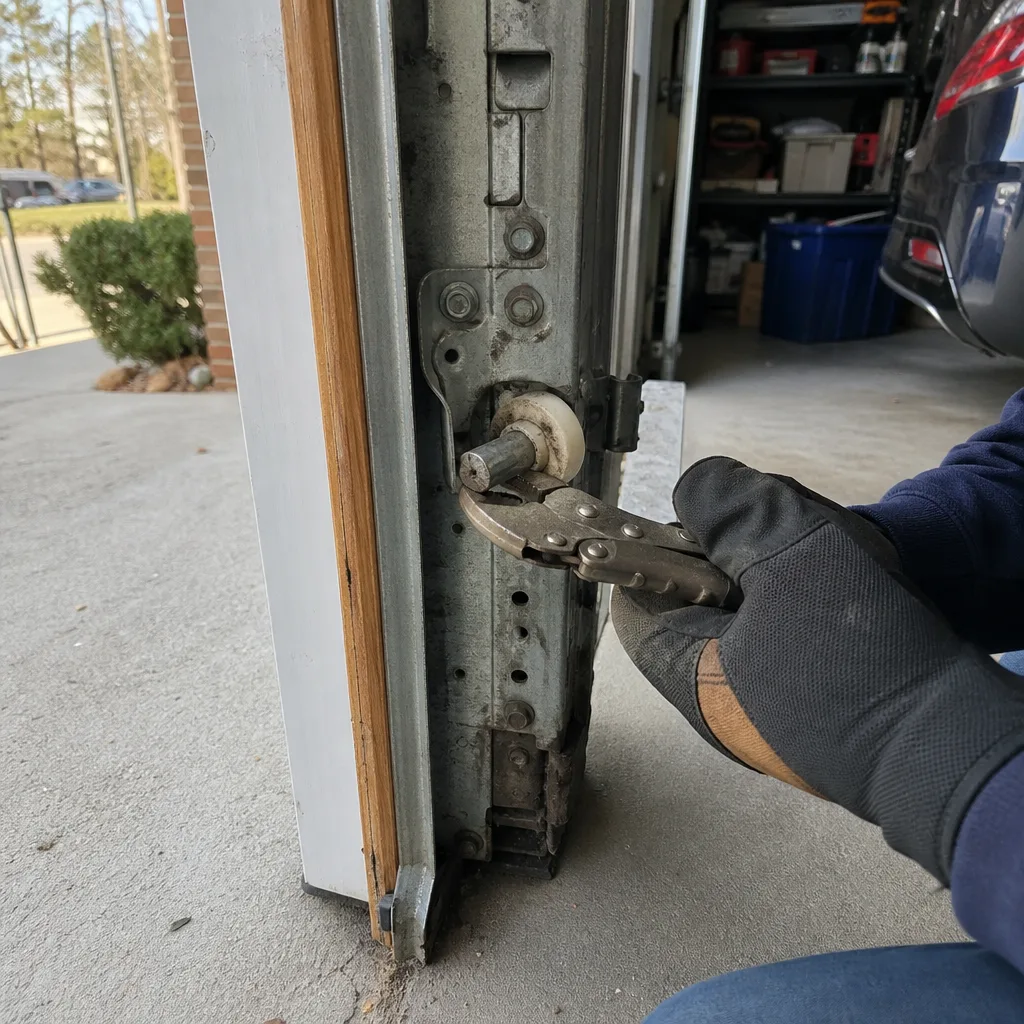
Stand near the side of the door with the door closed and look at the cable that runs from the bottom bracket up to the drum above the door. The cable should be tight, with no visible gaps between the cable and the drum. If you can push the cable sideways with a finger and see slack, or if you see individual wire strands poking out from the cable body, the cable is in the final stage of failure.
Fraying is a fatigue process. Each cycle of the door rubs the cable against the drum and the pulley. Over 8,000 to 10,000 cycles, the individual strands begin to separate. A frayed cable can hold for weeks or break on the next cycle; there is no way to predict which. The replacement cost in Alpharetta is the same $160 to $260 range as a broken cable, and the job takes under an hour.
What to do: Stop using the door. Take a photo of the frayed section with your phone, holding a coin or ruler next to it for scale. That photo is useful when you request a written price so the technician knows what to bring before they arrive.
3. The Door Falls Faster Than the Opener Controls It
A properly functioning opener controls the door’s descent at a steady rate. If the door accelerates on the way down, outrunning the opener’s motor, one of two things has happened: the torsion spring has lost tension, or the opener’s internal braking has failed.
In most cases the cause is the spring. A torsion spring stores the energy that makes the door feel light. When it breaks, the door’s full weight is no longer counterbalanced, and gravity takes over. The opener was never designed to hold the full weight of the door; it is a motion controller, not a brake. The result is a door that slams down, which is dangerous to anything in the path and damaging to the opener’s internal gears.
We’ve seen this specific failure in Alpharetta homes more often in north-facing garages, where temperature swings are more extreme and spring metal fatigues faster. A new torsion spring for a standard Alpharetta two-car garage door costs between $280 and $450 installed, depending on the door’s weight and spring wire size. Garage Door Repair in Alpharetta is the service category this falls under.
What to do: Stop operating the door. If the door is stuck open, leave it open and call for emergency service. A door that falls faster than the opener controls it can cause serious injury or property damage, and the spring is now under unpredictable tension.
4. Any Loud Bang From the Spring Area
A torsion spring breaking sounds like a gunshot inside the garage. It is unmistakable, and if you were home when it happened you already know what it was. The spring sits on a metal shaft above the closed door, and when one of its coils snaps, the released energy travels through the shaft and into the door frame.
The explanation is fatigue. Torsion springs are rated for a specific number of cycles, typically 10,000 for a standard spring on an Alpharetta home with a two-car garage. Each open-and-close cycle winds and unwinds the spring by one full revolution. When the steel reaches its fatigue limit, one coil snaps cleanly. The break is almost always at a quarter to a half inch from the winding cone, where stress concentrates during winding.
Replacement cost is the same $280 to $450 range, and a technician should replace both springs at once. A broken spring in a two-spring system means the surviving spring is at the same cycle count and will fail imminently. At Servo we photograph the broken spring before quoting the replacement, per Clause 4 of The Haven Standard, so you see the break with your own eyes.
What to do: Do not open the door manually. Do not attempt to release the opener from the door, because the door’s full weight is now unsupported. Call for service and tell the dispatcher you heard a spring break; the technician will arrive knowing the door is unsafe to move.
Tier 2 Warning Signs: Schedule Service Within Two Weeks
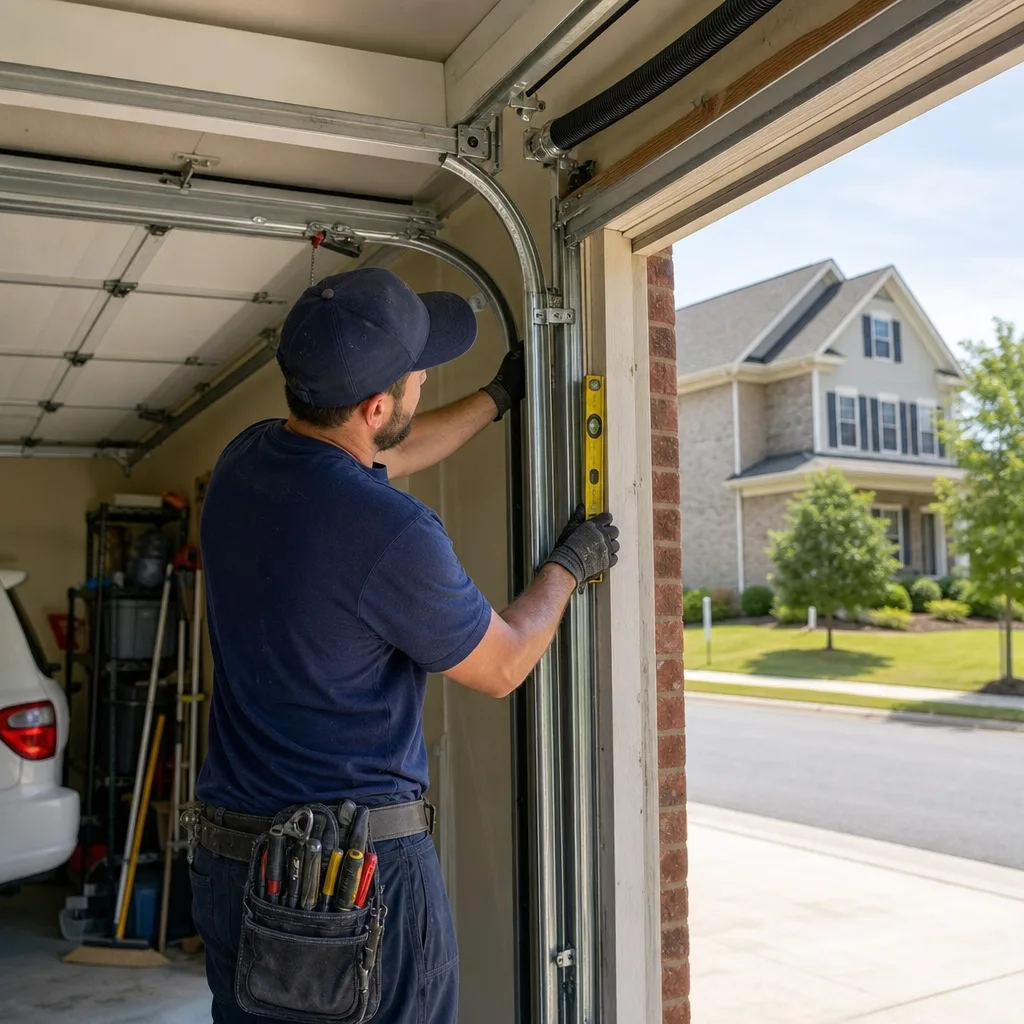
These signs do not mean the door will fail tonight, but they mean a failure is developing. Scheduling within two weeks prevents a Tier 2 sign from becoming a Tier 1 emergency.
5. Grinding When the Door Reverses Direction
Listen to the opener as it starts to reverse from the closed position. A smooth opener makes a low hum. A grinding, scraping, or chattering sound means the opener’s internal gears or the trolley carriage are wearing.
The trolley carriage is the part that slides along the rail and connects the opener motor to the door. In older openers, the carriage teeth are nylon, and they wear down over 5 to 7 years of daily use. When the teeth round off, the motor’s gear and the carriage no longer mesh cleanly, producing a grind that grows louder over time.
At this stage, the fix is a carriage replacement or opener service, which in Alpharetta costs $120 to $220. If ignored, the carriage can strip entirely, and the opener will spin its motor without moving the door. A stripped carriage often damages the drive gear, pushing the repair into a full opener replacement at $380 to $650 installed. Garage Door Opener Repair & Installation in Alpharetta covers both service and replacement.
6. The Opener Motor Runs Longer Than Six Seconds to Complete Travel
Time your door from fully closed to fully open. A standard opener on a seven-foot door should complete the cycle in 10 to 12 seconds. If the motor runs noticeably longer, or if the door pauses partway and resumes, the opener is struggling against added resistance.
The usual cause is dried or depleted lubrication on the rollers, hinges, and spring coils. Over sections of Alpharetta with heavy pollen in spring, roller grit accumulates faster and increases rolling resistance. The motor compensates by drawing more current and running longer to complete the same travel.
The fix is often a full service: cleaning and lubricating the rollers, hinges, and spring, adjusting the opener’s force settings, and checking the balance. Most companies in Alpharetta price a full service between $110 and $175. It is the cheapest intervention that prevents the most expensive failures.
7. The Door Fails a Manual Balance Test
Disconnect the opener by pulling the emergency release cord. Then lift the door by hand to waist height and let go. A balanced door stays in place, moving neither up nor down. A door that drifts down is under-sprung. A door that creeps up is over-sprung.
The balance test tells you whether your torsion spring is still doing its job. A door that drifts down by more than a few inches means the spring has lost tension through normal wear, and the opener is carrying more of the door’s weight than it should. That excess load shortens the opener’s life and raises the odds of a spring failure.
In Alpharetta, a spring tension adjustment runs $80 to $140. If the spring has lost too much tension to safely rewind, replacement is the $280 to $450 cost described above. The technician should measure the door’s weight and specify the correct spring wire size before installing anything, not wind the old spring tighter and hope for the best.
Tier 3 Warning Signs: Document and Monitor
These signs are not urgent, but they are the first indication of problems that become expensive if ignored for five years. Take a photo, make a note, and check again in three months.
8. Weather Seal Cracking
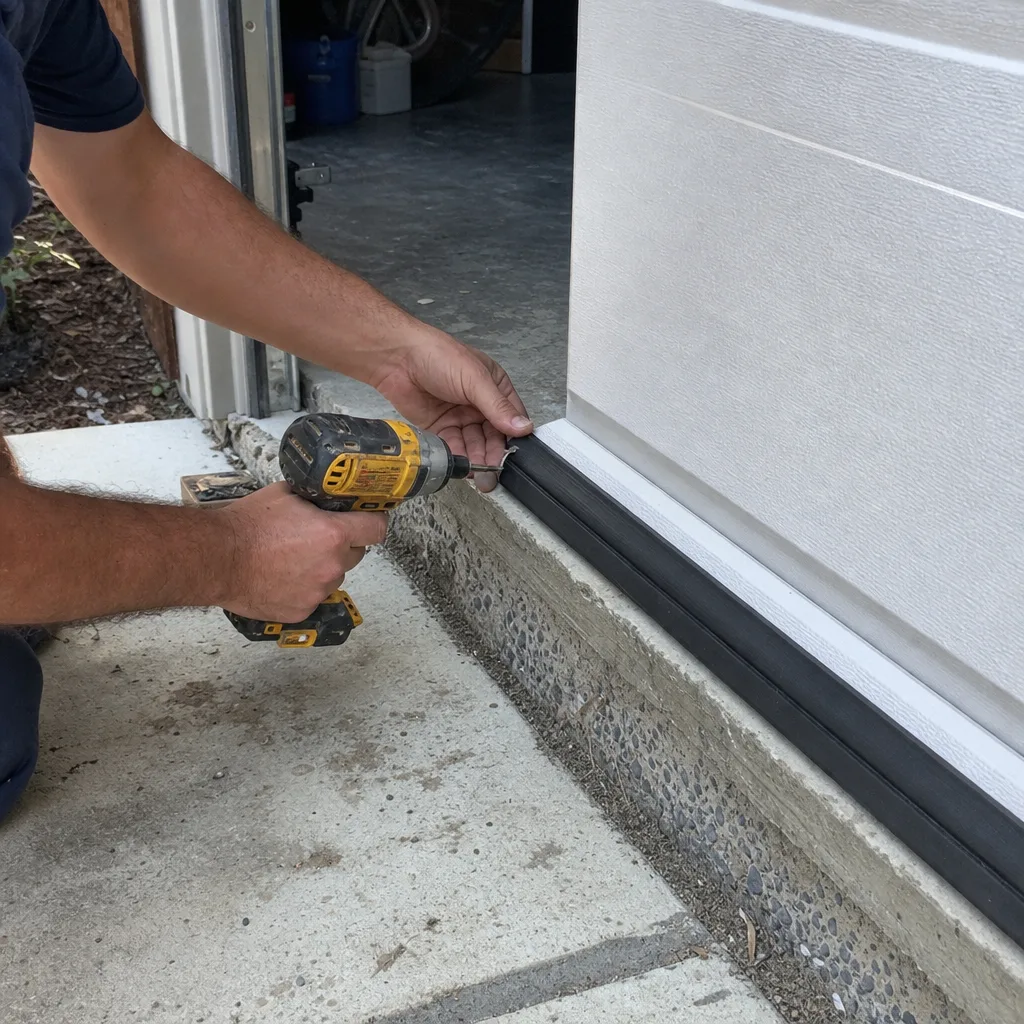
The rubber weather seal along the bottom of the door cracks along its length after prolonged exposure to Alpharetta’s summer heat and winter cold cycles. The seal’s job is to keep water, leaves, and pests from entering under the door, and to cushion the door’s contact with the concrete.
A cracked seal is a $60 to $90 replacement, and the part is a simple slide-in rubber strip available for every major brand. The more important reason to monitor it is what a failing seal tells you about the door’s leveling: if one side of the seal crushes faster than the other, the door itself is not sitting level on the floor, and that draws you back to the Tier 1 cable and spring discussion.
9. Surface Rust on Panel Joints
Steel garage doors from Clopay, Amarr, and Wayne Dalton are finished with a baked-on primer and topcoat. Surface rust at panel joints means that finish has worn through at the hinge line, usually from the panels flexing as the door travels. Left untreated, the rust spreads under the paint, and a door that would have lasted 20 years fails at the joints in 12.
Rust at panel joints is a monitor-level issue unless you see bubbling or flaking paint over large areas. When you see that, the panel is compromised, and replacement panels for a standard Alpharetta two-car door cost $250 to $450 per panel depending on the model and finish.
10. Intermittent Remote Response With Fresh Batteries
Replace the battery in your remote. If the door still only responds every second or third press, the problem is in the opener’s logic board or the receiver antenna.
The logic board is the circuit board inside the opener’s powerhead that interprets the radio signal from your remote. In Alpharetta, frequent lightning storms can induce voltage spikes that degrade the board’s receiver circuit over time. Genie openers manufactured before 2018 seem especially sensitive to this in our experience.
A replacement logic board costs $140 to $240 on a service call, which is often cheaper than a full opener replacement. If the opener is 15 years old or older, the better financial decision is usually replacement, and a new belt-drive unit installed in Alpharetta runs $450 to $700.
How to Photograph Each Warning Sign Before the Technician Arrives
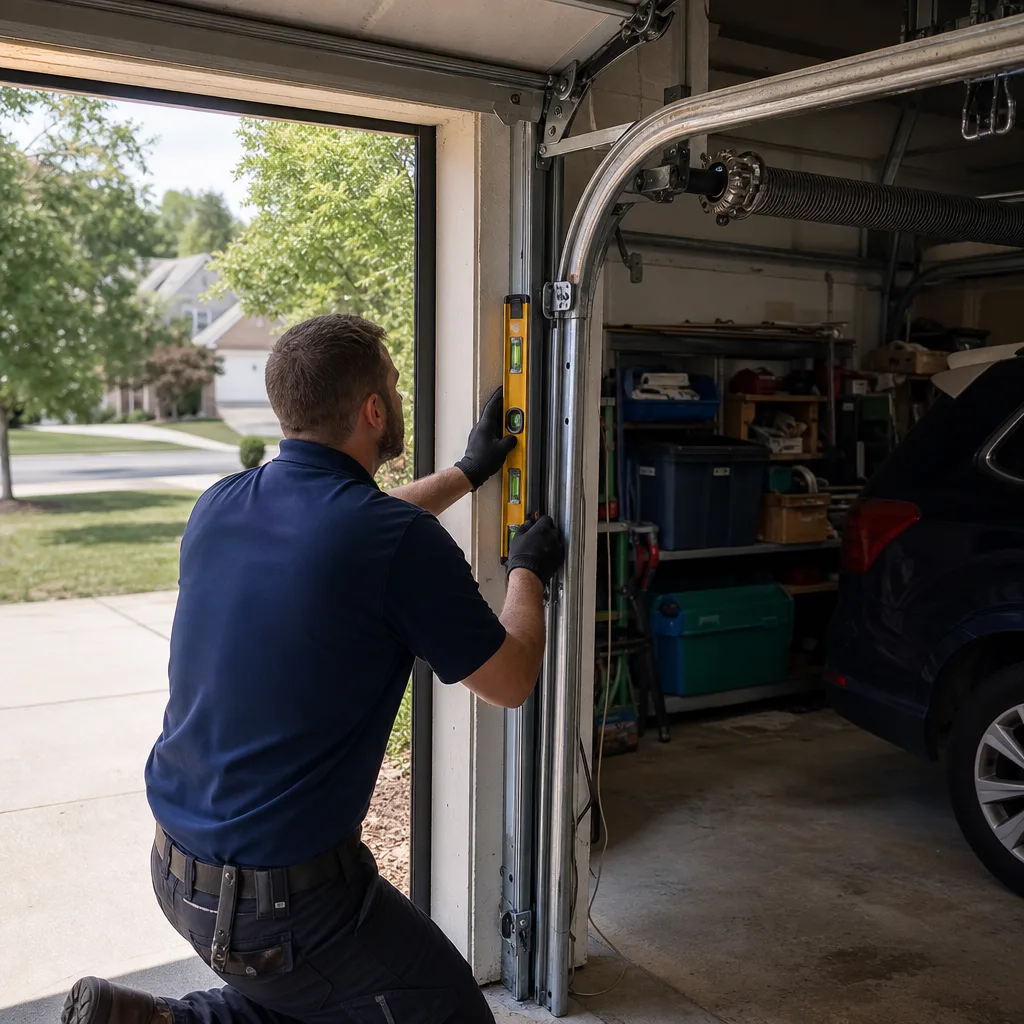
Documentation protects both sides of a service call. Before the technician arrives, you should have a photo record of every warning sign you observed. Here is a step-by-step process we recommend to every Alpharetta homeowner we work with.
- Shoot from the side, not straight on. A three-quarter angle shows depth and alignment better than a straight-on shot. Stand a few feet to the left or right of the door and capture the full height of the door in one frame.
- Get close on the specific component. If the cable is frayed, hold your phone within six inches of the fray and tap the screen to set focus. If the spring is broken, photograph the exact break point, not just the general spring area.
- Include a size reference. Hold a quarter or a key next to the damaged section. The reference object makes it obvious what scale you are looking at when the technician reviews the photo on a small screen.
- Shoot the date and time. If your phone does not automatically timestamp photos, open a news website on another device and include it in the frame. This proves when the condition existed, which matters for warranty claims.
- Photograph the whole door after the detail shots. A wide shot showing the full door in its current state provides context the close-ups can’t. This is the shot that shows whether the door is sitting level, whether the track is visibly bent, and what the weather seal looks like across the full width.
We deliver a documented photo record on every visit we make, tracing back to the founding rule that the customer sees the failed part before anyone quotes a replacement. Your pre-visit photos are the same idea from the homeowner side: a written record of what you observed, before anyone else touches the door.
Common Mistakes to Avoid
- Trying to open a door with a broken spring. The door weighs 150 to 250 pounds. Without the spring’s counterbalance, you are lifting that full weight, and if it slips it falls at full speed. We have seen doors fall through the rear window of cars parked in Alpharetta driveways because the owner insisted on getting the car out before the technician arrived.
- Lubricating a grinding opener with WD-40. WD-40 is a solvent, not a garage door lubricant. It strips the existing grease and accelerates wear on the carriage teeth. Use a spray silicone or white lithium grease on the rollers and hinges, and nothing inside the powerhead.
- Replacing one spring on a two-spring system. Both springs share the same cycle count. The surviving spring will break within months, and you will pay for a second service call. Honest technicians recommend replacing both; the cost difference is the price of one additional spring, not a second trip charge.
- Ignoring a slow opener because it works. A motor that runs longer to complete travel is working harder. That heat shortens the motor’s life and raises the odds of a failure during the coldest weeks of the year, when Alpharetta service schedules are busiest.
- Adjusting the opener’s force settings to mask a balance problem. Every opener has up and down force dials. Cranked-up force makes the door move, but it masks the spring problem underneath and puts the excess strain into the opener’s gears. The correct fix is the spring, not the dial.
- Waiting on a weather seal because it’s cosmetic. A cracked seal lets water in during Alpharetta summer thunderstorms. Water on the concrete slab then gets tracked into the house, and the humidity that collects in the garage accelerates rust on every metal component. A $75 seal is cheaper than the corrosion it prevents.
When to Call a Professional
Any Tier 1 sign is a call-now situation. A broken spring, a frayed cable, a door that falls faster than the opener controls it, a loud bang from the spring area: these are not DIY repairs. The torsion spring assembly stores enough energy to cause serious injury if the winding cone lets go while under tension, and no YouTube video substitutes for a torque wrench and a trained hand. For non-emergency upkeep, browse our more guides & resources.
Tier 2 signs are a call-this-week situation. The grinding carriage, the slow travel, the failed balance test: all of these are repairable for under $250 today, and all of them become $400-plus failures if deferred past the point where the component damages its neighbor. Servo Garage Doors Alpharetta home service area covers all of Alpharetta and the surrounding neighborhoods. Call (678) 679-2096 for a free estimate, and we will quote a flat, written price before any work begins.
Frequently Asked Questions
A torsion spring replacement on a standard two-car garage door in Alpharetta typically costs between $280 and $450 installed, including both springs and labor. The exact price depends on the door’s weight and the spring wire size required to balance it. Call (678) 679-2096 for an exact written quote, which we provide before any work starts, per Clause 1 of The Haven Standard.
Yes, same-day spring replacement is standard in Alpharetta as long as the call is placed before early afternoon. We carry a full stock of torsion springs on every truck, which means the technician arrives with the parts needed to complete the repair on the first visit. Emergency calls are answered by a live person 24/7 at (678) 679-2096.
No. The flat, written price we quote before starting is the price you pay, and the written scope describes exactly what the technician will do. If the technician finds something the quote did not cover, they stop, show you the issue, and provide a new written price before doing anything else. That is Clause 1 of The Haven Standard, and it applies on every job without exception.
A belt-drive opener from LiftMaster, Chamberlain, or Genie installed in Alpharetta typically lasts 10 to 15 years. The climate plays a role: summer heat and humidity shorten motor and board life compared to cooler regions. Garage Door Installation in Alpharetta covers opener replacement as part of a full door install.
No. Operating a door with one broken spring puts the entire load on the surviving spring and the opener’s motor, neither of which is designed for it. The door can fall without warning, and the surviving spring will fail soon at the same cycle count. Keep the door closed and schedule service before using it again.
Yes. Every visit ends with a documented photo record showing what the technician found and what the work looked like when completed. The record traces to the founding rule Servo was built on in 2015: the customer sees the failed part before anyone quotes a replacement, and the evidence follows the work to completion.
The Bottom Line
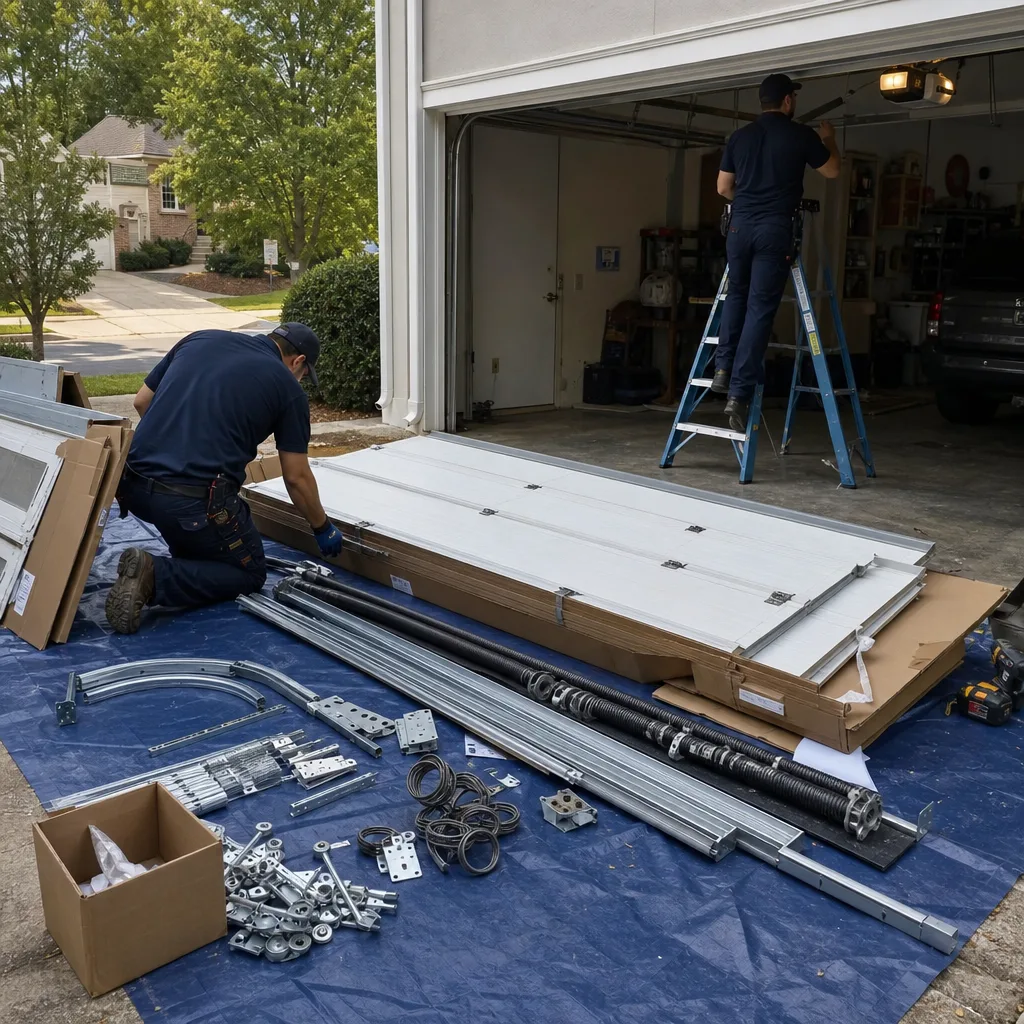
Garage door warning signs are a timeline, not a lottery. A frayed cable photographed today is a $180 repair; the same cable a week from now is a door that falls on your car or worse. A spring that fails with a bang costs $450 and a same-day call; a balance problem caught two months earlier costs $100 and a 45-minute visit. The Alpharetta homeowner who documents signs early and schedules Tier 2 repairs before they escalate saves real money and never has to make a panic call. Know your Tier 1 signs, photograph everything, and keep the number of a local technician who quotes a written price before touching the door.
Written by Marcus Deller, Owner at Servo Garage Doors Alpharetta, serving Alpharetta since 2015.