
Last updated September 20, 2026
Full 25-point door and opener safety check with every visit - springs, cables, rollers, tracks, and your LiftMaster or Chamberlain opener included
You get a price before we start. It does not change when the truck arrives.
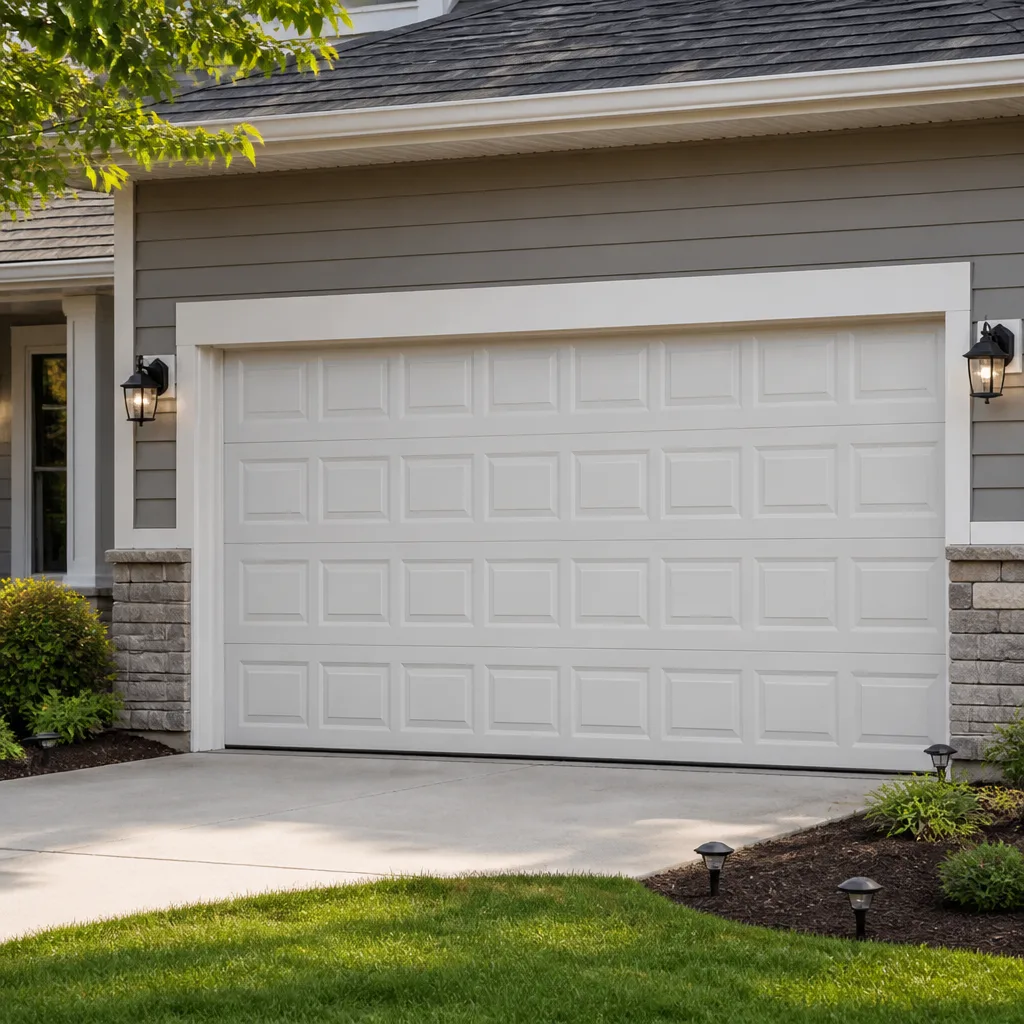
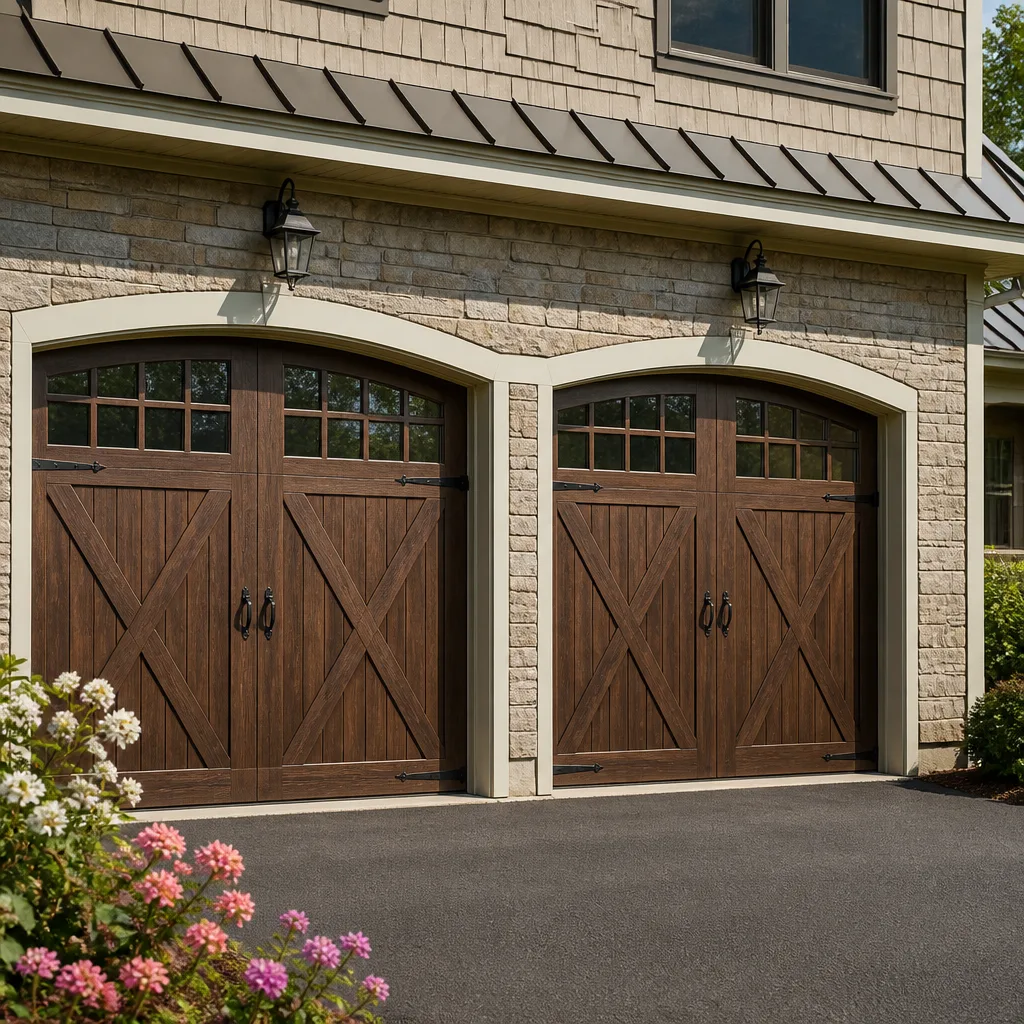
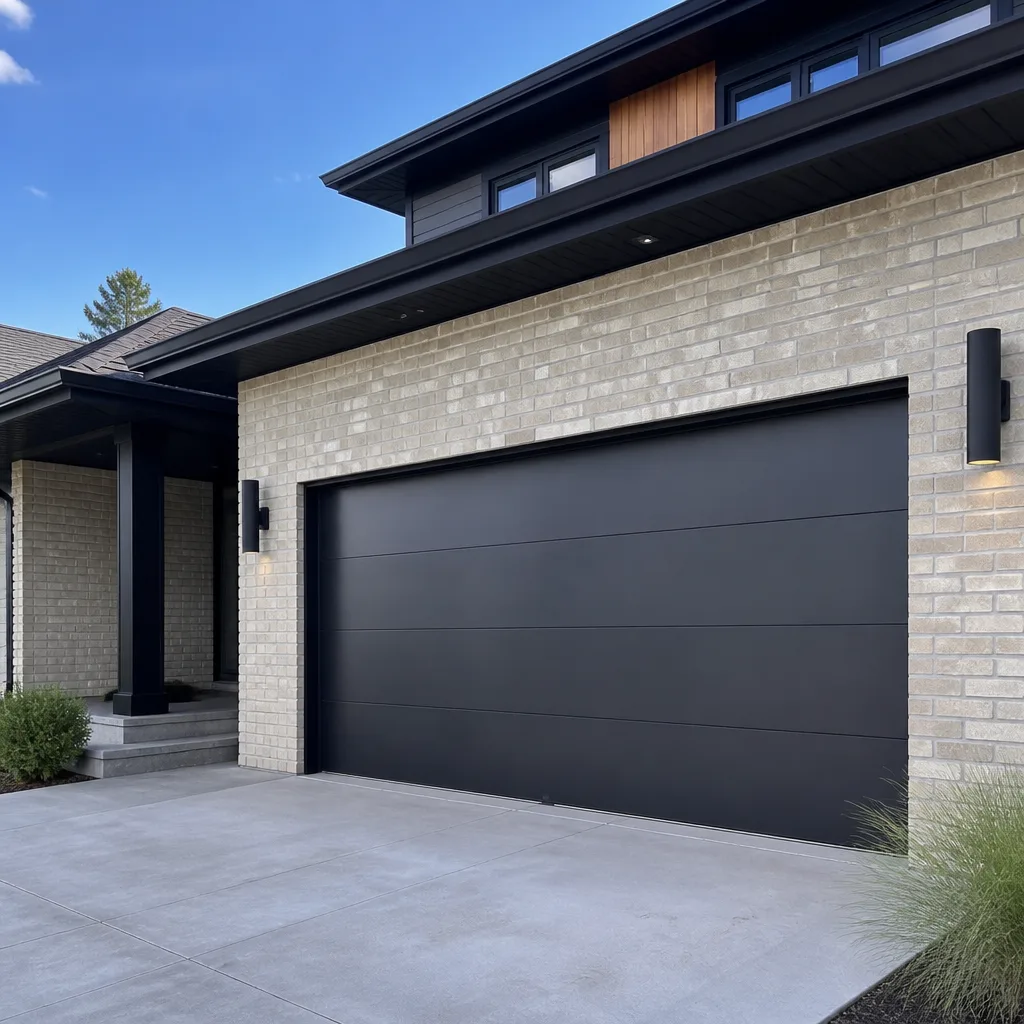
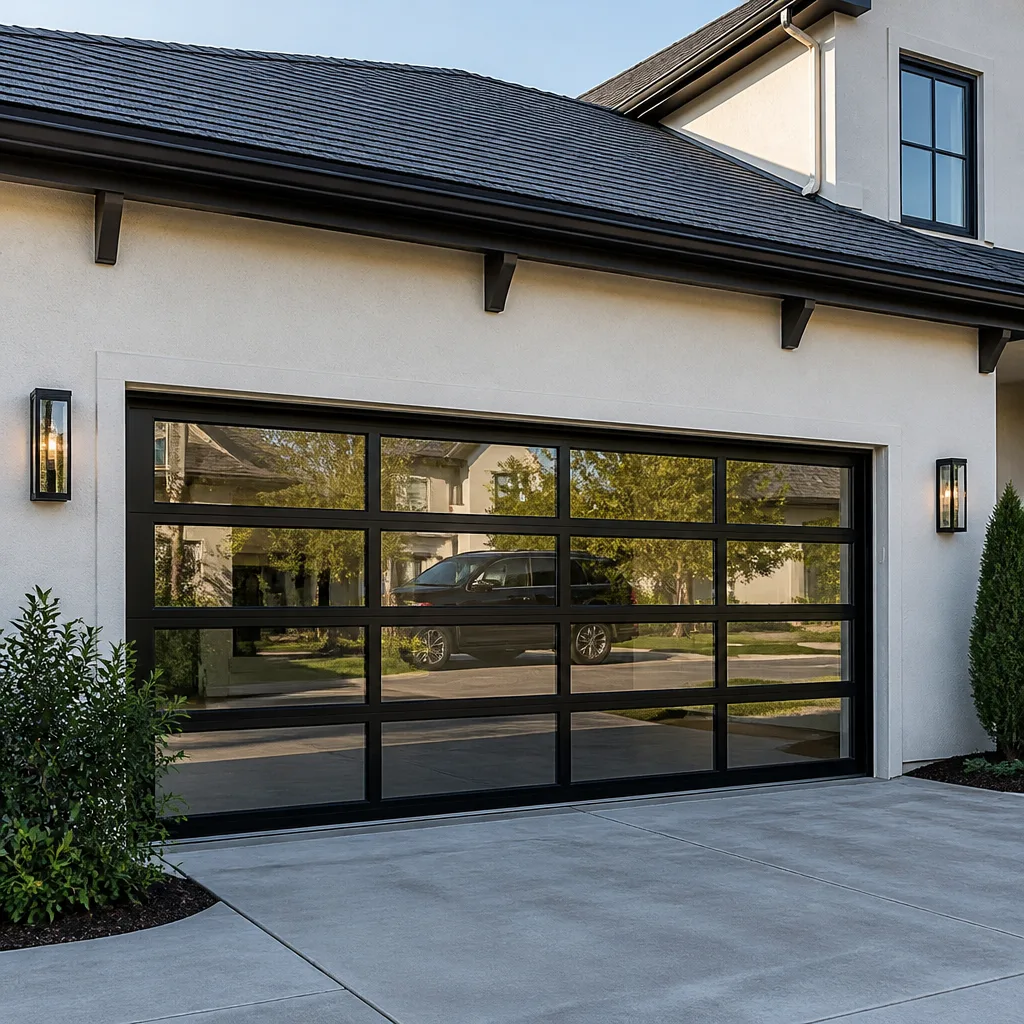
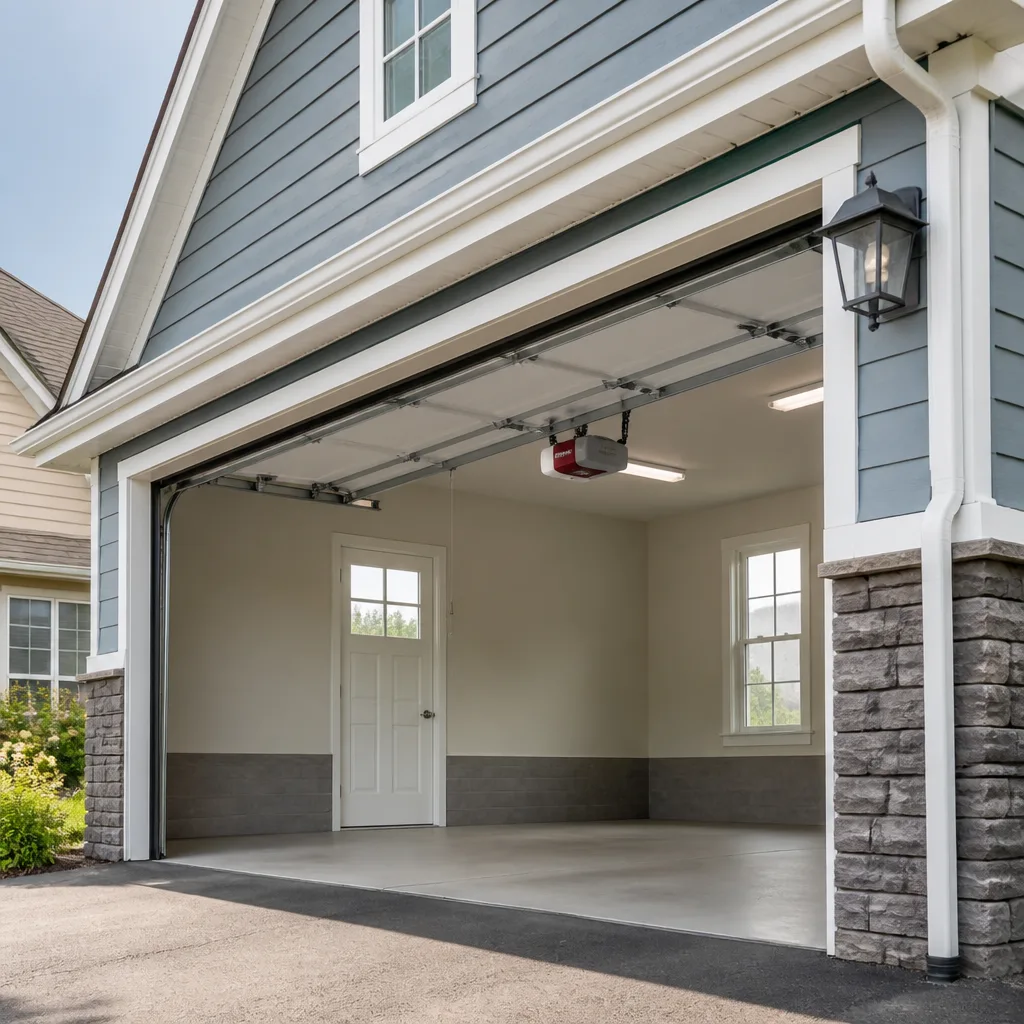
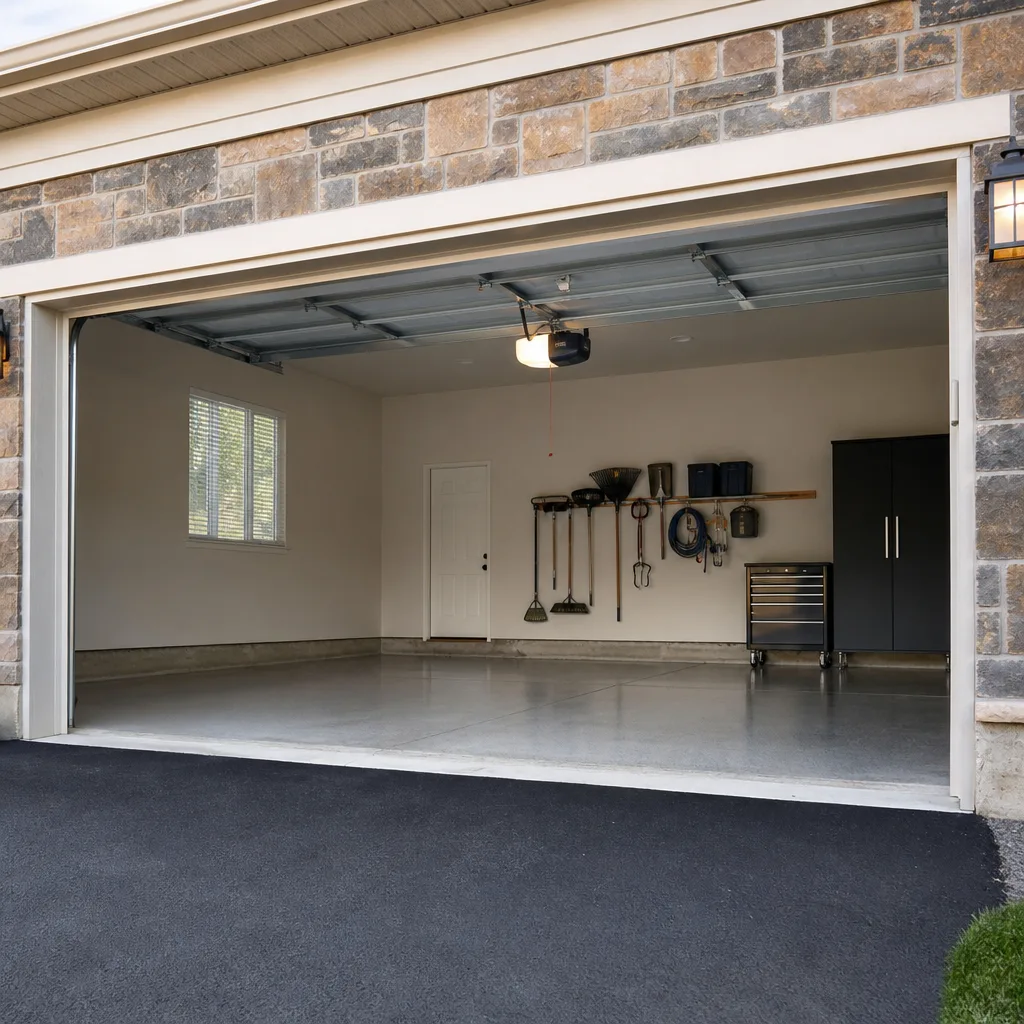
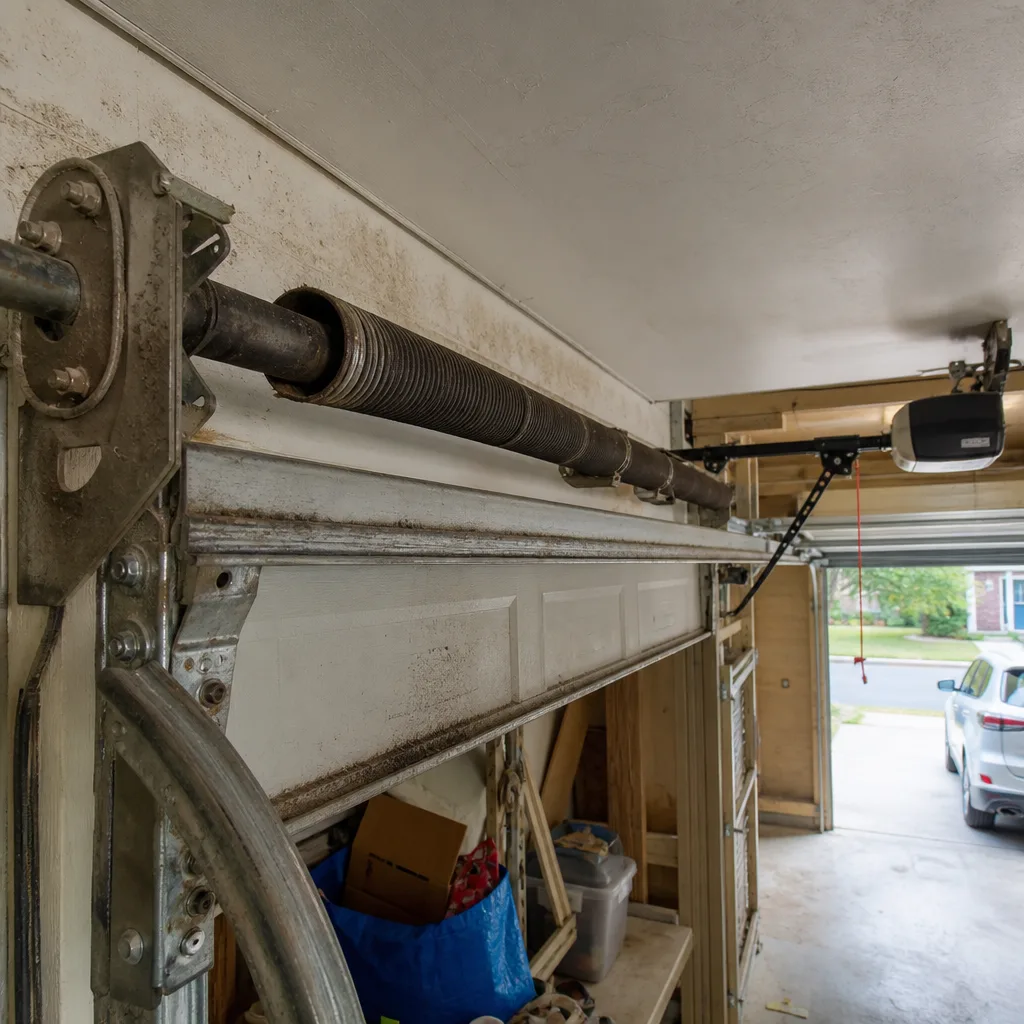 Before
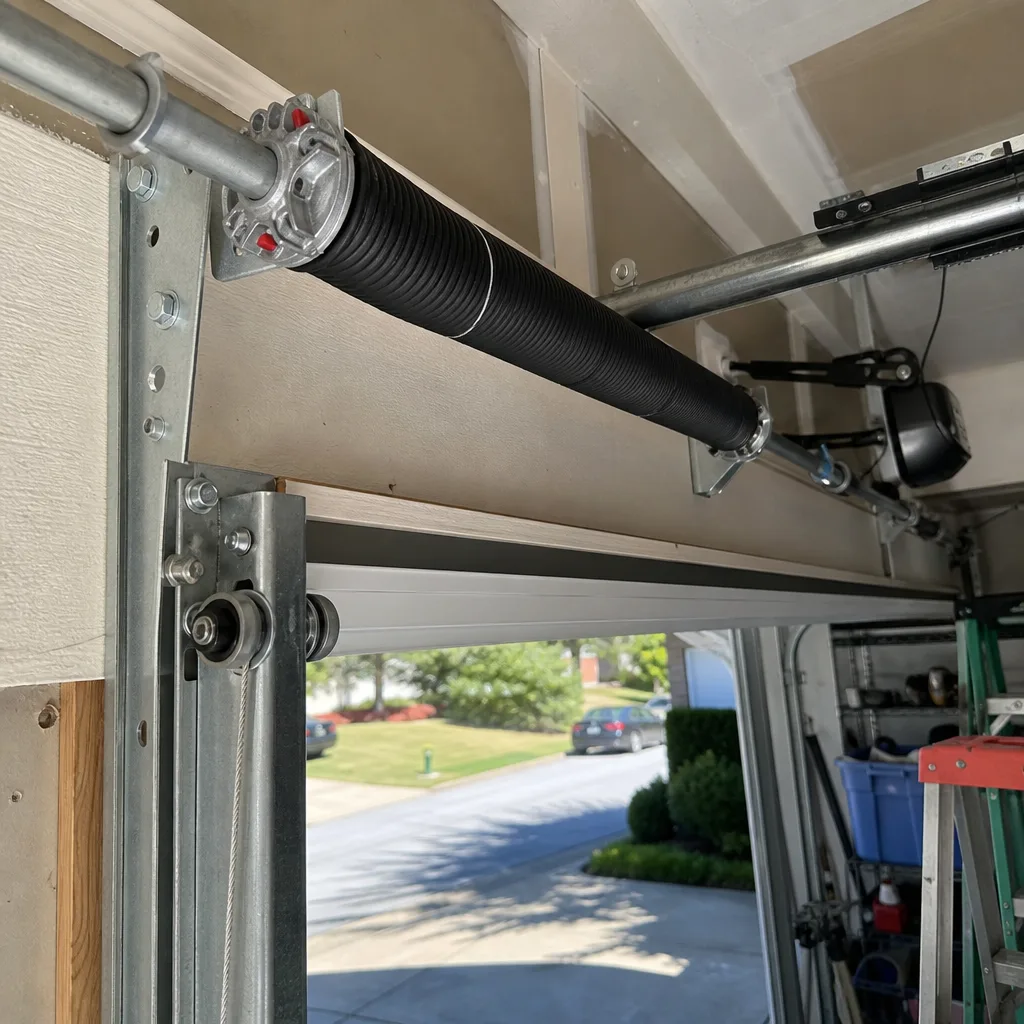 After
After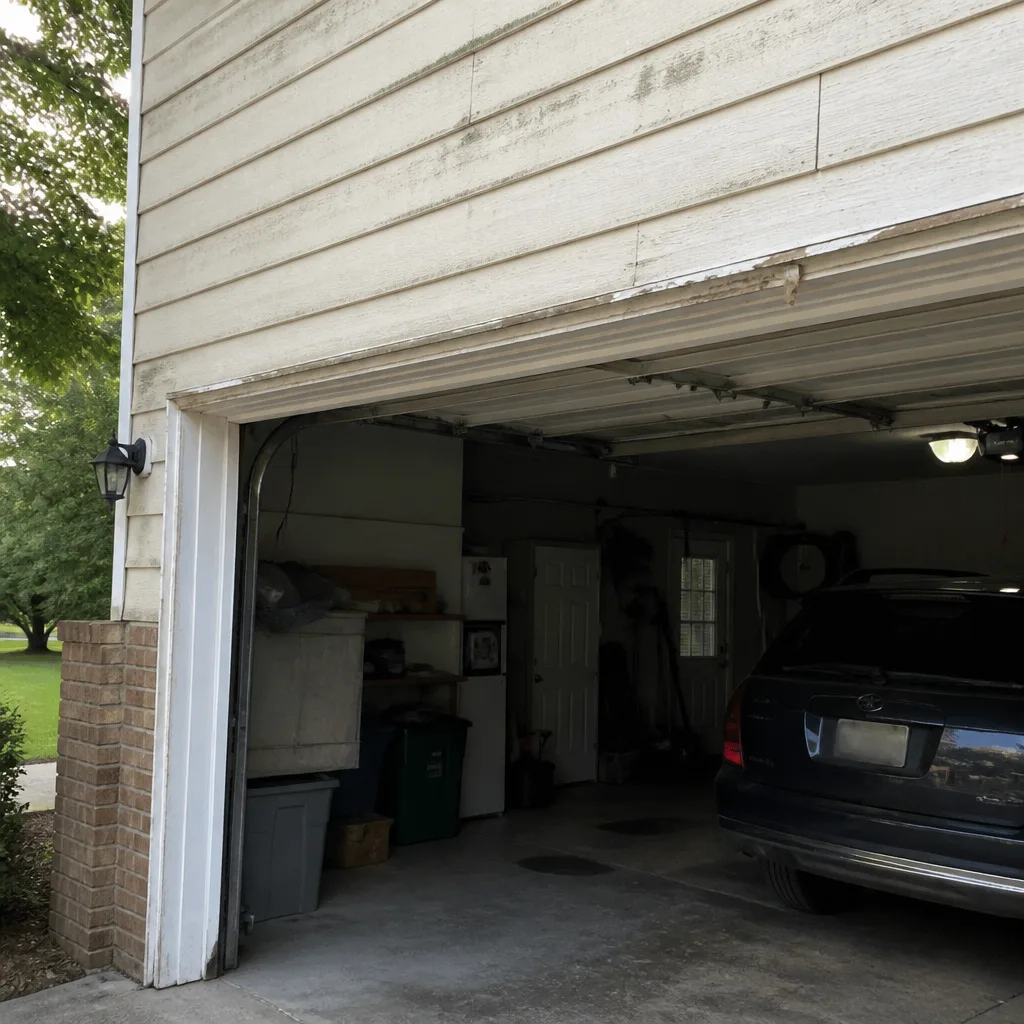 Before
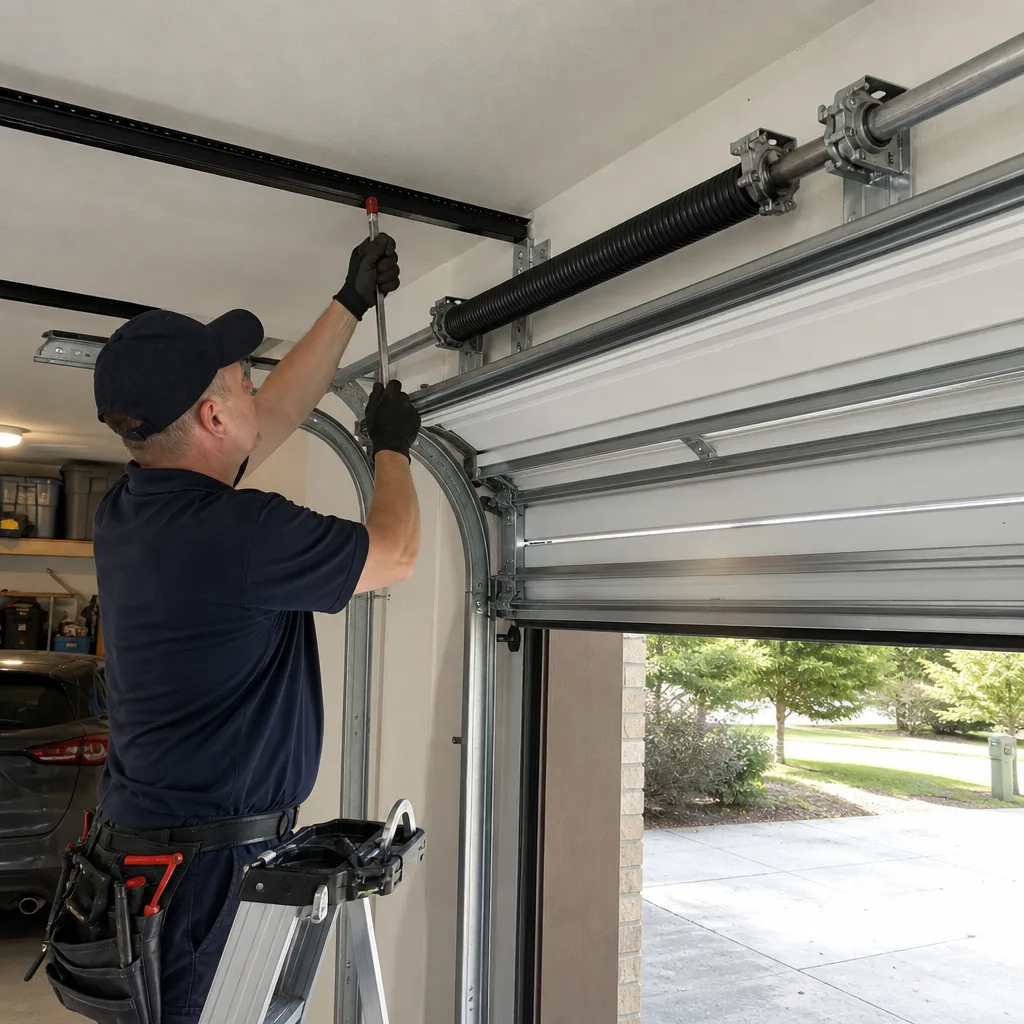 After
After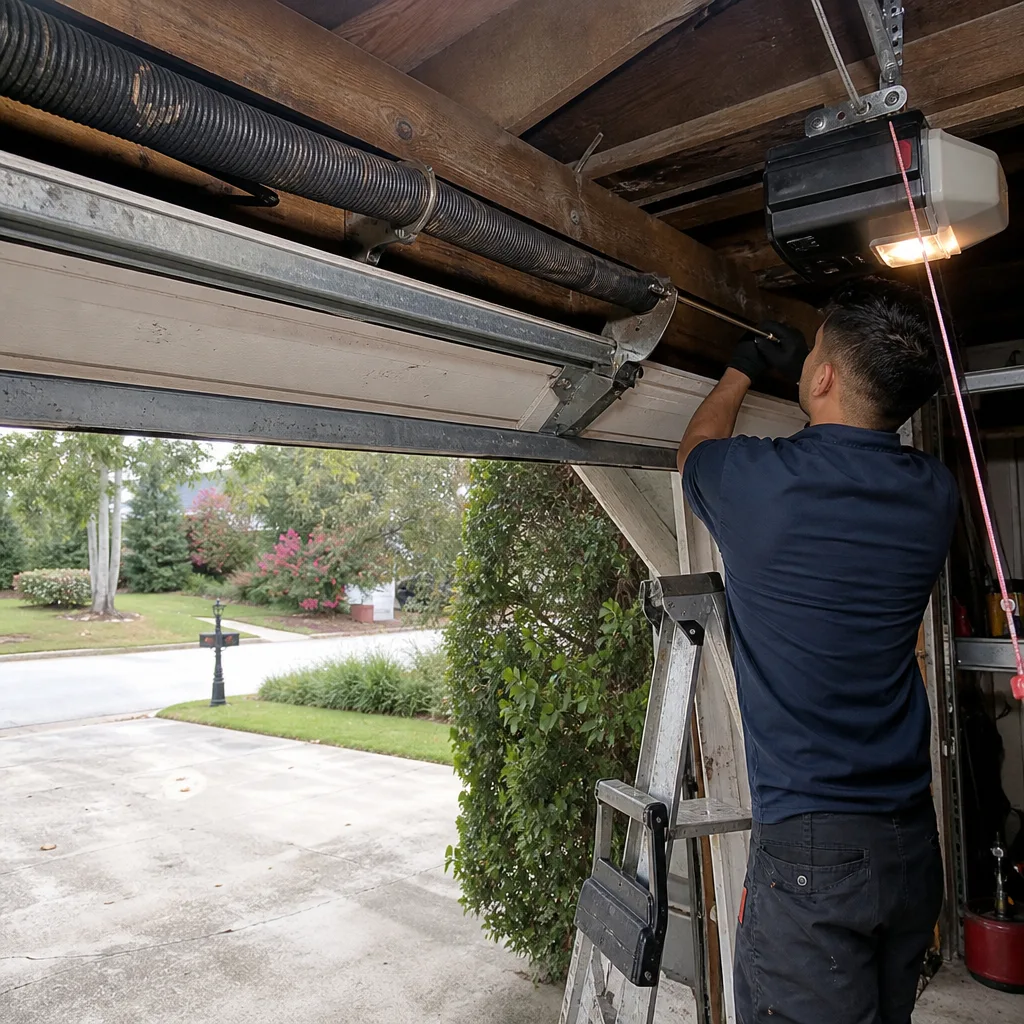 Before
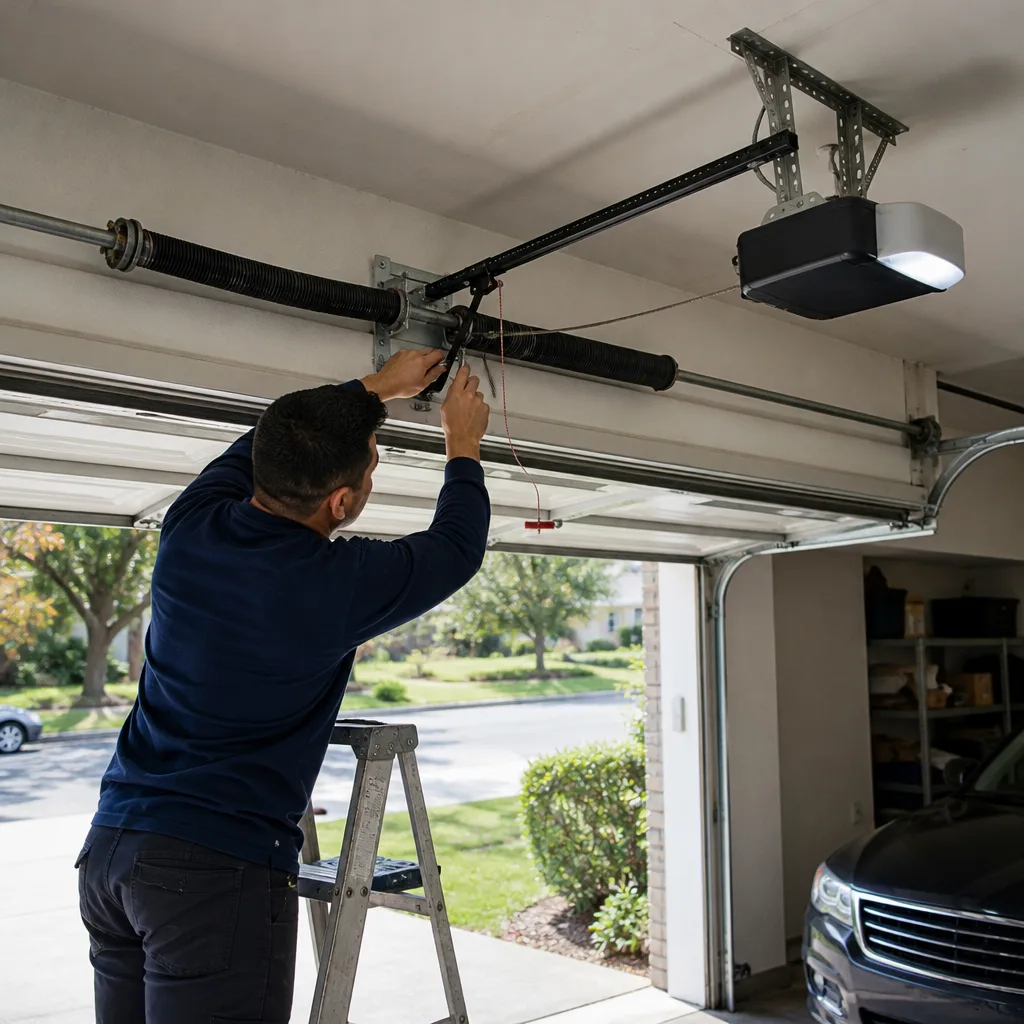 After
AfterThe Complete Guide to Garage Door in Alpharetta
A torsion spring is not “the spring.” It is a specific high-tension component that stores roughly 100 ft-lbs of torque, and when it fails, the door weighs somewhere around 150 to 250 pounds with nothing counterbalancing it. Most Alpharetta homeowners learn that sentence for the first time while standing in a driveway with a car they cannot move. This guide exists so you learn it now, before the failure, on your own schedule, with the mechanical vocabulary and the local context that turns a confusing service call into a conversation between informed parties. For more guides & resources on keeping your door running, see our blog. By the time you finish reading, you’ll know the name of every major sub-system on your door, what it costs to fix in Alpharetta, and what documentation you should expect before any technician touches your equipment.
Quick Answer
This guide covers every major component of a residential garage door system, what it does, what fails, and what repairs cost in Alpharetta, Georgia. For a detailed look at pricing, see our Garage Door Cost Breakdown: The Alpharetta Homeowner’s Reference for 2026. You’ll learn how to read the nameplate on your opener, how local clay soil and humidity swings affect your door over ten years, and what written documentation a reputable contractor should hand you after any service visit. If you need work done now, Servo Garage Doors Alpharetta provides a flat written price and written scope before any work starts, on every job, no exceptions, and you can call (678) 679-2096 for a free estimate.
Table of Contents
- The Anatomy of a Garage Door System
- How Alpharetta’s Climate and Soil Affect Your Door
- How to Read a Garage Door Nameplate
- Residential vs. Commercial-Duty Openers
- What Documentation You Should Receive After Service
- What Repairs Cost in Alpharetta
- Understanding Torsion Spring Replacement
- Preventive Maintenance That Actually Matters
- Common Mistakes to Avoid
- When to Call a Professional
- Frequently Asked Questions
BeforeAfterThe Anatomy of a Garage Door System
A garage door is not one machine. It is five sub-systems, each doing independent work, and most of them are invisible until something stops moving. Knowing the names of these components changes the conversation you have with any contractor, because you’ll recognize when someone is describing a real repair versus a vague problem. We’ve organized each sub-system below with its plain-English function, because the trade vocabulary matters, but so does understanding it.
The Torsion Spring Assembly
The torsion spring assembly sits on a metal shaft above the door opening, mounted to the header. It consists of one or two high-tension springs, a center bearing plate, two cable drums, and two end bearing plates. The springs counterbalance the door’s weight; without them, a 150 to 250 pound door is dead weight. Torsion springs are rated by wire diameter, inner diameter, length, and wind orientation (left-hand or right-hand wind). When we replace a spring, those four measurements determine what gets installed, not guesswork. Lighter doors use one spring; double-car doors in Alpharetta homes generally use two. When one breaks, the door often still opens if you use the opener, but it strains the motor and can pull the door off-level. Springs are rated in cycles, and a 10,000-cycle spring is the industry minimum we’d recommend for a home that runs its door four times a day.
Cable Drums and Lift Cables
The cable drums are grooved steel spools mounted on each end of the torsion shaft. The lift cables wind onto these drums and run down each side of the door, attaching to the bottom corner brackets. Their job is simple: they carry the counterbalanced weight of the door as it travels along the track. The cable itself is aircraft-grade galvanized steel, but it still wears, frays, and eventually fails if the door goes out of balance. A frayed cable is not a “minor issue.” If a cable snaps while the door is moving, the door can drop or bind against the track, and that is a genuinely dangerous failure. In Alpharetta, we see cable wear accelerate on doors that are out of level, because one side carries more load than the other.
Trolley Carriage and Rail System
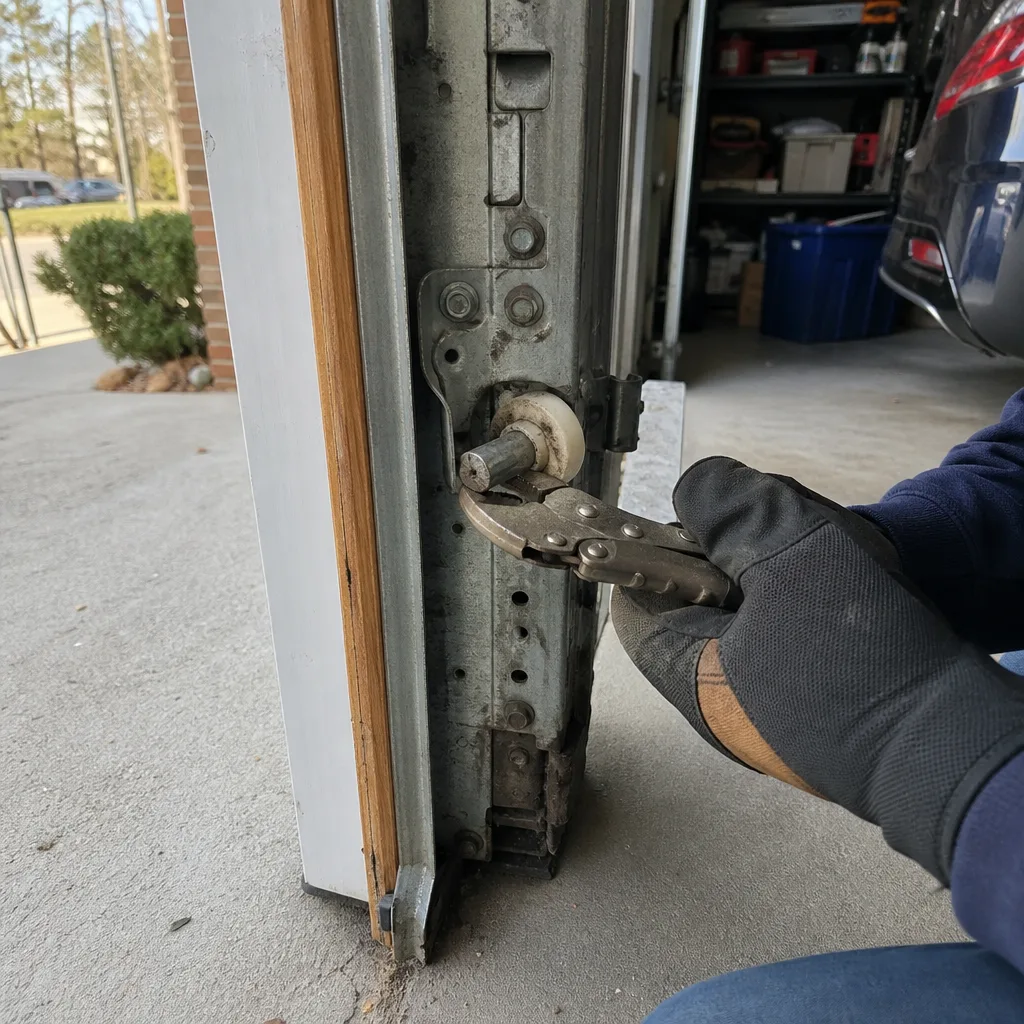
The trolley carriage is the component that connects the opener to the door. It rides on a rail attached to the ceiling, and it engages with a small release arm called the opener trolley. When you press the remote, the opener motor drives a belt, chain, or screw, which moves the trolley carriage, which moves the door. The carriage has a plastic slide or metal bearing that wears over time. When it wears, the door gets noisy, but more importantly, the travel becomes uneven, which loads the spring system asymmetrically. The track gauge, meaning the distance between the vertical and horizontal track rails, must stay within manufacturer specification; if a track gets knocked out of gauge, usually from a car bump or a loose mounting bracket, the rollers bind. That bind is what turns a small adjustment into a bigger repair if left unchecked.
Bottom Weather Seal and Rubber Components
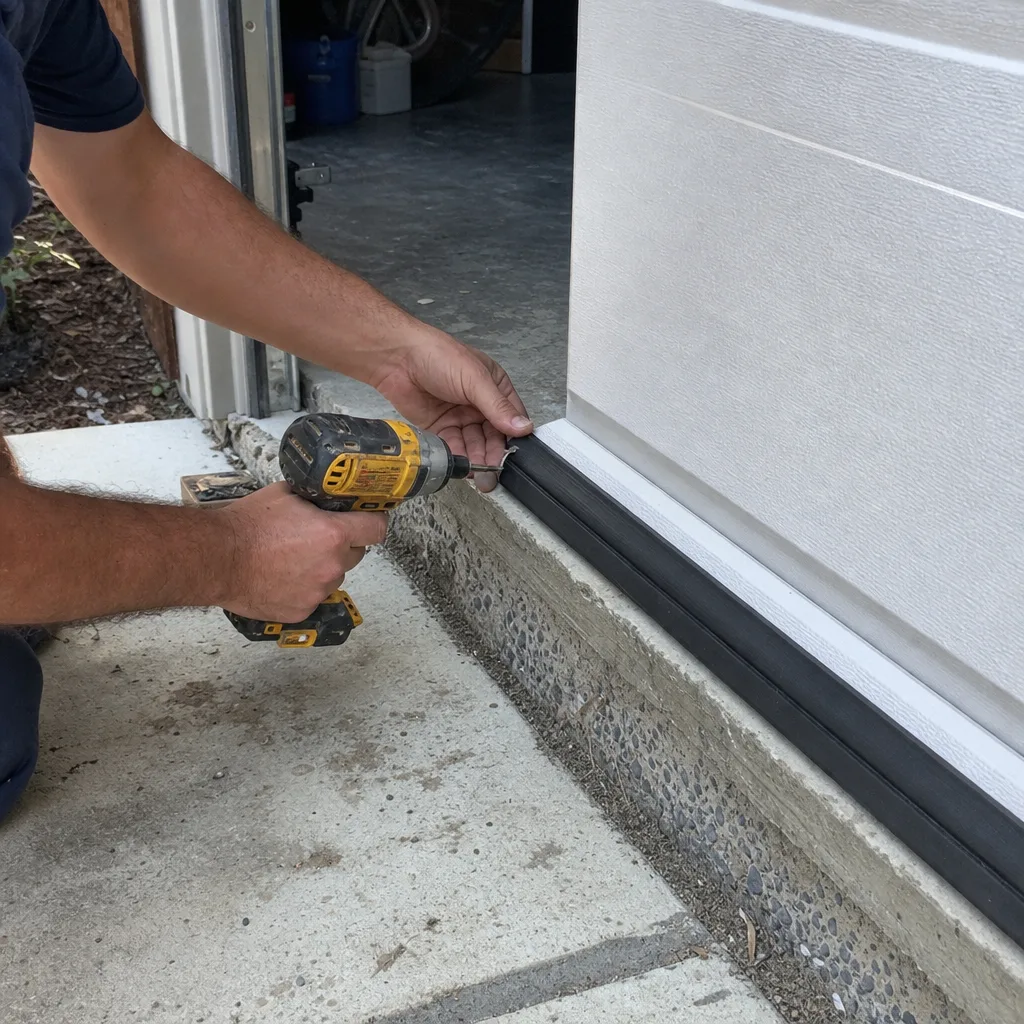
The bottom weather seal is a replaceable rubber strip that slides into a retainer channel on the bottom of the door. It is the first line of defense against water, dust, leaves, and insects. In Alpharetta, where we get real rain and a long humidity season, a failed bottom seal lets moisture into the garage, which accelerates rust on the track hardware, the door hinges, and anything you store on the floor. The seal dries out, cracks, and loses its compression after four to six years. It is the least expensive sub-system on the door and the one most homeowners overlook entirely.
How Alpharetta’s Climate and Soil Affect Your Door
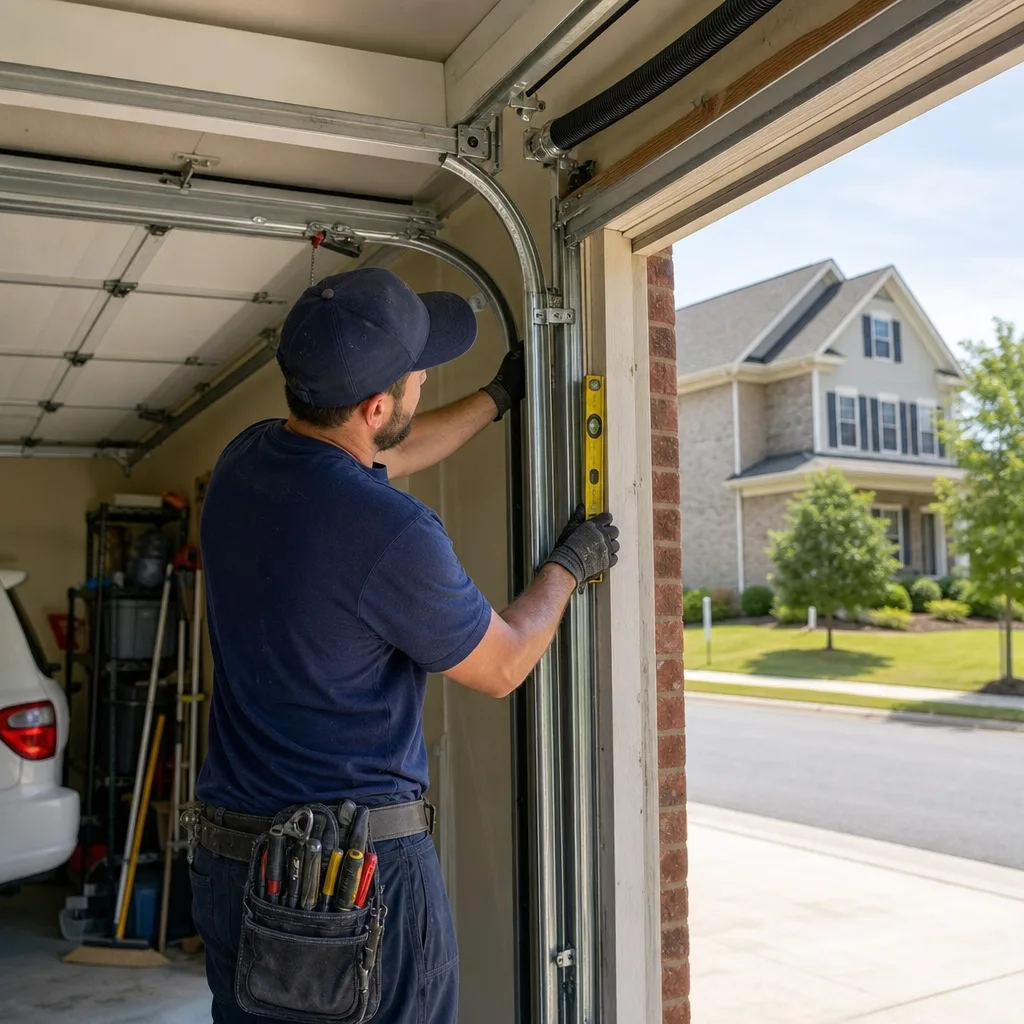
Alpharetta sits on Georgia red clay, and that clay is expansive. It swells when it is wet and shrinks when it is dry, and that movement shows up in garage door performance. A concrete slab that shifts even half an inch changes the relationship between the door sections, the track, and the weather seal. We see this in neighborhoods like Windward, where older homes on established lots have had years of wet and dry cycles move the slab under the door opening. The practical effect: a door that starts binding on one side, a bottom seal that gaps in one corner, and a spring system that works harder than it should because the door is fighting the track.
Humidity is the second Alpharetta-specific factor. Georgia humidity swings between 60% and 90% for months at a time, and it affects door materials differently. Wood composite doors, which were common on custom-built Alpharetta homes in the 2000s, absorb moisture, swell, and eventually delaminate if the paint film is not maintained. Steel doors hold shape better, but the interior steel skin of a non-insulated panel will rust at the bottom edge if water sits on it repeatedly. Fiberglass doors shrug off humidity well but cost more, and they are uncommon enough that most Alpharetta homes have steel or wood composite.
What matters in practice is the ten-year ownership window. A steel door with a proper paint system and a functioning bottom seal will go ten years with minimal degradation. A wood composite door in Alpharetta’s humidity will show visible wear at the bottom panel by year six unless the owner maintained the paint. A fiberglass door will still look structurally sound at year ten, but the hardware attached to it, hinges, rollers, and cables, will have gone through their life cycles regardless of panel material. The panels do not wear out first; the moving parts do.
How to Read a Garage Door Nameplate
The motor housing on every garage door opener carries a manufacturer’s nameplate, and On most LiftMaster and Chamberlain units, it is on the left or right side of the metal chassis. That nameplate contains three pieces of information that matter more than the brand name: the model number, the serial number with manufacture date, and the motor rating. The model number tells you the opener’s generation and feature set. The serial number decodes to a manufacture date, which we use to determine whether a unit is still within its parts warranty. The motor rating, usually listed in horsepower or horsepower-equivalent, tells you what the unit was built to do.
For the spring system, the nameplate information lives on the spring itself, marked on the spring cone. A spring marked “0.225-2-27” is a spring with 0.225-inch wire diameter, 2-inch inner diameter, and 27-inch length. When a technician quotes a spring replacement, they should be reading those numbers from the existing spring or calculating them from a door-weight measurement, not guessing from the door size. Why does this matter? Because a wrong spring, one rated for fewer cycles or a different door weight, will fail early, sometimes within two years. You have the right to ask the technician to show you the old spring’s markings before accepting a quote. Clause 4 of The Haven Standard requires that photo, and it exists because too many homeowners were quoted spring replacements without ever seeing the failed component.
Steps to Read Your Door Before Any Repair Quote
- Open the door halfway by hand. Disconnect the opener using the red emergency release handle, then try to lift the door. If it stays in place at the halfway point, the springs are balanced. If it drops or shoots up, it is not.
- Look at the spring cones. Write down the numbers printed on the spring cone. If they are too worn to read, photograph the spring assembly from a few feet away instead, and let the technician read them on site.
- Check the manufacturer plate on the opener. Write down the model and serial number before calling anyone. That turns a phone call into a data exchange instead of a sales pitch.
- Measure the door width and height. Standard Alpharetta two-car doors are 16 feet wide by 7 feet tall, but some larger homes have 18-foot or even 20-foot doors, and the spring system differs.
- Record the cycle count if your opener displays it. Chamberlain and LiftMaster wall consoles on newer units show a cycle count in the diagnostics menu, which tells you how heavily the door has been used.
Residential vs. Commercial-Duty Openers
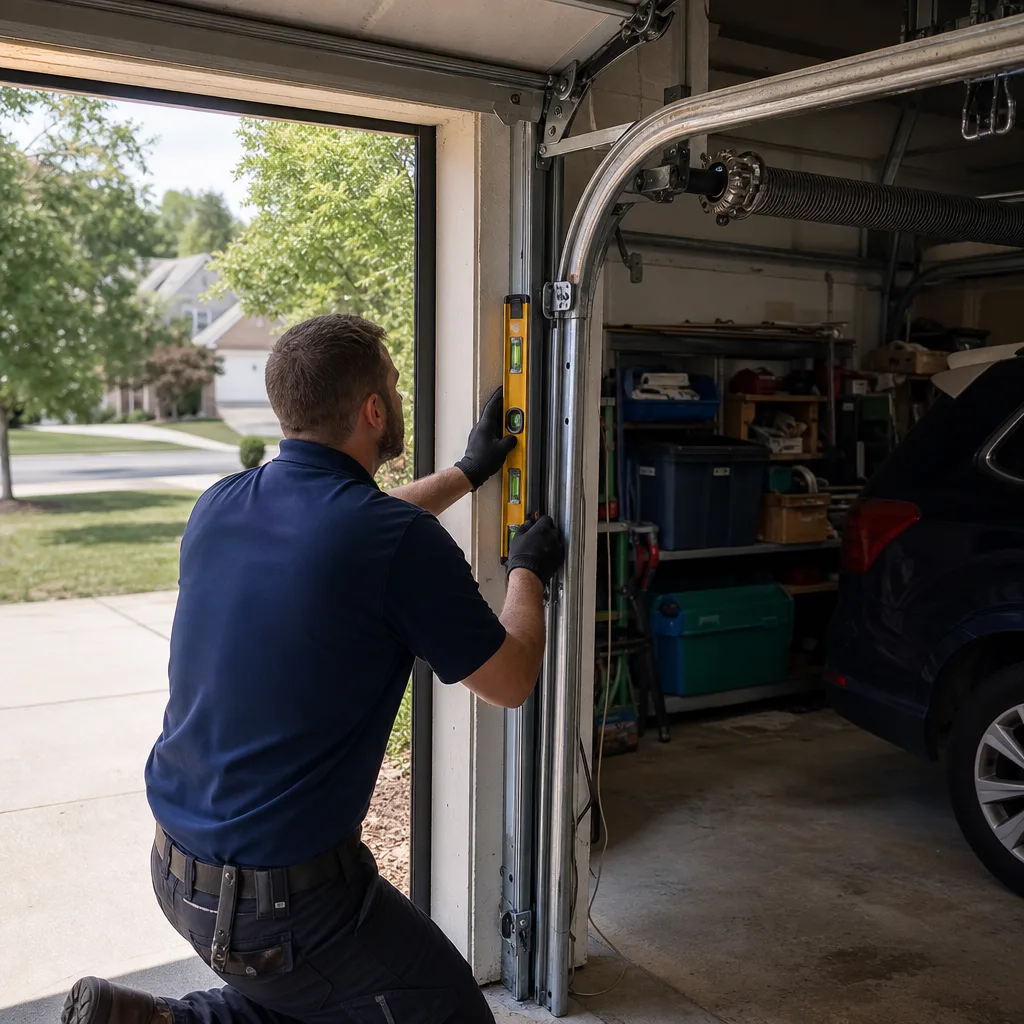
Many Alpharetta homes run their garage doors far more often than the average American household. A family with two working adults, two school-age kids, and an active social routine can easily cycle the door 20 times a day, sometimes more. That is 7,300 cycles a year. A residential opener rated for 10,000 cycles will last less than 18 months under that load, which is why we tell Alpharetta homeowners to look at the duty cycle rating, not just the horsepower number.
A residential opener like a Chamberlain B2405 or a LiftMaster 8160 uses an AC or DC motor rated at 1/2 to 3/4 horsepower-equivalent, with a duty cycle of about 10 to 12 cycles per hour. It is built for the average suburban door that opens and closes four to six times a day. A commercial-duty opener, like a LiftMaster JHD or a Raynor commercial unit, uses a heavier motor rated for continuous duty, meaning it can cycle 25 or more times per hour without overheating, and the gear train is metal where residential units use composite gears. You do not need a commercial opener just because your door opens 20 times a day, but you do need to know the cycle rating on the unit you buy. If your family runs the door hard, an opener with a higher cycle life rating, even one marketed for residential use, will outlast a cheaper model by years.
The second difference is the rail system. A commercial-duty trolley uses a heavier-gauge steel rail, and the trolley carriage has a metal bearing assembly instead of plastic. The third is the logic board. Commercial boards carry better surge protection, which matters in Alpharetta because our summer thunderstorms produce power surges that kill opener logic boards. We replace more logic boards after summer storm season than at any other time of year.
What Documentation You Should Receive After Service
Here is the part most service guides do not cover: what leaving should look like after the technician finishes. A reputable contractor hands you paper. Not a receipt, but documentation. If you do not receive written records, you are carrying risk that you cannot evaluate. We’ll list the specific documents below, because the absence of any one of them is a measurable risk.
- A written scope of work, signed before labor begins. It states exactly what will be replaced or repaired, the flat price for the work, and any exclusions. Clause 1 of The Haven Standard requires this on every job, no exceptions. If a contractor will not put the scope in writing before touching the door, do not let them touch the door.
- A photo record of the failed component. You should be shown the broken part, photographed, before it is removed. If a spring is broken, you should see the break. If a cable is frayed, you should see the fray. This is not theater; it is evidence.
- A written warranty document. State what is covered, in writing, with a defined term. A handshake warranty is not a warranty.
- A post-service photo record. After the work is done, you should receive photos of the completed repair or installation, showing the new components in place. Servo Garage Doors Alpharetta includes this documented photo record on every visit, tracing back to the founding rule that the customer sees the failed part before anyone quotes a replacement.
- A receipt with the technician’s name. You should know who was on your property, by name, with license information available upon request. No anonymous service vans.
A contractor who will not provide these documents is not saving you hassle. They are removing your ability to verify the work, to make a warranty claim, or to get a second opinion. The Free Second Opinion offer from Servo Garage Doors Alpharetta is tied directly to this: bring in another company’s written estimate and we’ll review it against your door’s actual condition. That offer only works if the original estimate was written, which is the entire point.
What Repairs Cost in Alpharetta
Naming a dollar range on the page is not a marketing choice. It is the deal. The Alpharetta market for garage door work is consistent enough that we can give you real numbers, and these figures reflect what we charge, which is a flat written price agreed before any work starts.
| Repair Item | Typical Cost Range in Alpharetta |
|---|---|
| Single torsion spring replacement | $180 to $280 |
| Double torsion spring replacement (typical for 16-ft door) | $300 to $450 |
| Cable replacement (per side) | $120 to $180 |
| Roller replacement (set of 10, nylon) | $100 to $160 |
| Bottom weather seal replacement | $80 to $140 |
| Logic board replacement (opener) | $150 to $260 |
| Full opener replacement (motor unit, remote, safety eyes, wall console) | $420 to $700 |
| Track adjustment and re-level | $80 to $150 |
| Full door replacement (16-ft steel, installed) | $1,600 to $3,200 |
These prices are quoted and agreed before any work starts, in writing, per The Haven Standard. If a contractor will not give you a written number before touching your door, that is the only red flag you need. The price does not change once the technician sees the door because the price is based on the actual condition of the door, documented in the photo record, not on a phone estimate that gets revised upward.
Understanding Torsion Spring Replacement
The torsion spring is the component most Alpharetta homeowners replace first, usually because it broke with a sound like a gunshot in the garage. Here is what you need to know about that replacement before it happens. The spring stores mechanical energy, and when it breaks, that energy is released suddenly. You should not be in the garage when it fails, and you should not attempt to replace it yourself. High-tension springs carry enough stored force to cause severe injury. See our DIY vs Professional Garage Door: The Alpharetta Homeowner’s Decision Guide for why this work belongs to trained professionals.
When we replace a spring, the process is consistent. The old spring is photographed and documented, the new spring is matched to the old spring’s wire diameter, inner diameter, and length, the spring is wound to manufacturer specification for the door weight, and the technician verifies the balance by releasing the opener and lifting the door by hand. A correctly balanced door stays in place at the halfway point. An incorrectly balanced door drifts, and that drift shortens the life of the new spring and strains the opener.
The material choice matters too. Oil-tempered springs are cheaper and common on builder-grade doors. Galvanized or powder-coated springs resist rust, which matters in Alpharetta’s humidity. We recommend a minimum of 10,000 cycles on any spring replacement for a door that cycles four or more times daily. If you run your door 20 times a day, ask for a higher cycle count, because the difference between a 10,000-cycle and a 25,000-cycle spring is often less than $60 per spring and the higher-cycle spring lasts roughly two and a half times longer under that load.
Preventive Maintenance That Actually Matters
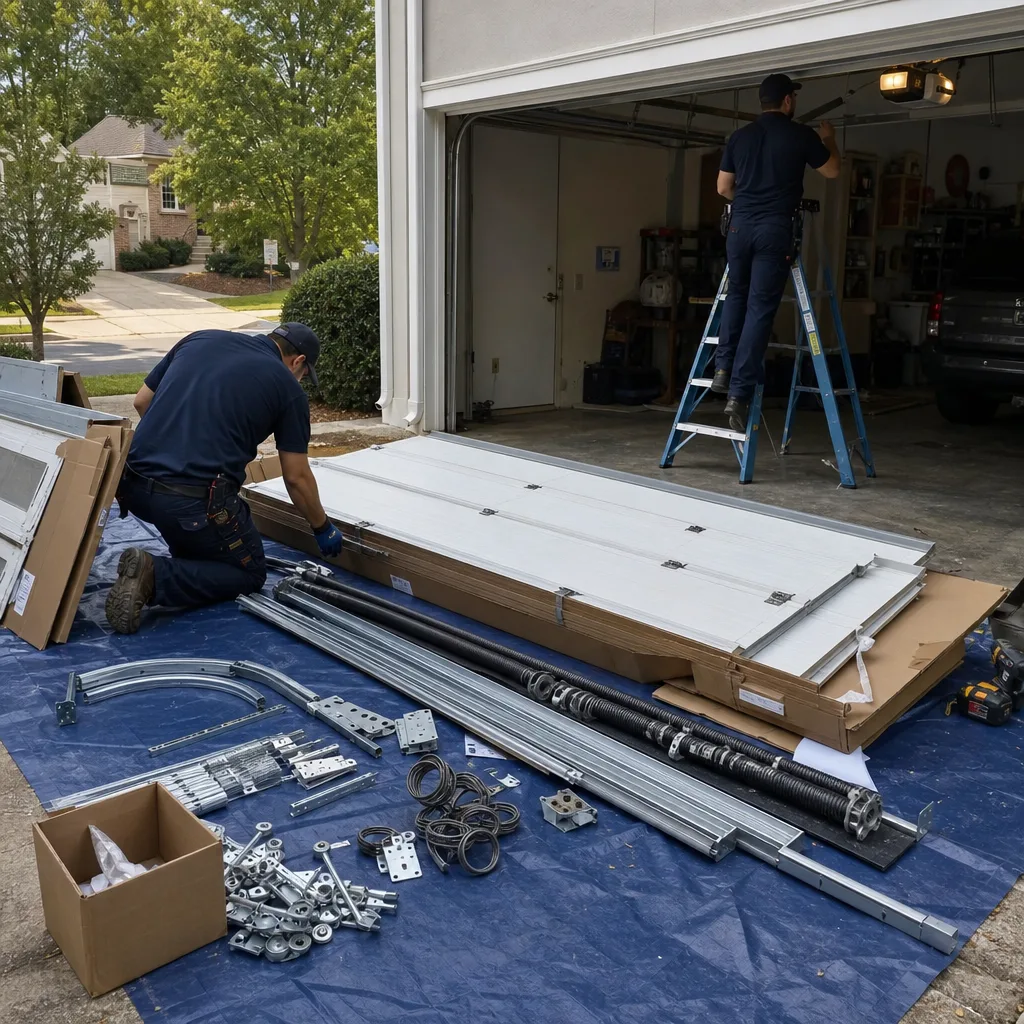
Most garage door maintenance advice is noise. The useful version is a short list of things that change outcomes: less breakage, longer component life, and a door that stays level. Here is the list, organized by what we see ignored most often in Alpharetta garages.
- Lubricate the rollers, hinges, and bearings twice a year. Use a lithium-based or silicone spray lubricant, never WD-40, which is a solvent and will strip lubrication. Do not lubricate the torsion spring itself, which can cause the coils to slip.
- Inspect the bottom seal every spring. Run your hand along it in March. If it is cracked or compressing flat, replace it before the summer humidity season. This is the single most cost-effective maintenance item on any Alpharetta door.
- Test the balance every six months. Disconnect the opener and lift the door by hand. If it does not stay at the halfway point, the springs are wearing and the door is out of balance. An unbalanced door wears cables, rollers, and the opener gear train faster.
- Clean the photo eyes monthly. The safety sensors at the bottom of the track get dusty, and a dusty eye sends a false obstruction signal that makes the door reverse for no reason. Wipe the lenses with a dry cloth.
- Check the track gauge annually. The vertical and horizontal rails should be parallel and secure. Look for a gap between the rollers and the track, which indicates a bent bracket or a shifted slab. Do not try to bend a track back yourself; that is a job for a technician with a track gauge.
If you are not comfortable doing these things yourself, that is fine. The point of a written maintenance record from Servo Garage Doors Alpharetta is that you can see what was checked and what was found, without guessing. We will document it the same way we document a repair: photos, measurements, and a written summary.
Common Mistakes to Avoid
- Treating the garage door opener as the whole system. The opener is one sub-system. The springs, cables, track, and rollers are the parts that carry the load. When a door fails, the opener is usually the innocent bystander, not the cause.
- Accepting a quote over the phone without a written scope. A phone quote is a starting number, not an agreement. In Alpharetta, the price you are quoted before work starts should be the price on the invoice, and it should be in writing.
- Waiting for a spring to break before replacing it. Springs are rated in cycles. If your door is original to a 2015-era Alpharetta home and has been used daily for nine years, the springs are at or beyond their rated life. Replacement before failure is cheaper and safer, because the door never drops unexpectedly.
- Ignoring a frayed cable. A cable does not fail gracefully. It snaps. And when it snaps, the door can bind or fall. If you see fraying, schedule the replacement that week, not next month.
- Lubricating the wrong components. Spraying WD-40 on a torsion spring accelerates coil slip and can cause the spring to unwind. Lubricate rollers and hinges only, with the right product.
- Assuming the door is safe because it is heavy. A door that drops suddenly is heavier than you think, and it does not care about your schedule. If the door will not stay at the halfway point, the springs need attention now.
When to Call a Professional
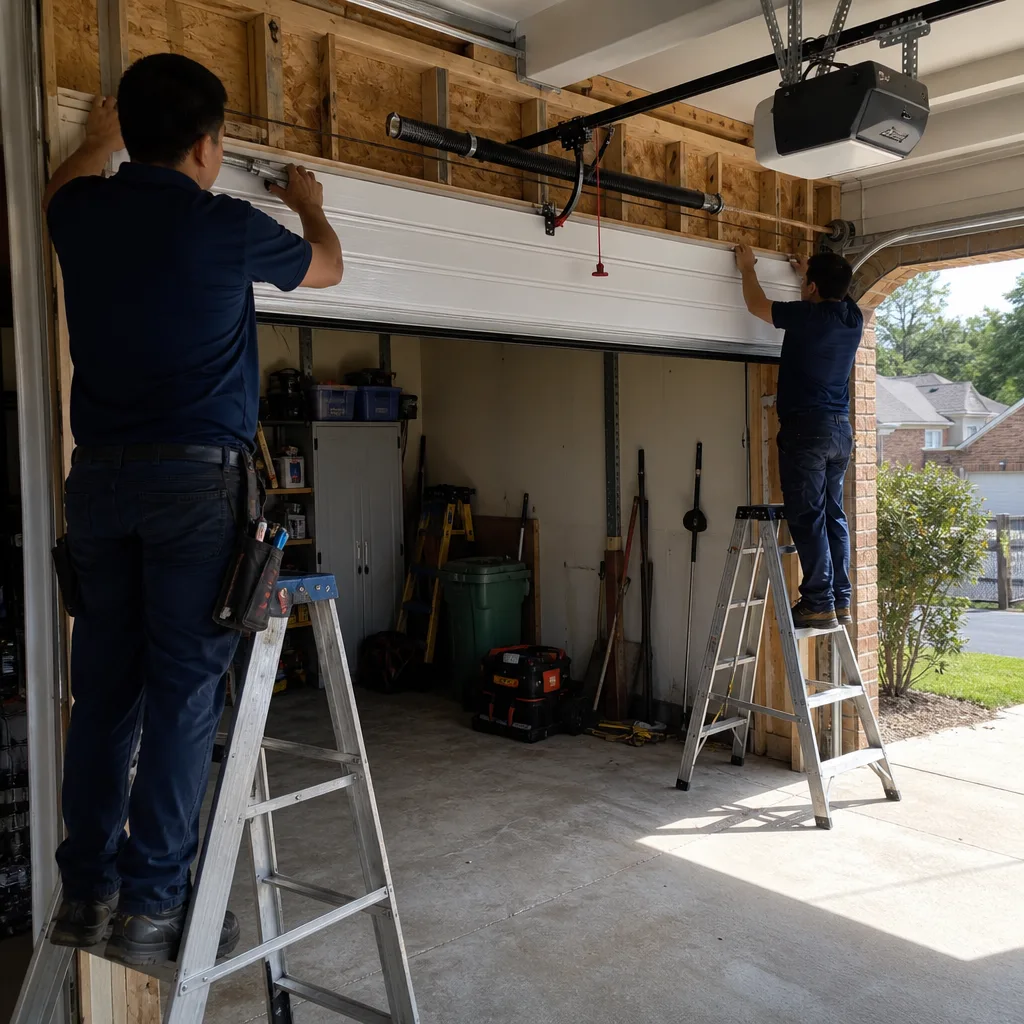
You need a professional when the failure involves stored energy or load-bearing components. That means torsion springs, torsion spring cables, and anything attached to the spring shaft. You also need one when the door has come off-level, when a cable has frayed, or when the opener logic board has failed and you need a replacement unit programmed to your door’s travel limits and force settings. These are not items you fix with a YouTube video and a pair of pliers; the high-tension spring system can cause severe injury if mishandled, and force-setting errors on an opener can make a door reverse insufficiently and cause property damage or worse. Before any major work, check Garage Door Permits, Codes & Inspections in GA: What You Need to Know to stay compliant. Servo Garage Doors Alpharetta offers free estimates in Alpharetta, with written pricing and a documented photo record on every visit. Call (678) 679-2096, and a live person answers, 24 hours a day, including holidays.
Frequently Asked Questions
A single torsion spring replacement in Alpharetta typically costs $180 to $280, while a double spring replacement for a standard 16-foot door runs $300 to $450, including the spring, installation, and a written warranty. The price is quoted and agreed in writing before any work starts. Call (678) 679-2096 for an exact quote, because every door’s spring system is matched to its specific weight and dimensions.
That loud bang is almost always a torsion spring breaking under tension, which releases the stored energy suddenly. The door will not open because the springs are what counterbalance the door’s weight. Do not try to operate the door manually or with the opener, because the opener motor is not designed to lift a 200-pound door without spring assistance, and forcing it will damage the motor. Call a professional to inspect and replace the spring.
In Alpharetta’s humidity and red clay conditions, we recommend a maintenance check twice a year, once in spring and once in fall, with a focus on lubricating rollers and hinges, checking spring balance, and inspecting the bottom seal. A documented inspection that includes photos and written findings, which you’ll receive from Servo Garage Doors Alpharetta on every visit, gives you a paper record of your door’s condition over time.
For most repairs in Alpharetta, yes. Servo Garage Doors Alpharetta answers calls with a live person 24/7, including emergency garage door calls, and dispatches a named technician with an on-the-way text, not a window. Same-day service applies to spring replacements, cable repairs, and opener troubleshooting; new door installations are measured, ordered, and scheduled, with a free measure and a written price provided first.
No. Servo Garage Doors Alpharetta operates under Clause 1 of The Haven Standard, which requires a flat written price and written scope before any work begins. The price is based on documented measurements and the door’s actual condition, and it does not change after the technician arrives unless you authorize additional work in writing.
Yes. Technicians in Alpharetta carry torsion springs in a range of wire diameters and lengths, lift cables, bottom seals, rollers, hinges, and replacement opener components, so the most common repairs are completed on the first visit. If a specific panel or door model must be ordered, that is communicated in writing before the visit ends, with a defined lead time and a written price.
The Bottom Line
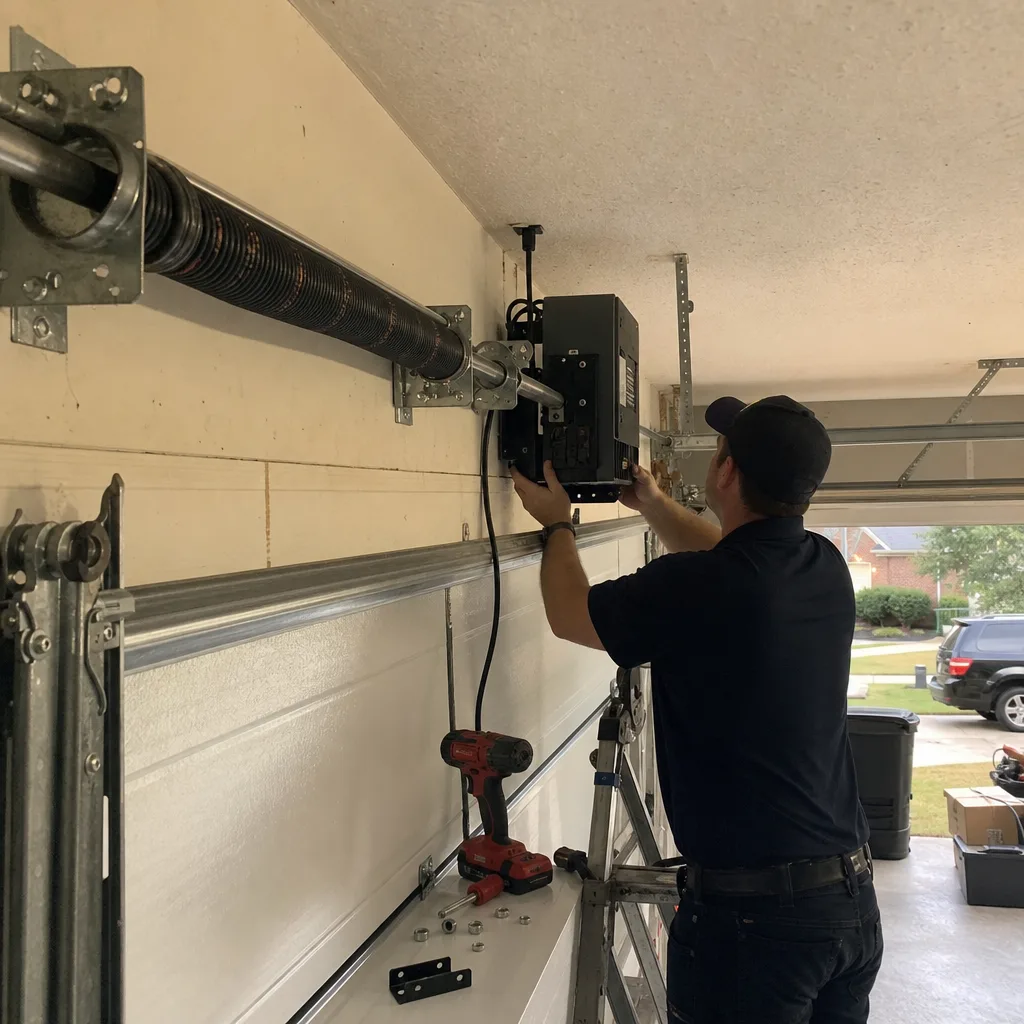
Your garage door is a system of interdependent components, and the one that matters most, the torsion spring, is the one most homeowners never see until it breaks. Knowing the names of those components, the cycle ratings on the springs, and the documentation you’re owed after any service call puts you in control of the transaction, not the contractor. In Alpharetta, red clay movement and long humidity seasons mean your door needs different attention than a door in Arizona or Michigan, and the cheapest repair is the one you catch before the spring snaps. If you’d like that documented, with a written price and the photo record to prove it, call Servo Garage Doors Alpharetta at (678) 679-2096. The estimate is free, and the written price is the entire point.
Written by Marcus Deller, Owner at Servo Garage Doors Alpharetta, serving Alpharetta since 2015.