
Last updated September 20, 2026
Full 25-point door and opener safety check with every visit - springs, cables, rollers, tracks, and your LiftMaster or Chamberlain opener included
You get a price before we start. It does not change when the truck arrives.
 Before
 After
After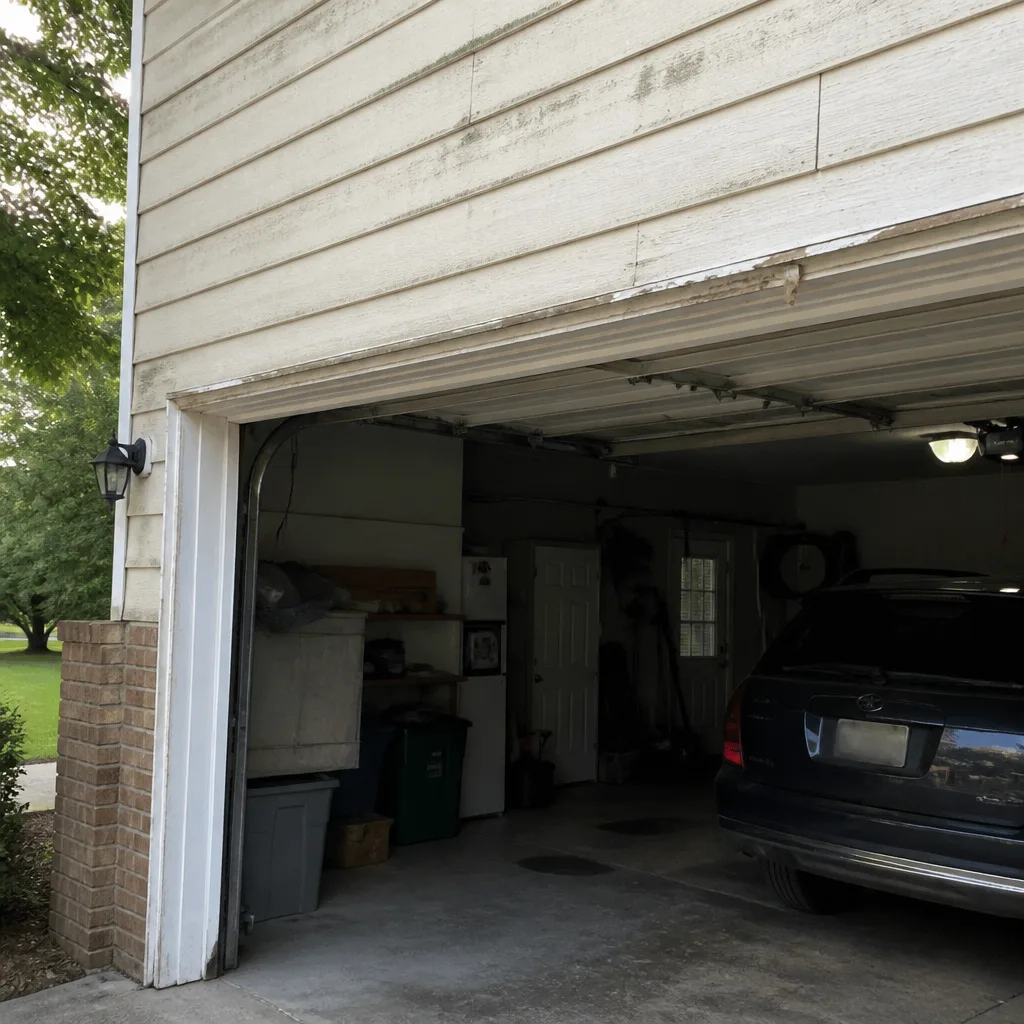 Before
 After
After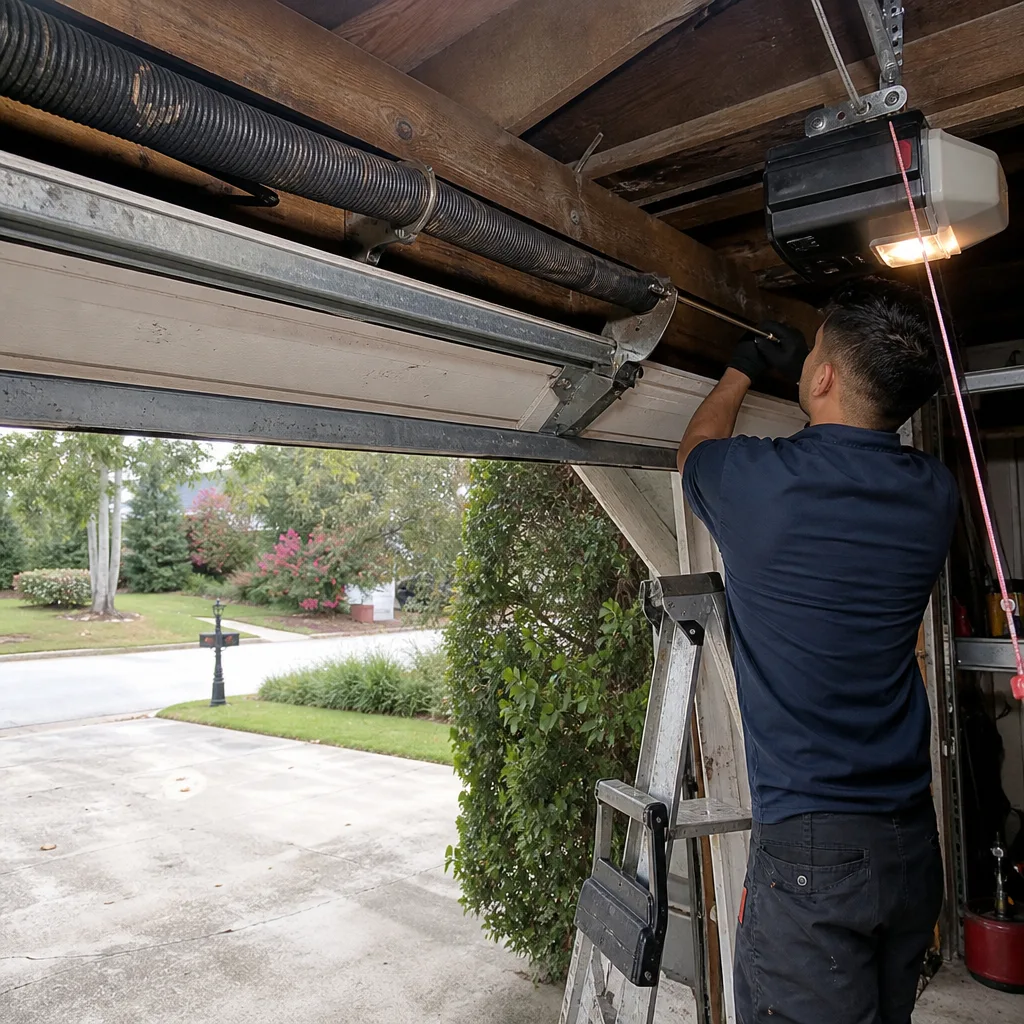 Before
 After
AfterSeasonal Garage Door Care for Alpharetta: Year-Round Homeowner’s Guide
Alpharetta averages 52 inches of rainfall annually, nearly 40 percent more than the national average, and most of it arrives in summer and late fall. That single number changes everything about how a garage door wears in this city. The bottom weather seal works harder here than in most of the country, the humidity loads the air with moisture that wood composite panels absorb, and the temperature swings between January mornings and August afternoons stress metal components in ways a national maintenance calendar never accounts for. This guide is built around Alpharetta’s actual climate data, not a four-season template copied from a website in Ohio, and you can explore The Complete Guide to Garage Door in Alpharetta for a broader overview. You’ll learn what fails, when it fails, why it fails here specifically, and what to check before you pay anyone to fix it.
Quick Answer
Seasonal garage door care in Alpharetta means addressing four local stress points: summer humidity that swells wood composite panels, fall pollen and leaf debris that accelerates roller and track wear, winter temperature drops that change how torsion springs behave, and spring condensation cycles that corrode cables at the drum anchor point. A homeowner should check the bottom seal quarterly, clear the bottom track monthly during fall, and test the opener’s auto-reverse force setting after any temperature swing exceeding 30 degrees. Most of this takes under fifteen minutes and costs nothing.
Table of Contents
- Summer (June-August): Humidity, Swelling Panels, and Track Binding
- Fall (September-November): Pine Pollen, Leaf Debris, and Roller Wear
- Winter (December-February): Cold-Weather Grease Viscosity and Torsion Spring Behavior
- Spring (March-May): Post-Winter Cable Inspection at the Drum Anchor Point
- Year-Round Opener Sensitivity Test: The 2×4 Auto-Reverse Check
- Common Mistakes to Avoid
- When to Call a Professional
- Frequently Asked Questions
BeforeAfterSummer (June-August): Humidity, Swelling Panels, and Track Binding
Alpharetta’s summer humidity is the single most underrated threat to a garage door. We’re not talking about the door rusting through. We’re talking about wood composite panels, the most common panel material in North Atlanta homes built in the last fifteen years, absorbing moisture from air that routinely sits above 70 percent relative humidity from June through September.
Wood composite is exactly what it sounds like: wood fibers pressed together with resin. It looks like wood, it stains like wood, and it absorbs water like wood. When a panel absorbs moisture, it expands. The expansion is not dramatic, typically a quarter-inch or less across a sixteen-foot-wide door. But a quarter-inch of swelling on a door that was installed with an eighth-inch clearance on each side is enough to make the panel rub against the vertical track as the door travels.
You’ll hear it before you see it. A door with a swelling panel makes a scraping sound on the way up, usually louder in the top third of the travel where the panel passes the curve of the track. If the problem has been going on for more than a few weeks, you’ll see telltale marks: light-colored rub lines on the panel edge, or fine wood-composite dust collecting on the bottom of the track. That dust is the panel literally being ground away.
How to Check Panel Swelling in Alpharetta’s Summer
- Open the door halfway and walk to the inside edge of either panel. Look at the gap between the panel edge and the vertical track. On a properly installed door, you should have a visible gap, roughly the width of a nickel, on both sides.
- Close the door and repeat the check at three points: the bottom panel, the middle panel, and the top panel. Swelling often follows a pattern: lower panels absorb more moisture because ground-level humidity is higher.
- If the gap is visibly narrower in summer than it was in winter, the panel is absorbing moisture. Record the measurement. Check it again in October. If the gap returns to normal, the swelling is seasonal and cosmetic, not structural.
Cosmetic swelling is manageable. The fix is not replacing the panel. It’s addressing the humidity source: check that the garage floor drains away from the door, verify that the weather seal is intact and actually touching the ground, and consider running a dehumidifier in the garage during July and August if the garage is attached to the house and holds heat. Structural swelling, where the panel has delaminated or developed soft spots you can press with a thumb, is a different situation. That panel needs replacement because the resin bond has failed, and no amount of drying out will restore it.
In our experience across Alpharetta, we see the worst cases in garages that face east with no tree coverage. The morning sun hits the door, warms it, and the afternoon humidity re-hydrates it. That daily cycle is what accelerates resin breakdown in wood composite.
Fall (September-November): Pine Pollen, Leaf Debris, and Roller Wear
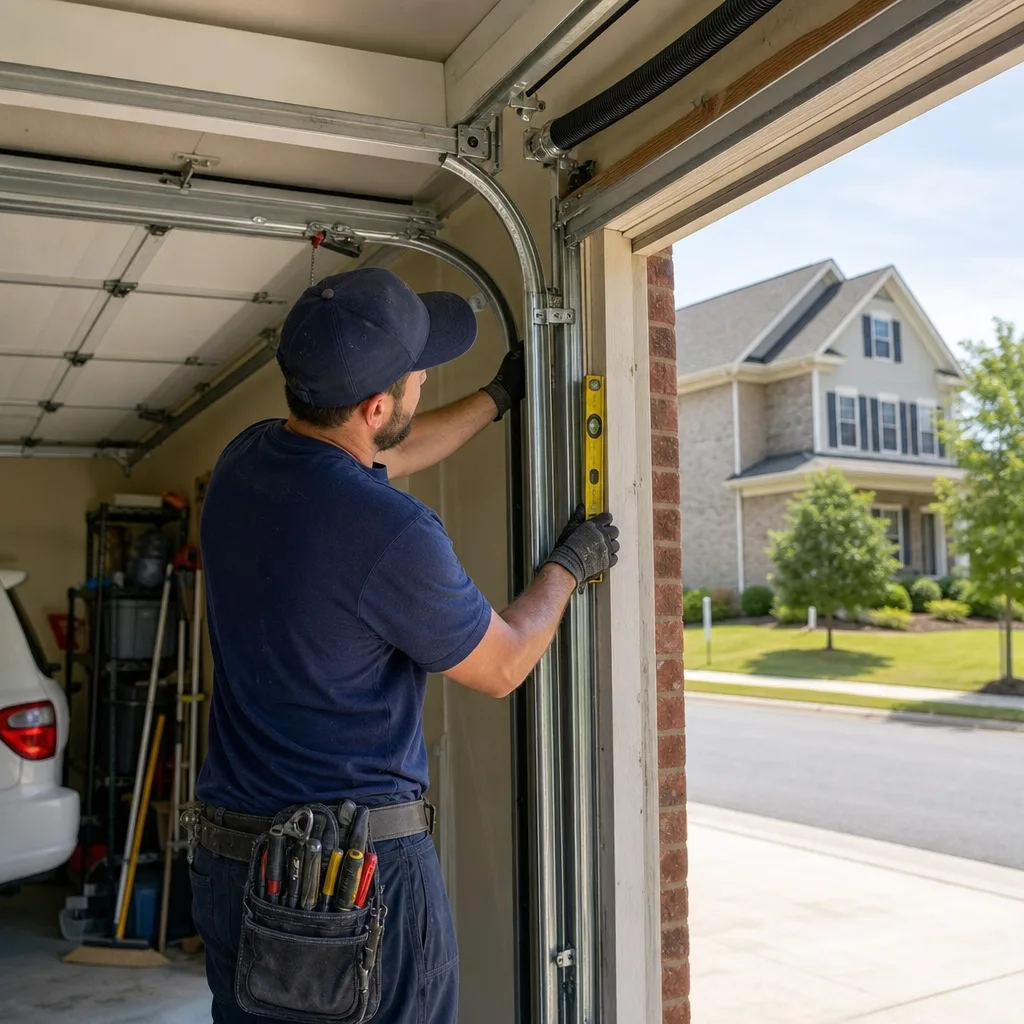
Fall in Alpharetta is not just leaves. It’s pine pollen in spring and pine needles and leaf debris in fall, and together they create the leading preventable cause of premature roller wear in North Atlanta. Most seasonal guides mention fall cleaning as a nice-to-have. That understates the problem. In Alpharetta, fall debris in the bottom track is the difference between a roller lasting twelve years and a roller lasting five.
Here’s the mechanism. Your garage door rides on rollers, typically four to six pairs depending on door height. Each roller is a small wheel with a stem that fits into a track on each side of the door. The bottom track, the horizontal section on the floor, is a catch basin for everything that blows into the garage: pine needles, leaf fragments, grass clippings, dirt, and the fine yellow-green pollen that coats every surface in March and April. When debris builds up in the bottom track, the rollers stop rolling and start skidding. A skidding roller develops a flat spot. A flat-spotted roller grinds against the track and wears the track itself. Now you’re replacing both.
Fall Track Cleaning: The Right Interval and Method
- During September, October, and November, clean the bottom track every two weeks. This is more frequent than you think you need. Alpharetta’s tree canopy is dense, and the volume of leaf fall is high. Every two weeks is the right interval.
- Use a shop vacuum with a narrow nozzle attachment. Do not use a leaf blower; it blows fine debris deeper into the track and into the garage ceiling.
- After vacuuming, wipe the inside of the track with a dry microfiber cloth. If the cloth comes up with a yellow-green tint, that’s pollen residue. Pollen is slightly acidic; it etches the galvanized track surface over time.
- Inspect the rollers while the track is empty. Spin each one by hand. A roller that spins freely with no wobble is good. A roller that catches, grinds, or has visible flat spots on the wheel surface is done. If you see flat spots, you’re looking at roller replacement, which is a straightforward job but one that requires releasing tension on the door. That is not a do-it-yourself task on a torsion-spring door. Call a professional.
We’ve pulled enough pine needles out of Alpharetta bottom tracks to fill a dumpster. The homes in Windward, Kimball Bridge, and the older neighborhoods off Rucker Road have mature pine stands, and the needle load is constant. A homeowner who keeps the bottom track clean saves themselves a roller replacement that runs $150 to $350 in this market, depending on the door height and roller count.
Get the price in writing before anything starts.A real person answers, day or night.Call nowWinter (December-February): Cold-Weather Grease Viscosity and Torsion Spring Behavior
Alpharetta winters are mild by national standards, but the temperature drops are sharp and sudden, and that’s what causes problems. The specific issue we see in December, January, and February is lithium grease viscosity loss in torsion springs when temperatures drop below 20°F. Here’s what that means in plain English and why it matters.
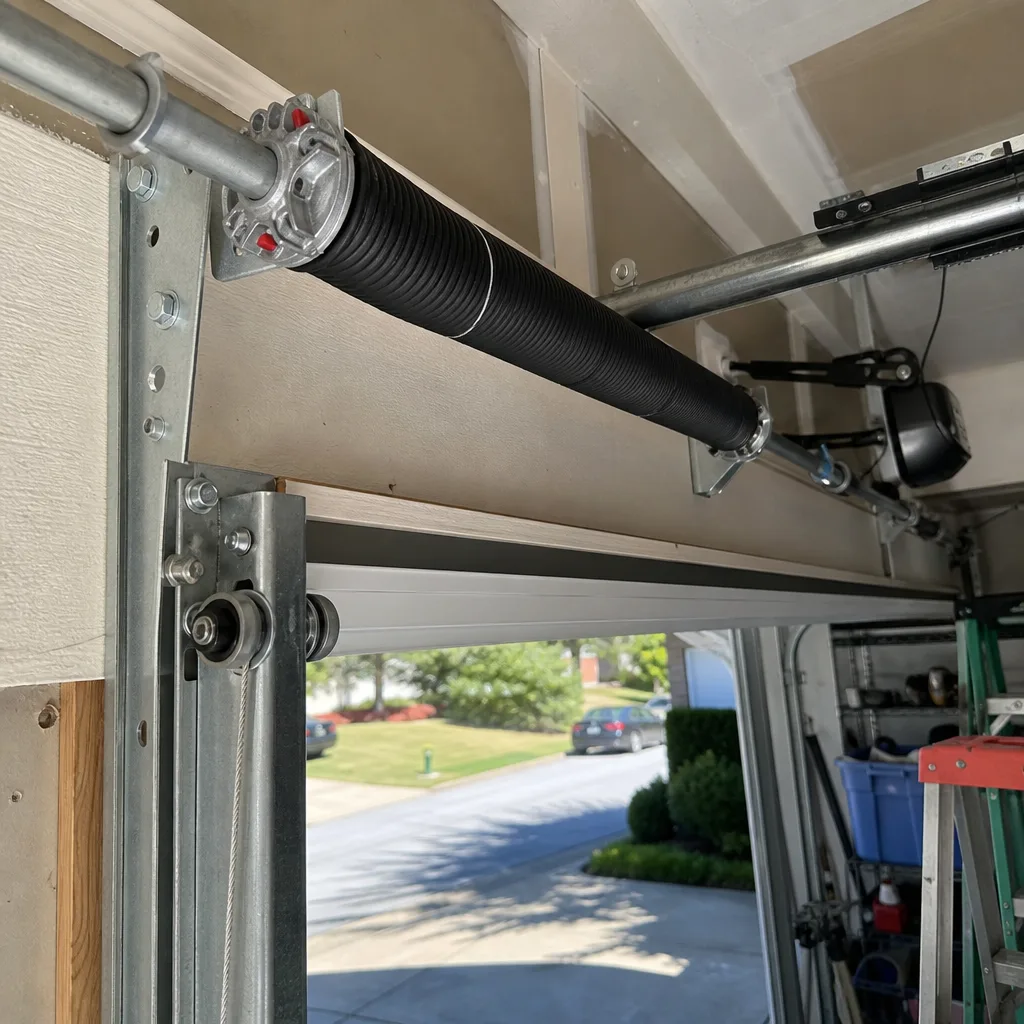
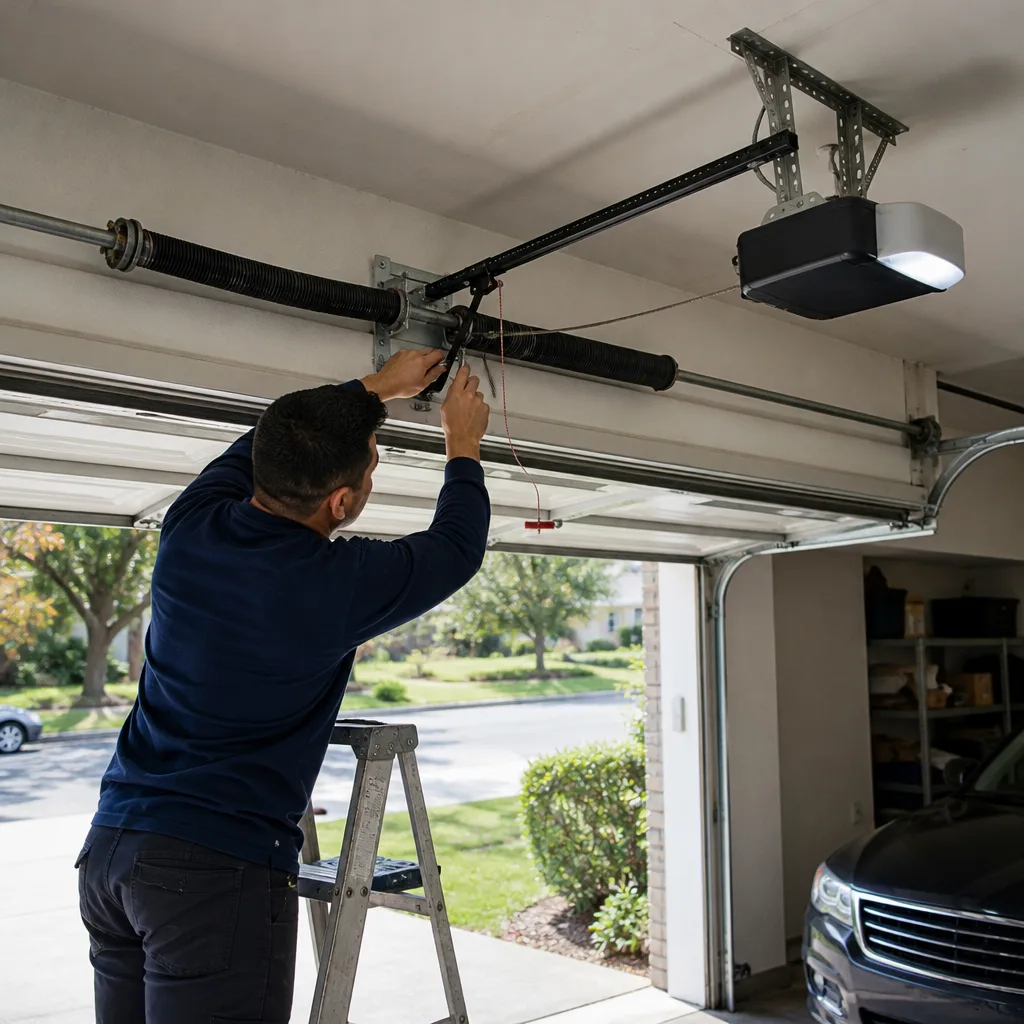
A torsion spring sits above the door opening on the header. It’s a tightly wound coil of hardened steel wire, and it does the actual lifting work on most doors built after 2000. The spring is lubricated at the time of installation with a lithium-based grease. Lithium grease works beautifully between 32°F and 120°F. Below about 20°F, the grease thickens. The spring becomes harder to turn. The door responds as if the spring is under-wound, meaning it feels heavy, it opens slower, and if you’re opening it manually, it takes noticeably more muscle than it did in November.
What does that look and sound like? The door will jerk at the start of the cycle. You’ll hear a low groaning or creaking sound from the spring coil itself, not from the tracks. The opener motor will strain; you’ll hear the motor pitch change as it works harder. If you release the opener and try to lift the door by hand from the handle, it should lift smoothly with moderate effort throughout its travel. If it’s heavy at the bottom and gets easier as it rises, that’s cold-thickened grease. If it’s heavy at every point, that’s a spring that’s lost tension or is nearing failure.
The Safe Cold-Weather Response
Do not apply penetrating oil, WD-40, or any spray lubricant to a torsion spring. Torsion springs are under enormous tension, always, even when the door is closed. Spraying a liquid on a cold spring does not fix the viscosity problem and it does not make the spring safe to work on. The correct response for a door that’s sluggish in cold weather is to note the temperature, check the behavior again when the temperature is above 40°F, and if the door returns to normal operation, the issue is grease viscosity, not spring failure. If the door remains heavy above 40°F, the spring has lost tension and needs a professional evaluation. A spring under full tension stores enough energy to cause serious injury or death if handled improperly. This is a line we will hold: torsion spring work is not a homeowner task.
Alpharetta typically sees overnight lows below freezing from mid-December through late February. The cold snaps are brief, rarely lasting more than three or four days. But it doesn’t take a full winter to expose a spring that’s already weak from age. Springs are rated in cycles, usually 10,000 cycles, which for a household that opens and closes the door four times a day translates to about seven years. Many Alpharetta homes built between 2015 and 2020 are coming up on their first spring replacement cycle right now.
Spring (March-May): Post-Winter Cable Inspection at the Drum Anchor Point
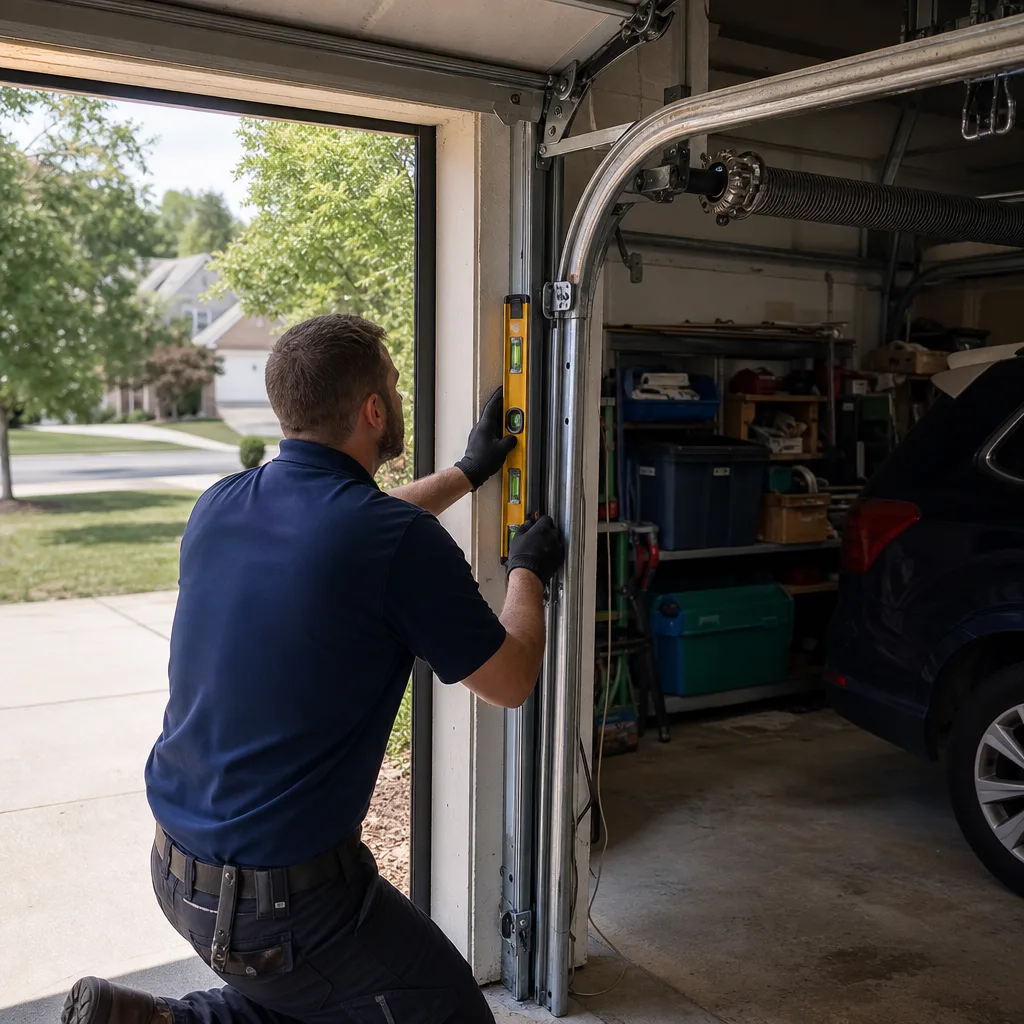
Spring (March-May): Post-Winter Cable Inspection at the Drum Anchor Point Spring in Alpharetta is when we find cable problems. Not because spring is harsh on cables, but because winter was, and the damage shows up after the condensation cycle of winter has had time to do its work.
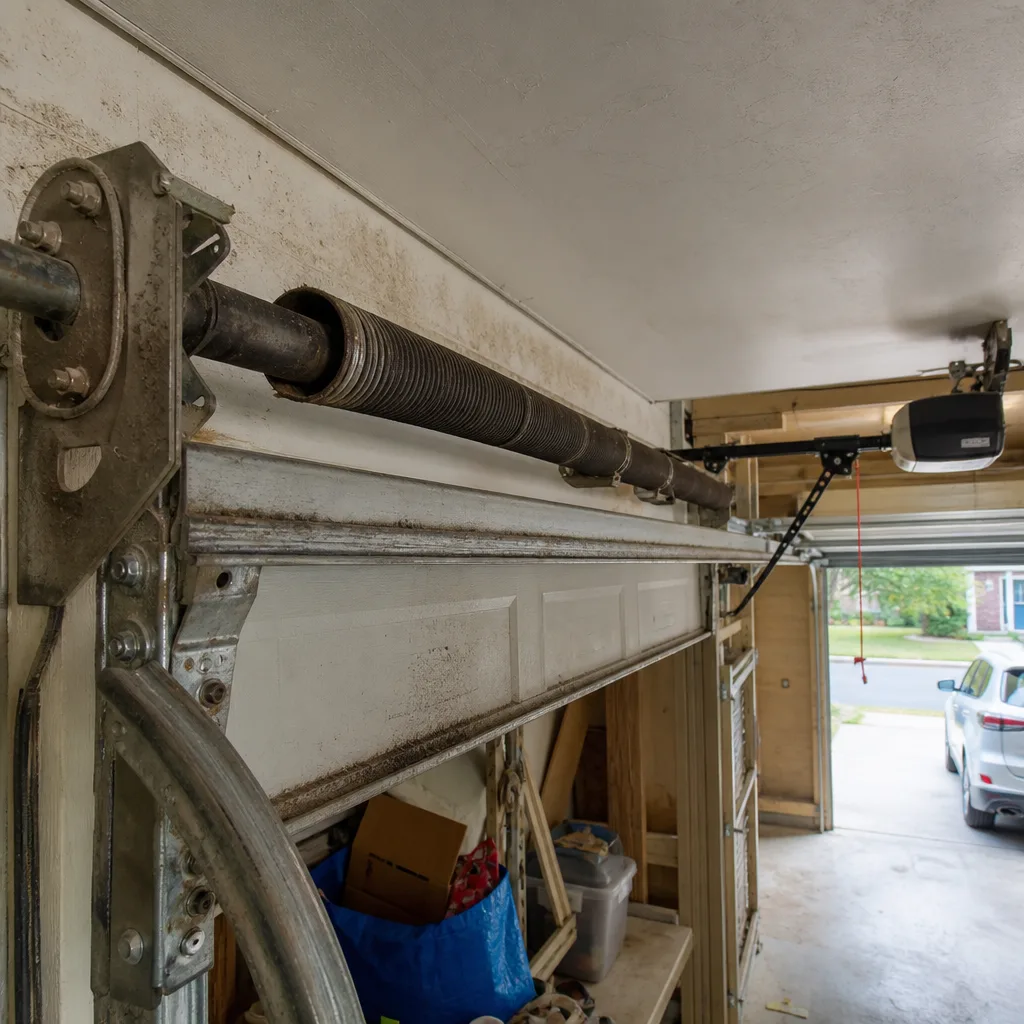
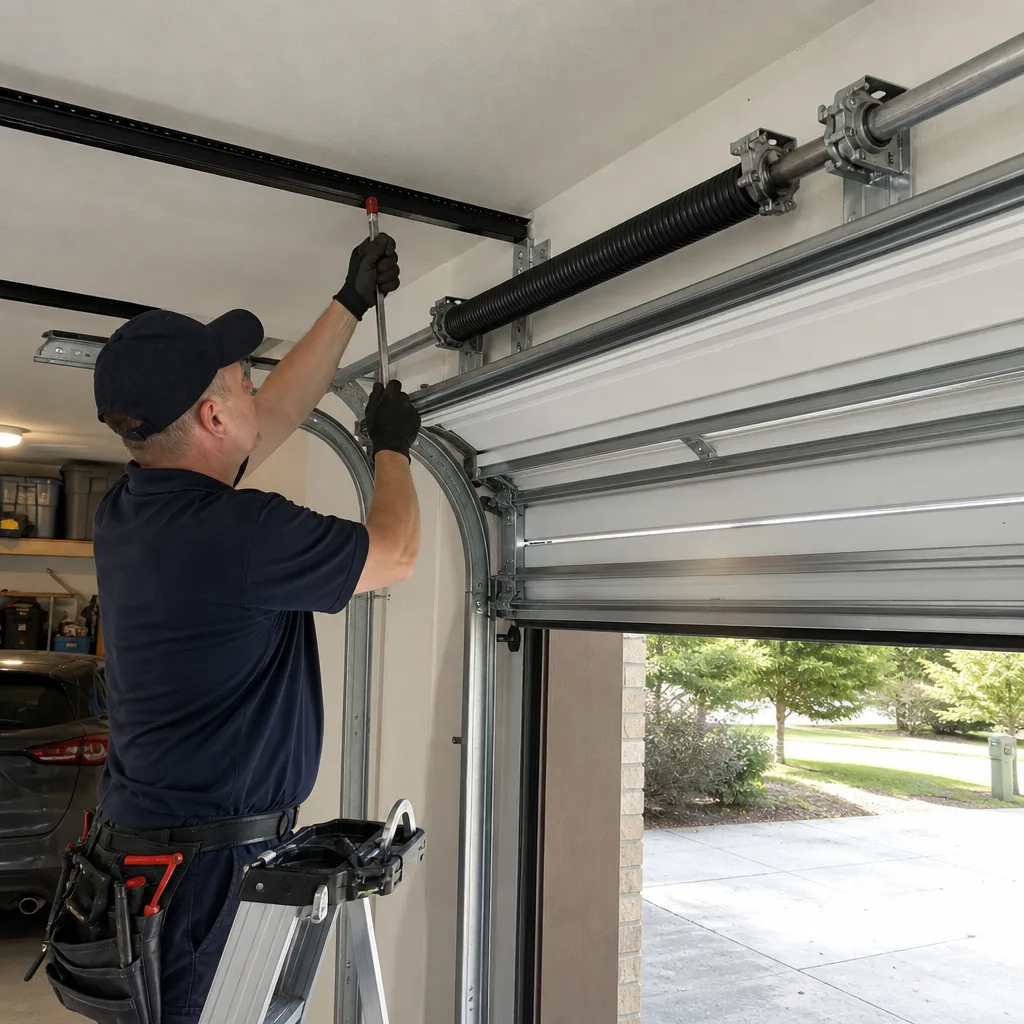
Here’s what happens. Your garage door runs on two lifting cables, one on each side, attached to the bottom bracket at the bottom corner of the door. The cable winds up around a drum at the top corner of the door opening as the door opens. The point where the cable attaches to the drum is the anchor point, and it’s the most common failure location we see in Alpharetta. The reason is moisture. Through December, January, and February, the garage experiences repeated condensation cycles: the door is cold, the garage air warms up during the day, moisture forms on the metal surfaces, and the moisture sits in the crevices at the drum anchor point. The repeated wet-dry cycle concentrates corrosion stress exactly where the cable bends and rubs against the drum.
Spring Cable Inspection: What to Look For
- Close the door completely. Stand inside the garage and look up at the top corners of the door opening. You’re looking for two items: the drum, a metal spool a few inches in diameter, and the cable, which should wrap cleanly around the drum in neat, parallel coils.
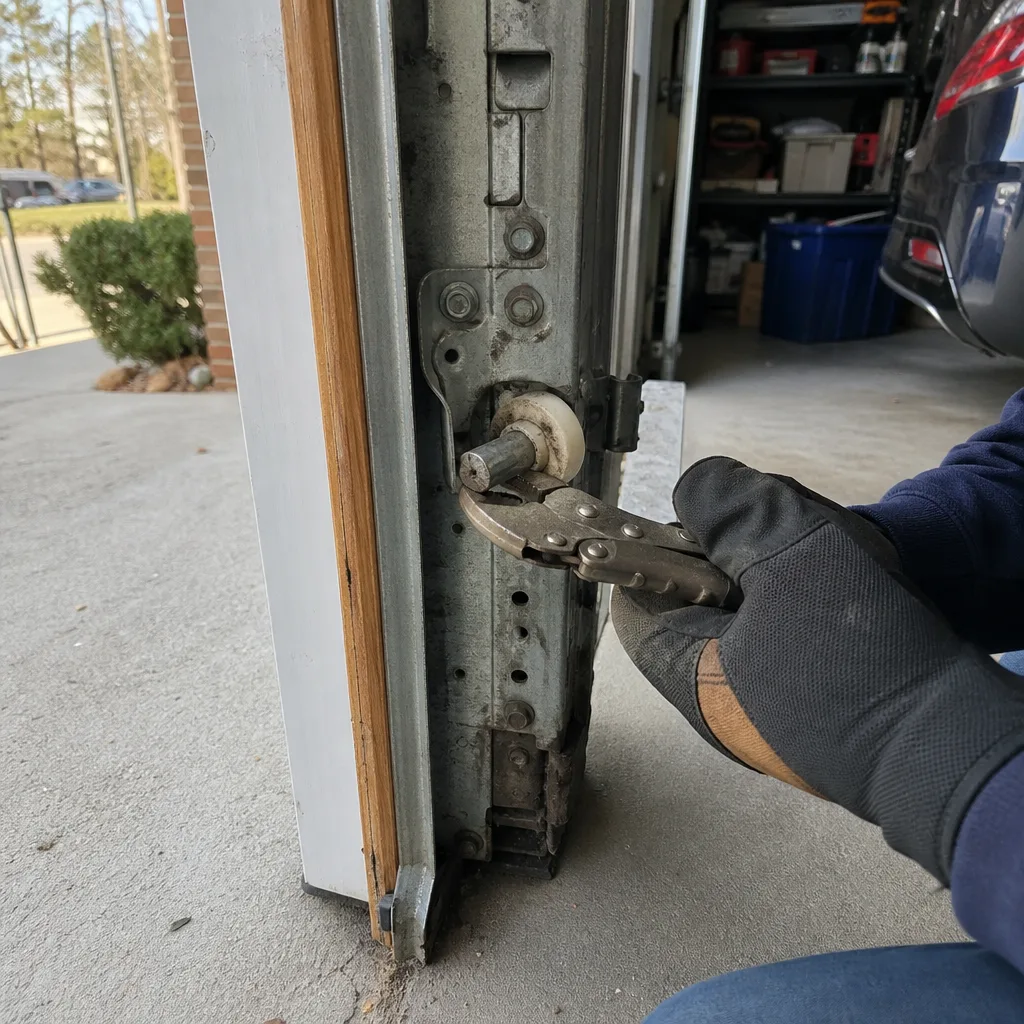
- Look at the point where the cable exits the drum and runs down to the bottom corner of the door. This is the anchor area. You’re looking for fraying: individual wire strands that have broken free of the main cable and are sticking out at odd angles. Fraying looks like a fuzzy halo around the cable.
- Check for rust-colored staining on the drum itself. If the cable is rusting, the rust transfers to the drum. A cable that’s gone from silver to brown at the anchor point has been compromised.
- Check both sides. Cables wear unevenly. One side can be pristine while the other is a single strand away from full failure.
A frayed cable is a replacement item, and cable replacement requires removing tension from the spring system first. This is another line we hold. A snapped cable under tension whips hard enough to break bone. We replace cables in Alpharetta every spring, and the homeowner who catches fraying early is paying for a cable replacement. The homeowner who catches it when the cable snaps is paying for cable replacement plus whatever damage the falling door did, which is usually a bent track and a cracked panel.
Year-Round Opener Sensitivity Test: The 2×4 Auto-Reverse Check
Your garage door opener has a safety system called the auto-reverse mechanism. When the door meets resistance as it closes, the opener is supposed to reverse direction and open back up. This is a federal safety requirement that’s been in place since 1993, and it’s the thing that keeps the door from closing on a child, a pet, or your car’s rear bumper. The force setting that controls this mechanism is adjustable on most openers, and it drifts with temperature.
Here’s the Alpharetta-specific problem. The force setting is calibrated at installation time, usually in spring or fall, at whatever temperature happens to be comfortable that day. But the force required to move the door changes with temperature: the grease thickens in winter, the panels expand in summer, the track friction changes with humidity. A door that was calibrated on a 65-degree October afternoon is not calibrated for a 28-degree January morning. The National Association of Garage Door Manufacturers recommends re-testing the auto-reverse monthly. In a climate with Alpharetta’s temperature swings, that monthly check is not optional.
The 2×4 Test: Step-by-Step
- Place a 2×4 board flat on the ground, the wide face down, directly under the center of the garage door opening. The board should be laid so the door closes onto its face, not onto its edge. A standard 2×4 measures 1.5 inches thick when laid flat.
- Close the door using the opener.
- Watch what happens when the door contacts the board. The door must reverse direction within two seconds of contact. It should reverse and travel full travel back to the open position.
- If the door does not reverse, or if it stops but does not reverse, the force setting is too high. This is a safety defect. Do not ignore it. This is a zero-tolerance item. An opener that fails a 2×4 test is a danger to your family and a danger to your car. Adjust the force setting downward and re-test until the door reverses reliably, or call a professional.
Repeat this test after any temperature swing exceeding 30 degrees. In Alpharetta, that means you’ll be testing in January after a sharp cold front, and again in April when the first warm spell hits. It takes five minutes. We’ve tested openers in Alpharetta homes that had been installed for a decade and the force setting had never been touched. Some of them failed the 2×4 test. Don’t let that be your family.
Common Mistakes to Avoid
- Lubricating the wrong part. The rollers, hinges, and the torsion spring are the only parts that need lubrication, and the spring needs lithium grease, not spray lubricant. Spraying a liquid silicone on a torsion spring does nothing to protect it from cold-weather viscosity loss and can break down the existing grease. The track itself should never be lubricated. Lubricating the track attracts debris and accelerates the skidding problem described in the fall section.
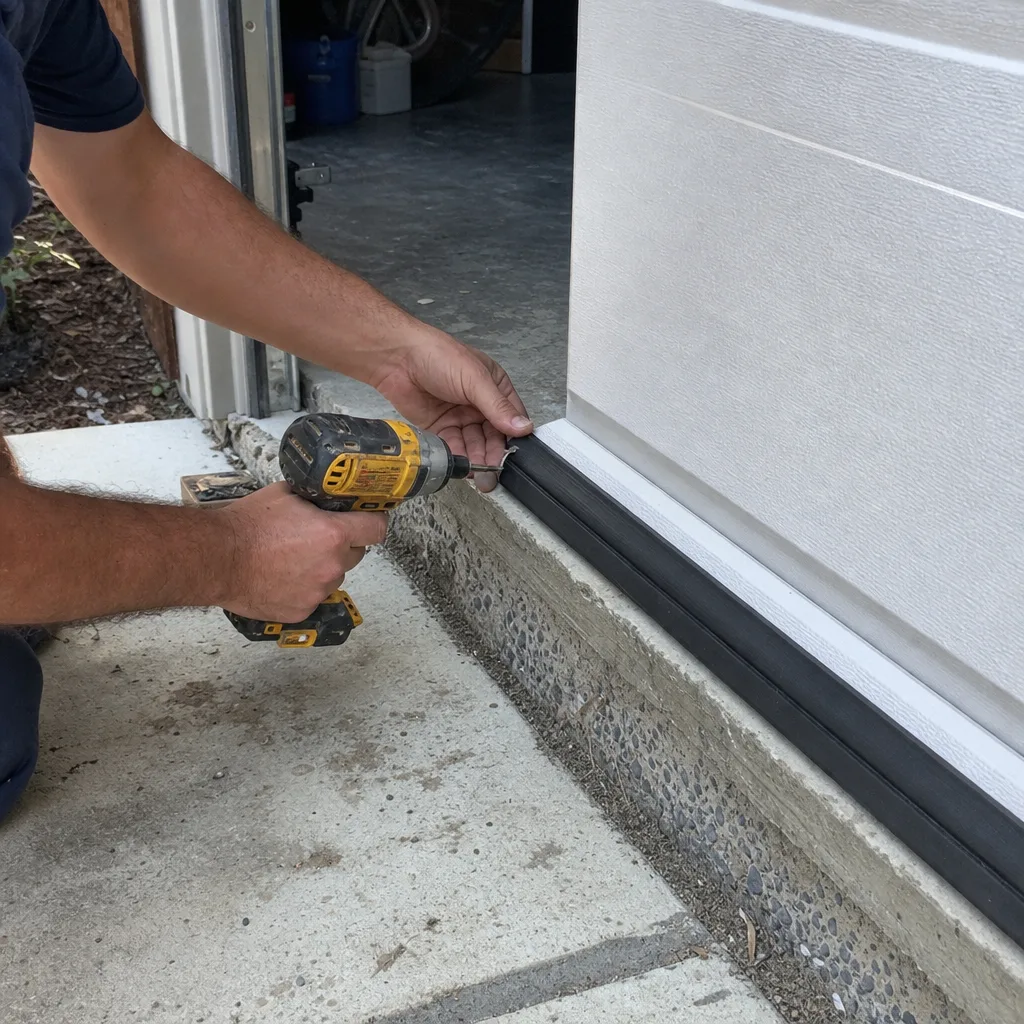
- Ignoring the weather seal until water appears. In a 52-inch rainfall climate, the bottom seal is a wear item, not a fixture. If you wait until you see water on the garage floor, the seal has been failing for months, and the moisture has already been doing quiet damage to panel bottoms and track hardware. Check the seal quarterly by closing the door and looking for gaps where daylight is visible.
- Re-testing the auto-reverse only when it’s convenient. The force setting drifts with temperature, and the month you skip might be the month the door fails to reverse. The 2×4 test is a five-minute procedure. It should happen monthly, and it’s non-negotiable in a home with children.
- Cleaning the bottom track with a leaf blower. A leaf blower throws fine debris into the garage ceiling and does a poor job of clearing the actual track. It moves the visible material while leaving the fine pollen and dust that actually causes the roller wear. A shop vacuum with a narrow nozzle is the correct tool.
- Attempting torsion spring or cable work without a professional. This is not a recommendation. It’s a hard line. Torsion springs and lifting cables are under tension that can maim or kill. In Alpharetta, calls to garage door repair professionals spike every January from homeowners who tried to adjust a cold-weather spring themselves. Do not be one of those calls.
- Assuming a slow winter door means the spring is dying. Cold-thickened grease makes a door feel heavy, and the problem resolves above 40°F. Before you pay for a spring replacement, note the temperature and check the door’s behavior in warmer weather. A licensed technician will always check the temperature before diagnosing a winter door as having a spring problem.
- Replacing a door without evaluating the opener. A new door changes the weight of the lift system, sometimes significantly. Heavy wood composite doors weigh more than insulated steel. If you’re investing in garage door installation in Alpharetta, the opener’s force setting and motor capacity must be re-evaluated. An opener sized for a lightweight aluminum door may strain under a new composite door.
When to Call a Professional
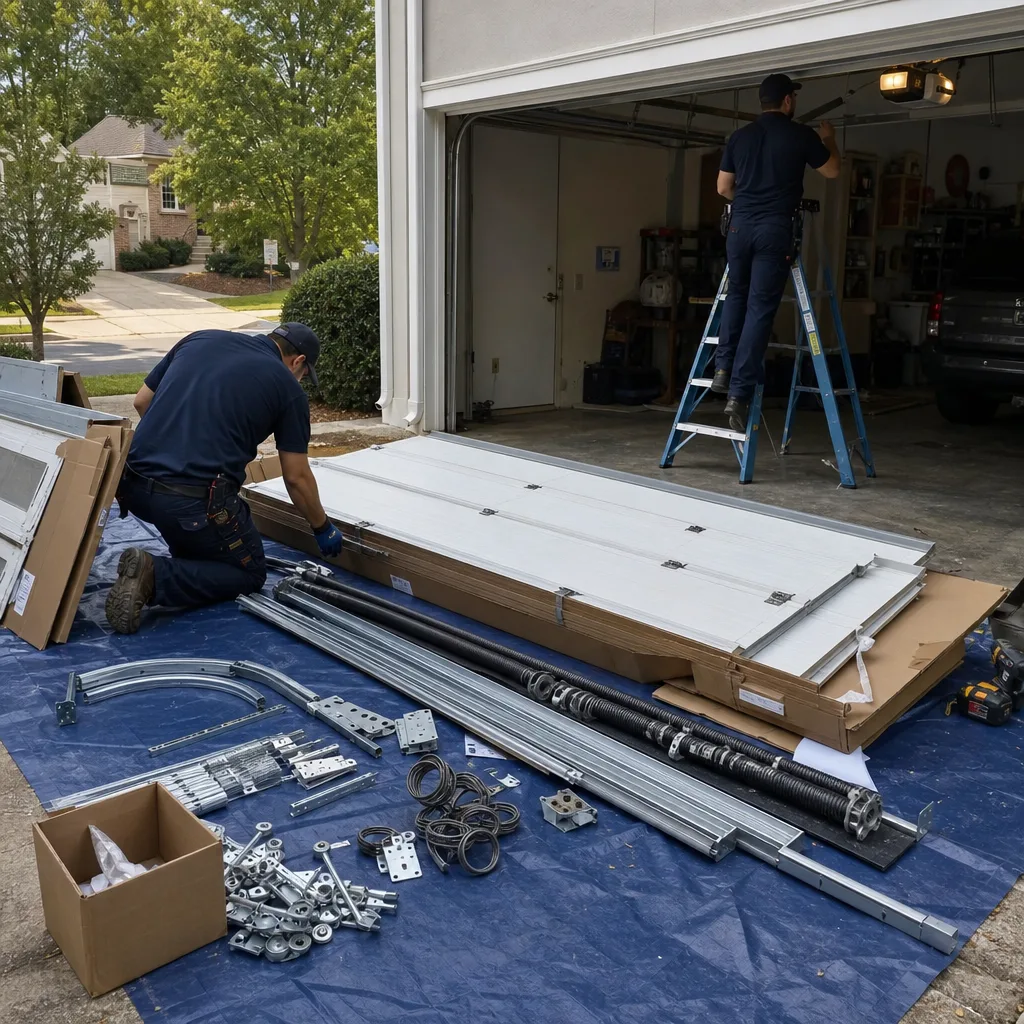
Call a professional when you see a frayed cable, a flat-spotted roller, a spring with a visible crack or gap in the coil, or when the door fails the 2×4 auto-reverse test and adjusting the force setting does not resolve it. Call a professional when a panel has delaminated or developed soft spots you can press with a thumb. Call a professional when the door makes a sound you’ve never heard before, especially a sharp bang. A spring snapping sounds like a gunshot inside the garage, and if you hear it, do not operate the door. Servo Garage Doors Alpharetta offers free estimates in Alpharetta and the surrounding area. The technicians arrive with the parts on the truck for most common repairs, and every job is quoted with a flat written price before any work begins. Call (678) 679-2096.
Frequently Asked Questions
A full seasonal maintenance visit in Alpharetta typically runs $85 to $175, covering track cleaning, roller inspection, spring lubrication, cable inspection, weather seal check, and opener force testing; for a detailed look at what drives these numbers, see our Garage Door Cost Breakdown: The Alpharetta Homeowner’s Reference for 2026. We quote a flat, written price before any work starts, per Clause 1 of The Haven Standard, and we never add charges after the fact. If you do the inspections yourself and catch problems early, you’re often looking at the cost of a new bottom seal, $20 to $45 in this market, rather than a $300+ repair. Call (678) 679-2096 for a written price on any maintenance or repair work you’re considering.
Yes. We answer the phone with a live person 24 hours a day, 7 days a week, and emergency calls include a named technician and an on-the-way text, not a vague callback window. Same-day service is available for most non-custom repairs, including broken springs, snapped cables, and failed openers. Call (678) 679-2096 and a real person will answer, day or night.
No. The price we quote is the price you pay. Per Clause 1 of The Haven Standard, every job is quoted with a flat, written price and written scope before any work begins. If we find additional issues during the repair, we’ll photograph the problem, show you the documentation, and quote the additional work separately before touching it. You will never receive an invoice bigger than the quote because the quote is the ceiling. Clause 4 is why we photograph the failed part before quoting a replacement; you see what we see.
Yes. Our technicians carry torsion springs in the common wire diameters and lengths for the doors installed in Alpharetta homes, along with cables, rollers, hinges, and bottom seals. For the most common repair calls, the parts are loaded before the truck leaves. For unusual door configurations or custom panels, we quote the part, order it with the written price agreed in advance, and schedule the installation. Call (678) 679-2096 and we’ll tell you over the phone whether it’s a same-day fix or a scheduled part order.
Every twelve months is the right interval for a professional inspection in Alpharetta, with the ideal timing in early November, after the fall pollen and leaf debris season has ended and before the winter cold snaps begin. The November appointment will catch cable corrosion from the prior winter, roller wear from fall debris, and spring fatigue that would otherwise surface as a cold-weather failure. Homeowners who follow the seasonal checklist in this guide can extend to eighteen months, but no longer. Most of the doors we service in Alpharetta are on an annual cadence.
You can lubricate the rollers and hinges yourself with a lithium-based grease or a garage-door-specific spray lubricant, applying it sparingly to the roller stems and hinge pivot points. Never lubricate the track. The torsion spring requires a heavier lithium grease applied carefully along the coil, and most Alpharetta homeowners prefer to leave that to a professional because the spring is under constant tension. If you’d rather not touch it, a professional maintenance visit is $85 to $175 and covers lubrication along with the full inspection.
Newer wood composite doors installed since 2015 are more susceptible to summer humidity swelling than older solid wood or steel doors. The resin binders in modern composite panels are lighter and more water-absorbent than traditional materials. At the same time, newer openers have more sensitive electronics, and the force setting drift with temperature is more pronounced on units with DC motors, which is most of what’s been installed in Alpharetta since 2018. A door installed new in 2020 will probably need a spring replacement around 2027 or 2028, and it will need opener force re-calibration every winter for its entire life.
The Bottom Line
Alpharetta’s climate does not match the national seasonal maintenance calendar, and the homeowners who treat garage door care as a local discipline get more years out of their doors. The bottom weather seal is a consumable in a 52-inch-rainfall city. Pine pollen and leaf debris are the primary roller killers in North Atlanta, and a two-week track-cleaning cadence during fall is the cheapest insurance you can buy. Cold snaps below 20°F change how torsion springs behave, and the safe response is observation, not application of spray lubricant. The 2×4 auto-reverse test is a monthly five-minute habit that protects your family, and it costs nothing. If anything on this checklist reveals a problem you’d rather not handle, Garage Door Opener Repair & Installation in Alpharetta is available anytime, and the team at Servo Garage Doors Alpharetta is a phone call away at (678) 679-2096. The estimate is free, the price is written before work starts, and the documentation comes home with you.
Written by Marcus Deller, Owner at Servo Garage Doors Alpharetta, serving Alpharetta since 2015. Browse more guides & resources from our team.